Albinism is a group of inherited disorders where the body produces very little or no melanin. Melanin is the substance responsible for determining the color of your skin, hair, and eyes. This substance is also crucial for the proper development and function of the eyes, which is why all forms of albinism involve vision problems. While symptoms are usually visible in a person's coloring, differences can sometimes be slight. Individuals with albinism must take steps to protect their skin and eyes, as they have a higher risk of developing skin cancer due to sun sensitivity. There is currently no cure, but the condition can be managed through proper care.
Understanding the Condition
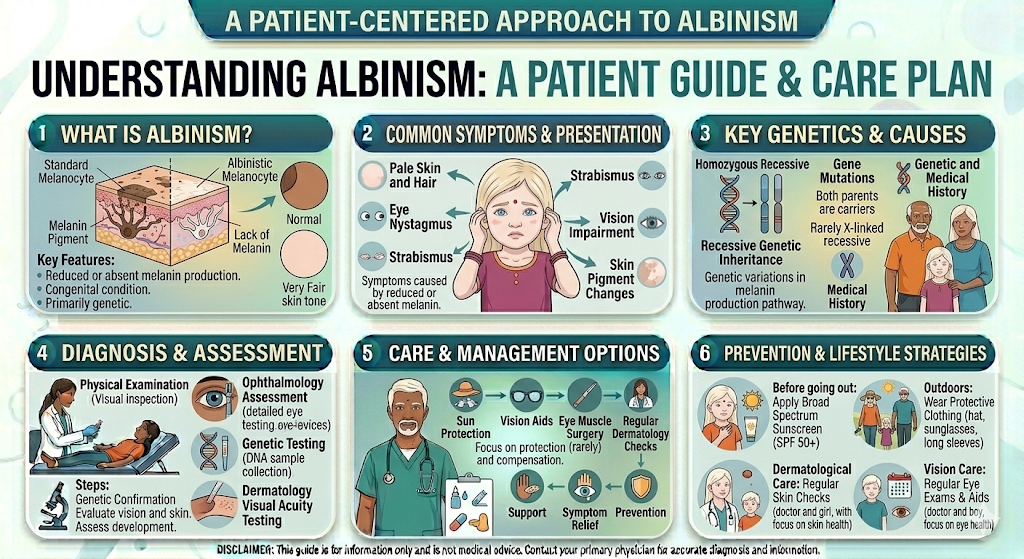
Albinism is a group of inherited disorders where the body produces very little or no melanin. Melanin is the substance responsible for determining the color of your skin, hair, and eyes. This substance is also crucial for the proper development and function of the eyes, which is why all forms of albinism involve vision problems. While symptoms are usually visible in a person's coloring, differences can sometimes be slight. Individuals with albinism must take steps to protect their skin and eyes, as they have a higher risk of developing skin cancer due to sun sensitivity. There is currently no cure, but the condition can be managed through proper care.
Symptoms affect skin, hair, eye color, and vision.
Skin and Hair: The most easily recognizable form of albinism results in white hair and very light skin compared to family members. However, skin color (pigmentation) and hair color can vary greatly, ranging from white to brown. For example, people of African descent with albinism may have light brown or reddish-brown skin and freckles. In some cases, melanin production may increase slightly during childhood or the teen years, causing minor changes in color. Hair color can also range from very white to brown, and may appear yellow, red, or brown in those of African or Asian descent. Sun exposure can lead to the development of pink moles, large freckle-like spots (solar lentigines), and sunburn, as the skin cannot tan.
Prepare a complete list of all symptoms you have been experiencing, especially regarding vision changes, and note when they began.
Consultation Guide
Eyes and Vision: Eyelashes and eyebrows are often pale. Eye color can range from light blue to brown and may change with age. Because the colored part of the eye (iris) typically lacks enough pigment, light can shine through, causing extreme sensitivity to bright light. For this reason, very light-colored eyes may sometimes appear red.
Albinism is caused by a change in one of the genes that provides instructions for producing melanin. Melanin is produced by special cells called melanocytes found in your skin, hair, and eyes. The gene change results in a significant reduction or complete absence of melanin.
Types of albinism are grouped by the affected gene and how they are passed down in families:
Oculocutaneous Albinism (OCA): This is the most common type. It is inherited when a person receives a changed gene copy from both parents (autosomal recessive inheritance). OCA affects pigment in the skin, hair, and eyes, and also causes vision problems.
Ocular Albinism (OA): This type mainly affects the eyes, causing vision problems but often sparing the skin and hair pigmentation. The most common form is passed down through the X chromosome, meaning it usually occurs only in males.
Related Syndromes: Albinism can be part of rare genetic syndromes, such as Hermansky-Pudlak syndrome or Chediak-Higashi syndrome, which include additional serious health issues like bleeding disorders or immune system problems.
The condition can lead to physical and psychosocial challenges.
Physical Health: Vision problems can affect daily life activities, including learning and driving. The lack of protective pigment makes the skin extremely vulnerable to sun damage, including sunburn, rough and thickened skin, and a heightened risk of developing skin cancer, including melanoma. Melanoma may be difficult to detect early because it can appear as pink or red growths instead of the usual black or brown color.
Social and Emotional Health: People with albinism may face discrimination, bullying, or social isolation because they look different from others in their family or community. This can lead to stress and poor self-esteem. The preferred term is "person with albinism".
Since albinism is caused by a change in a specific gene, genetic testing can confirm the diagnosis and identify the exact type of albinism (such as OCA1 to OCA8, or ocular albinism). This information is vital for genetic counseling and family planning.
Topical or oral treatments may be prescribed by a dermatologist to manage pre-cancerous or cancerous skin lesions caused by sun exposure.
Therapies/Procedures (Duration: Varies; short-term or ongoing):
Low Vision Services: Referral to specialized services and the use of low-vision devices to help individuals manage severe vision impairment.
Diagnostic Procedures
Diagnostics: Detailed Description of Procedures
Diagnosis typically involves comprehensive eye tests and genetic testing to confirm the specific type of albinism.
Comprehensive Eye Examination (Assessment of Vision and Eye Structure)
The doctor performs detailed tests to assess your overall vision, measure visual acuity, and check for specific eye movements or structural changes related to albinism, such as involuntary eye movements (nystagmus) and light sensitivity. The doctor will also examine the retina and optic nerve.
What to Expect
Genetic Testing (Confirmation of the Gene Change)
What to Expect
Genetic Counseling: If albinism runs in your family, consult a genetic counselor for guidance on the specific type and to understand the chances of having a child with the condition. They can also explain available genetic tests.
Lifelong Sun Protection: Consistently protect skin from UV rays by wearing wide-brimmed hats, protective clothing, and applying high-SPF sunscreen to minimize the risk of sunburn and skin cancer.
Disclaimer: This article provides general health information and is not intended to be a substitute for professional medical advice, diagnosis, or treatment. Always consult your treating physician or another qualified healthcare provider with any questions you may have regarding a medical condition.
To report an error in the article, please send an email to errors@medicalwriter.com.
Treatment Options
List all current medications, vitamins, and supplements you are taking.
Be ready to discuss your family medical history, specifically concerning albinism or other genetic disorders.
Note any new or changing skin spots, especially if a spot grows or changes color, as these may require immediate evaluation.
Book a doctor visit near me
While there is no cure, treatment focuses on maximizing vision, providing lifelong skin protection, and managing complications.
Home Remedies and Self-Care (Duration: Ongoing):
Sun Protection: Minimizing sun exposure and consistently protecting the skin from ultraviolet (UV) rays to reduce the risk of sunburn and skin cancer. This measure is ongoing and includes wearing protective clothing, wide-brimmed hats, and using high-SPF sunscreen.
Vision Aids: Using non-prescription or prescription eyewear, such as glasses, contact lenses, or specialized low-vision aids, to improve sight and manage light sensitivity.
Medication (Duration: As needed for complications):
Skin Lesion Removal: Office procedures, such as cryotherapy (freezing) or light-based treatments, may be used to remove scaly or rough skin patches that have the potential to become cancerous.
Eye Muscle Surgery: Surgery to correct misaligned eyes (strabismus), a common complication associated with albinism. This can improve the alignment and appearance of the eyes.
Skin Cancer Removal: Excisional surgical procedures to cut out and remove cancerous or pre-cancerous growths on the skin.
Prevention & Long-Term Wellbeing
For a condition that affects both vision and skin, you should consult a specialist: a Dermatologist for skin care and cancer prevention, and an Ophthalmologist (eye doctor) for vision care.
Preparations Before Your Visit
Surgical Procedures (Duration: Recovery typically a few weeks):
Prevention and Long-term Well-being
Regular Medical Monitoring: Schedule frequent check-ups with a Dermatologist for cancer prevention and an Ophthalmologist for vision care. Promptly evaluate any new or changing skin spots.
Vision Management: Use prescription or non-prescription eyewear, contact lenses, or specialized low-vision aids to improve sight and manage extreme light sensitivity.
Psychosocial Support: Recognize the potential for discrimination and bullying. Focus on emotional health and promote the use of the preferred term, "person with albinism," to navigate social challenges.
Tags & Topics
Notice an error or need an update?
Help us keep medical information accurate. Report incorrect info or suggest an edit.


