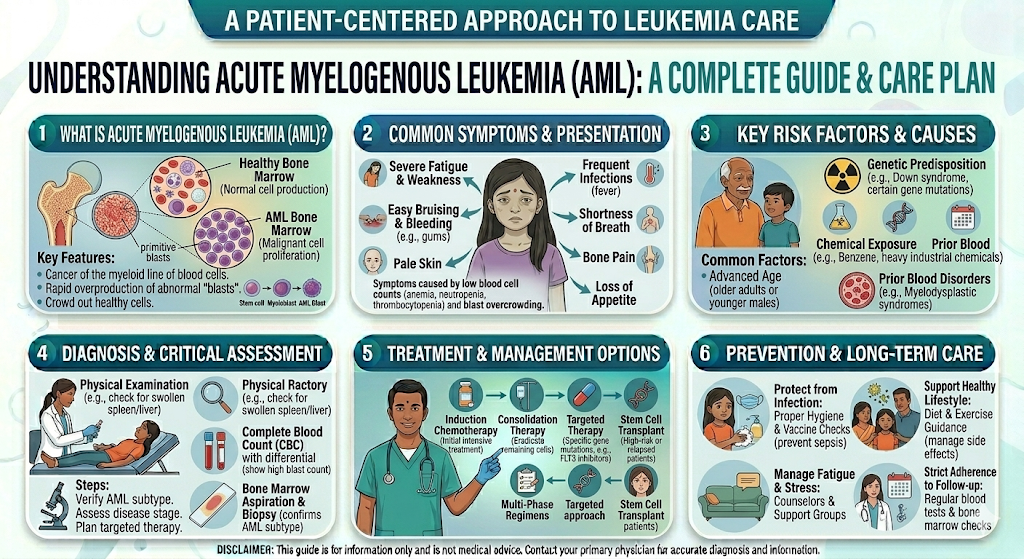
Acute myelogenous leukemia, or AML, is a type of cancer that affects the blood and bone marrow. Bone marrow is the soft, spongy material found inside bones where blood cells are produced.
Understanding the Condition
Acute Myelogenous Leukemia (AML)
Acute myelogenous leukemia, or AML, is a type of cancer that affects the blood and bone marrow. Bone marrow is the soft, spongy material found inside bones where blood cells are produced.
The signs and symptoms of acute myelogenous leukemia may be similar to those of more common conditions, such as infections. If you have persistent symptoms that concern you, consult a healthcare professional.
Symptoms can include:
Feeling extremely tired or weak.
Paleness or a noticeable change in skin color.
Unexplained bruising or bleeding, such as from the nose or gums.
Pain, commonly in the bones, back, or stomach.
AML begins when changes occur in the DNA inside the myeloid cells of the bone marrow. DNA contains the instructions that guide a cell's growth, multiplication, and eventual death. When this DNA changes, the cells begin to produce a large number of immature white blood cells, called myeloblasts, that do not function correctly. These abnormal cells accumulate and crowd out the healthy blood cells, leading to symptoms like low oxygen levels (due to too few red blood cells), bleeding issues (due to too few platelets), and frequent infections (due to non-working white blood cells).
Factors that may increase the risk of developing AML include:
Older Age: The condition is most common in adults aged 65 and older.
If you have persistent, concerning symptoms, you should first consult your primary care doctor. If leukemia is suspected, you will likely be referred to a specialist known as a hematologist-oncologist, a doctor who specializes in blood disorders and cancer.
Preparations Before Your Visit
To ensure a productive appointment, consider preparing the following information:
A complete list of all symptoms you have been experiencing and when they began.
Key personal information, including any major life changes or recent stressors.
Therapies (Immunotherapy and Symptom Management):
Acupuncture: This complementary therapy involves inserting thin needles into specific points on the body and is often used to help relieve discomfort and pain associated with various diseases and their treatments. This is typically an ongoing therapy used as needed for symptom management.
Procedure/Surgical (Bone Marrow Transplant):
A bone marrow transplant, also known as a stem cell transplant, is a procedure that infuses healthy, blood-forming stem cells into the body to replace diseased bone marrow.
Symptom Management: Work with your healthcare team to manage any chronic or long-term side effects from treatment. Complementary therapies, such as acupuncture, can be used as needed for ongoing symptom and pain relief.
Consultation Guide
The term "acute" means the disease progresses quickly. It is called myelogenous because it involves myeloid cells, which are cells in the bone marrow that normally develop into mature blood components, including red blood cells, white blood cells, and platelets. AML is the most common form of acute leukemia in adults, though it can be diagnosed at any age. Unlike many other cancers, acute myelogenous leukemia is not classified using numbered stages.
While AML is often not preventable, minimizing exposure to known risk factors can lower your risk.
Chemical Exposure: Minimize contact with harmful industrial chemicals, such as benzene.
Smoking: Avoid smoking and exposure to cigarette smoke, as it contains known cancer-causing chemicals linked to AML.
Radiation: Limit unnecessary exposure to high levels of radiation.
Pre-existing Conditions: If you have an existing blood disorder like myelodysplasia, ensure you maintain regular monitoring and follow your doctor's guidance.
Diagnostic Procedures
Doctors use various tests and procedures to diagnose AML, assess the extent of the disease, and gather information to guide treatment.
Complete Blood Count (CBC)
A CBC is a common blood test used to check overall health and screen for conditions like leukemia. It measures the number of red blood cells, white blood cells, and platelets in your blood. An unusual increase or decrease in these counts may prompt the need for further, specialized testing.
What to Expect
A small blood sample is collected, typically drawn from a vein in your arm. The process is quick and routine.
Bone marrow exam (Aspiration and Biopsy)
This is a key procedure used to collect and examine the bone marrow, which helps determine if the marrow is healthy and producing normal blood cells. The exam is comprised of two parts: aspiration, which removes a small amount of liquid bone marrow, and biopsy, which removes a small piece of solid bone tissue and enclosed marrow.
What to Expect
The exam is usually performed on the back of the hip bone (pelvis). You will lie on your side or stomach. The area is numbed with a local anesthetic. During the aspiration, a thin needle is inserted to withdraw the fluid sample. During the biopsy, a second needle is used to obtain the solid tissue sample. While the anesthetic prevents pain on the skin, you may feel a brief, sharp pain or pressure when the marrow itself is extracted.
Lumbar Puncture (Spinal Tap)
A lumbar puncture is a test used to collect a sample of cerebrospinal fluid (CSF)—the fluid that protects the brain and spinal cord—for analysis. It can help diagnose cancers that may have spread to the brain or spinal cord. In some cases, this procedure is also used to inject therapeutic medicines directly into the CSF.
What to Expect
You will typically lie on your side with your knees pulled up toward your chest. A healthcare professional inserts a needle into the lower back, between two vertebrae, to remove the fluid sample.
Disclaimer: This article provides general health information and is not intended to be a substitute for professional medical advice, diagnosis, or treatment. Always consult your treating physician or another qualified healthcare provider with any questions you may have regarding a medical condition.
To report an error in the article, please send an email to errors@medicalwriter.com.
Treatment Options
Prior Cancer Treatment: Exposure to certain types of chemotherapy and radiation therapy for other cancers.
Exposure to High Radiation: Very high levels of radiation exposure, such as from a nuclear reactor accident.
Chemical Exposure: Contact with certain harmful chemicals, such as benzene.
Smoking: AML is linked to cigarette smoke, which contains known cancer-causing chemicals.
Other Blood Disorders: Having a prior blood disorder like myelodysplasia, myelofibrosis, polycythemia vera, or thrombocythemia.
Genetic Conditions: Certain inherited disorders, such as Down syndrome.
Family History: A close blood relative, such as a parent or sibling, with a blood or bone marrow disorder.
When to See a Specialist (Consultation)
A list of all current medications, including vitamins and supplements.
A list of questions you wish to ask the doctor.
Book a doctor visit near me
The primary goal of cancer treatment is to cure the disease, shrink the cancer, or stop it from spreading. A treatment plan may involve a single approach or a combination of methods, based on the type of leukemia and the individual patient's situation. Since AML is an acute disease, treatment is often intensive and spans an extended duration, typically involving multiple phases over months to years.
Medication (Systemic Treatment):
This treatment uses powerful chemical substances to destroy fast-growing cells, such as cancer cells, throughout the body.
Treatment often involves intense initial cycles to achieve remission, followed by ongoing, less intensive treatment over many months to kill any remaining cancer cells and prevent recurrence.
Biological Therapy: This treatment harnesses the body's own immune system to identify and kill cancer cells. One advanced method involves collecting a patient's immune cells (T-cells), genetically modifying them in a lab to better target the cancer, multiplying them, and then infusing them back into the bloodstream. This type of therapy can produce lasting anti-cancer results and requires ongoing monitoring.
Preparation requires intensive medication-based treatment beforehand to eliminate malfunctioning bone marrow. The transplant itself is a one-time procedure, but the overall process, including preparation and recovery, is intensive and requires a long-term commitment, often spanning several months of critical care and years of follow-up monitoring. The transplanted cells can come from a compatible donor or, in some cases, the patient's own body.
Life after intensive AML treatment requires a commitment to ongoing care.
Follow-up Monitoring: Regular, long-term follow-up monitoring is critical, often spanning years after the initial treatment phase is complete, to watch for any signs of recurrence.
Prevention & Long-Term Wellbeing
Prevention and Long-term Well-being
Prevention
Tags & Topics
Notice an error or need an update?
Help us keep medical information accurate. Report incorrect info or suggest an edit.


