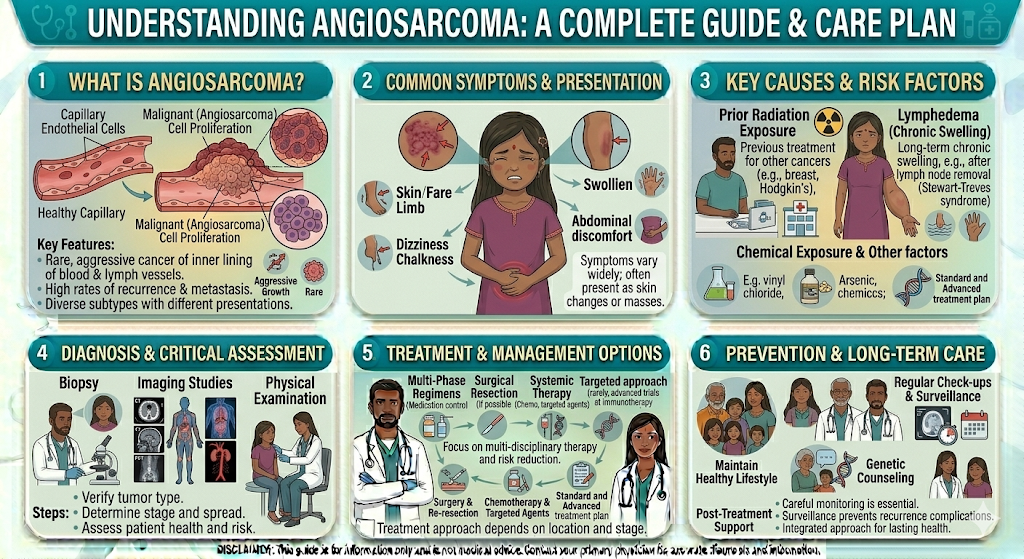
Angiosarcoma is a rare type of cancer that begins in the inner lining of blood vessels or lymph vessels. Lymph vessels are a vital part of the immune system, collecting and disposing of waste products, viruses, and bacteria from the body.
Understanding the Condition
Angiosarcoma: A Guide for Non-Medical Readers
Angiosarcoma is a rare type of cancer that begins in the inner lining of blood vessels or lymph vessels. Lymph vessels are a vital part of the immune system, collecting and disposing of waste products, viruses, and bacteria from the body.
This cancer can occur anywhere, but it is most frequently found in the skin of the head and neck, particularly the scalp. Less commonly, it can affect the skin on other parts of the body, such as the breast, or deep tissues, including the heart and liver. Angiosarcoma can sometimes develop in areas that have been treated with radiation therapy in the past.
When angiosarcoma affects the skin, it may look like a bruise or a lesion that steadily gets bigger. When it affects internal organs like the liver or heart, it often causes pain. Symptoms depend on where the cancer is located.
If you have persistent, worrying symptoms, you should consult with a specialist, such as an oncologist (a doctor specializing in cancer) or a soft tissue sarcoma specialist.
Preparation Before the Visit
To ensure a productive visit, be prepared to discuss:
A clear description of all your symptoms, including when they first began.
Consultation Guide
What Causes Angiosarcoma?
The exact cause of most angiosarcomas is not fully known. The disease begins when cells lining a blood vessel or lymph vessel develop changes—called mutations—in their DNA. The DNA contains all the instructions that tell a cell what to do. These changes instruct the cells to multiply rapidly and to continue living when healthy cells would naturally die. This abnormal growth can form a mass (tumor) that may invade and destroy healthy tissue.
Consultation and Preparation
Since the exact cause of most angiosarcomas is not fully known, prevention focuses on minimizing known risk factors and ensuring long-term health after treatment.
Diagnostic Procedures
Your complete medical history, including any previous cancer diagnoses or radiation treatments.
All prescription and non-prescription medicines or supplements you are taking.
Book a doctor visit near me
Needle Biopsy: This procedure removes a small piece of tissue or cells from the suspicious area using a long, thin needle. The sample is then analyzed in a lab to look for cancer.
Computerized Tomography (CT) Scan: An imaging method that uses X-ray technology to generate highly detailed, cross-sectional views (slices) of internal structures, including bones, blood vessels, and soft tissues.
Positron Emission Tomography (PET) Scan: An imaging test that shows the metabolic activity of the body’s tissues and organs. A safe, radioactive tracer is injected into a vein and tends to concentrate in areas with high biochemical activity, such as cancer cells, which appear as bright spots. This scan is often performed alongside a CT or MRI scan.
Ultrasound (Sonography): A safe procedure that uses low-power sound waves to produce moving images of the body’s internal structures. It is often used to guide diagnosis.
X-ray: A fast, painless test that captures images of structures inside the body, particularly bones, by passing radiation beams through the tissue.
What to Expect
Needle Biopsy: This is performed using a needle to remove tissue. The procedure will be performed by a healthcare provider, who will ensure comfort, potentially using a local anesthetic.
CT and X-ray Scans: You will lie down while the imaging equipment captures the necessary pictures. These are generally quick and pain-free procedures.
PET Scan: A radioactive tracer will be injected into your arm or hand. After a waiting period, you will lie on a table that moves into a doughnut-shaped scanner for approximately 30 minutes while the images are taken.
Ultrasound: For most exams, a device will be moved over your skin. You may be asked to wear loose clothing and remove jewelry.
Psychosocial Support: Seek emotional and social support through counseling or support groups to help navigate the challenges of life after a cancer diagnosis.
Disclaimer: This article provides general health information and is not intended to be a substitute for professional medical advice, diagnosis, or treatment. Always consult your treating physician or another qualified healthcare provider with any questions you may have regarding a medical condition.
To report an error in the article, please send an email to errors@medicalwriter.com.
Treatment Options
Treatment depends on where the cancer is located, and may involve a combination of approaches to cure the cancer, shrink it, or stop it from spreading.
Surgical Procedures: The goal is to completely remove the cancerous tumor and a margin of surrounding healthy tissue.
Duration: A one-time procedure, with a recovery time that varies based on the surgery's extent and location.
Radiation Therapy (Radiotherapy): This uses intense energy beams to destroy the cancer cells’ genetic material.
External Beam Radiation: High-energy beams are aimed from a machine outside the body directly at the cancer.
Brachytherapy: A small, solid radiation source is placed by a provider inside or near the cancer.
Duration: Typically delivered over a period of several weeks in daily sessions.
Medication (Chemotherapy): A drug treatment that uses powerful chemicals to kill fast-growing cancer cells. These drugs can be used alone or in various combinations.
Duration: Treatment cycles vary widely, often spanning several weeks or months, depending on the specific regimen.
Targeted Therapy: These treatments use medicines designed to attack specific features or genetic abnormalities in cancer cells, helping to block their growth and spread.
Duration: Varies, often taken over an extended period.
Immunotherapy: Therapies that use the body's own immune system to recognize and fight the cancer.
Duration: Varies, often taken over an extended period.
After treatment, maintaining overall health is vital:
Regular Follow-up Care: Attend all scheduled follow-up appointments to monitor for potential recurrence or late side effects of treatment.
Prevention & Long-Term Wellbeing
Prevention and Long-term Wellbeing
Prevention
Radiation Exposure: Angiosarcoma can sometimes develop in areas previously treated with radiation therapy. Discuss your medical history and radiation exposure risk with your doctor.
Long-term Wellbeing (Survivorship)
Healthy Lifestyle: Adopt a healthy diet, engage in regular physical activity, and strictly avoid tobacco products to support overall recovery and health.
Tags & Topics
Notice an error or need an update?
Help us keep medical information accurate. Report incorrect info or suggest an edit.


