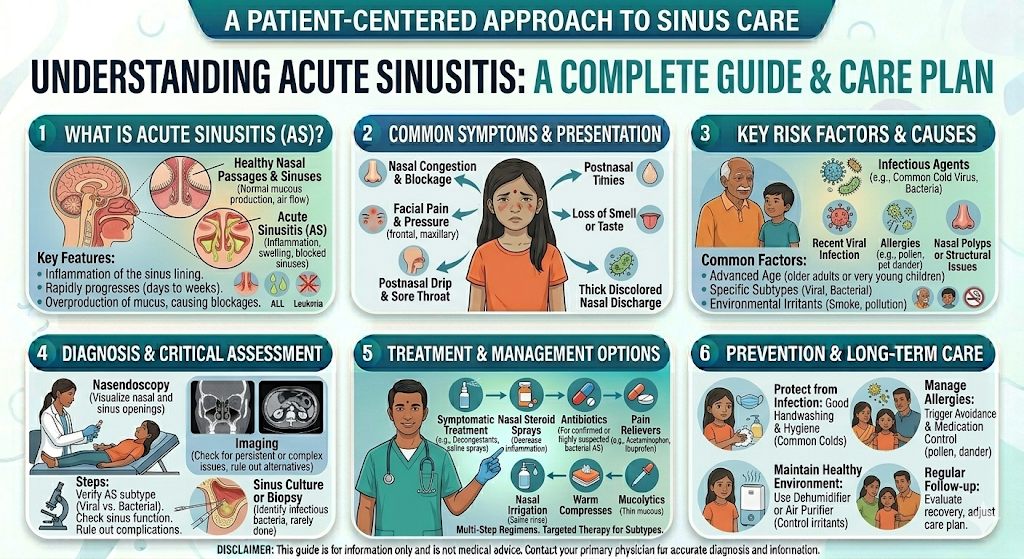
Acute sinusitis is a condition where the cavities around your nasal passages (sinuses) become inflamed and swollen. This swelling interferes with the normal drainage of mucus, causing it to build up and potentially lead to infection. While often triggered by the common cold, it can significantly impact your ability to breathe comfortably through your nose and cause facial pain or pressure. Most cases resolve within a week to ten days, but if symptoms persist beyond 12 weeks despite treatment, the condition is classified as chronic sinusitis.
Understanding the Condition
Acute Sinusitis: A Comprehensive Guide
Acute sinusitis is a condition where the cavities around your nasal passages (sinuses) become inflamed and swollen. This swelling interferes with the normal drainage of mucus, causing it to build up and potentially lead to infection. While often triggered by the common cold, it can significantly impact your ability to breathe comfortably through your nose and cause facial pain or pressure. Most cases resolve within a week to ten days, but if symptoms persist beyond 12 weeks despite treatment, the condition is classified as chronic sinusitis.
Common signs of acute sinusitis include:
Thick, discolored (yellow or green) mucus from the nose or drainage down the back of the throat.
Nasal congestion or blockage, making it difficult to breathe.
Pain, tenderness, and swelling around the eyes, cheeks, nose, or forehead.
Reduced sense of smell and taste.
Ear pressure, headache, aching in the teeth, or bad breath.
If your symptoms are severe, worsening, or persist for more than 10 days, you should consult a professional.
Specialist to Meet: You should see an Otolaryngologist (Ear, Nose, and Throat specialist) or a primary care physician.
Preparation: List your symptoms, how long you have had them, and any medications or supplements you take. Note any history of allergies.
Book a doctor visit near me
Management of acute sinusitis aims to relieve symptoms and reduce inflammation:
Home Remedies: Nasal saline rinses, warm compresses, and staying hydrated help thin mucus. Use a humidifier to add moisture to the air. Duration: Throughout the course of the illness (typically 7–10 days).
Manage Allergies: Work with your health care provider to keep allergy symptoms, such as hay fever, under control.
Avoid Irritants: Avoid exposure to cigarette smoke and polluted air, as these irritants can irritate the nasal passages and lungs.
Use a Humidifier: If the air in your home is dry, use a humidifier to add moisture. Be sure to clean the humidifier regularly and completely to prevent mold buildup.
Consultation Guide
The most frequent cause of acute sinusitis is a viral infection, such as the common cold. Occasionally, a bacterial infection can develop if the sinuses remain blocked for an extended period. Risk factors that increase susceptibility include allergies (like hay fever), structural issues such as a deviated septum or nasal polyps, and exposure to pollutants like cigarette smoke.
To accurately identify the cause of your sinus issues, several diagnostic procedures may be used:
Physical Examination and Medical History
Procedures and Therapies: Nasal corticosteroid sprays help reduce inflammation. Allergy shots (immunotherapy) may be used for long-term management if allergies are the root cause. Duration: Sprays (weeks); Immunotherapy (months to years).
Diagnostic Procedures
The doctor will look for tenderness in your nose and face and peer inside your nose. What to expect: A physician will use a light and a small instrument to inspect your nasal passages for inflammation or polyps.
CT Scan (Computerized Tomography)
This imaging technique uses X-rays and a computer to create detailed cross-sectional images of your sinuses. What to expect: You will lie on a table that slides into a large, donut-shaped machine. The procedure is painless and usually takes about 10 to 15 minutes.
Nasal Endoscopy
A thin, flexible tube with a camera (endoscope) is inserted into your nose to view your sinus passages. What to expect: The doctor may apply a numbing spray to your nasal lining. The endoscope is then gently guided through your nasal passages to provide a detailed view of the interior structures.
Allergy Skin Tests
These tests check for triggers that might be causing your sinusitis. What to expect: Small amounts of suspected allergens are placed on your skin, which is then pricked. The area is observed for reactions like redness or swelling.
Disclaimer: This article provides general health information and is not intended to be a substitute for professional medical advice, diagnosis, or treatment. Always consult your treating physician or another qualified healthcare provider with any questions you may have regarding a medical condition.
To report an error in the article, please send an email to errors@medicalwriter.com..
Treatment Options
Medication: Pain relievers help ease facial discomfort and fever. Nasal decongestant sprays or oral decongestants can reduce swelling, though sprays should only be used for a few days to avoid rebound congestion. If a bacterial infection is suspected, a course of antibiotics may be prescribed. Duration: Decongestant sprays (3 days max); Antibiotics (typically 5–14 days).
Surgical Procedures: Reserved for persistent cases or structural issues, surgery can improve sinus drainage by removing polyps or correcting a deviated septum. Duration: Recovery typically takes several weeks.
Prevention & Long-Term Wellbeing
Prevention and Long-Term Well-being
Taking preventative measures can significantly lower the risk of developing acute sinusitis and contribute to long-term nasal health.
Stay Well and Practice Good Hygiene: Try to stay away from people who have colds or other infections. Wash your hands often with soap and water, especially before meals.
Tags & Topics
Notice an error or need an update?
Help us keep medical information accurate. Report incorrect info or suggest an edit.


