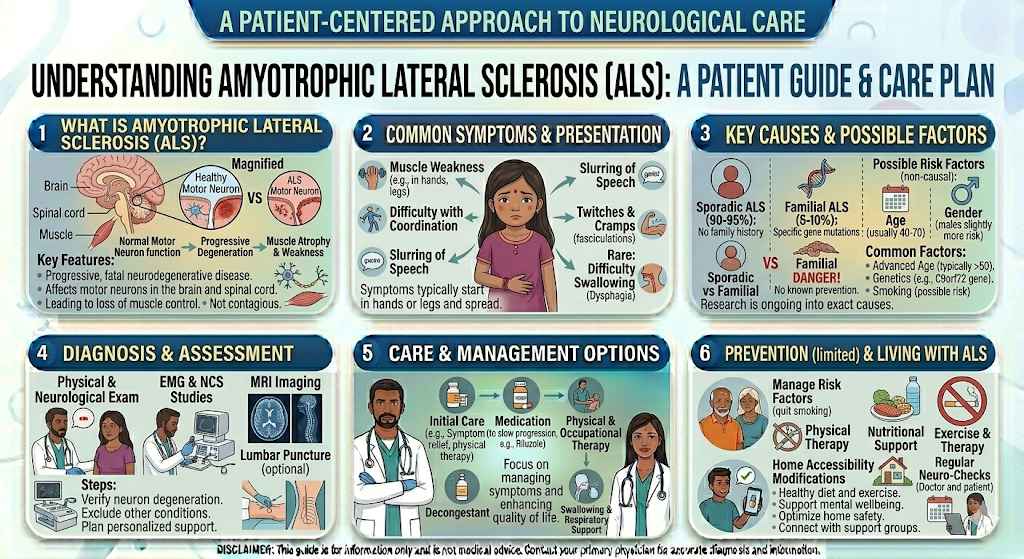
Amyotrophic lateral sclerosis (ALS), also commonly known as Lou Gehrig's disease, is a progressive disease of the nervous system. It attacks nerve cells in the brain and spinal cord, leading to the loss of voluntary muscle control. The disease is ultimately fatal, and there is currently no cure.
Understanding the Condition
Amyotrophic Lateral Sclerosis (ALS) / Lou Gehrig's disease
Amyotrophic lateral sclerosis (ALS), also commonly known as Lou Gehrig's disease, is a progressive disease of the nervous system. It attacks nerve cells in the brain and spinal cord, leading to the loss of voluntary muscle control. The disease is ultimately fatal, and there is currently no cure.
ALS symptoms vary widely depending on which nerve cells are affected, but generally begin with muscle weakness that spreads and worsens over time. Symptoms may include:
Trouble with walking or performing normal daily activities.
Tripping and falling.
Weakness in the legs, feet, or ankles.
Weakness or clumsiness in the hands.
Difficulty with speech (slurred) or swallowing.
Muscle twitching and cramps in the arms, shoulders, and tongue.
Involuntary emotional responses, such as untimely crying, laughing, or yawning.
Changes in thinking or behavior.
As the disease progresses, muscles used for chewing, speaking, swallowing, and breathing become affected.
Preparations Needed Before the Visit: To make the most of your appointment, be prepared to discuss your complete medical history and current symptoms. The neurologist will conduct physical and mental status checks as part of the initial examination.
Book a doctor visit near me
Since there is no cure for ALS, treatment is lifelong and focuses on managing symptoms and providing supportive care to maintain the best possible quality of life.
Consultation Guide
ALS causes the nerve cells, called motor neurons, which control voluntary movements (like walking and talking), to gradually break down and die. When these motor neurons are damaged, they can no longer send signals to the muscles, causing the muscles to stop functioning.
For the majority of cases, the exact cause is unknown. Researchers theorise that ALS results from a complex interplay between a person’s genes and environmental factors.
Established risk factors include:
Genetics: Approximately 10% of cases are inherited (hereditary ALS). Children of individuals with hereditary ALS have a 50% chance of inheriting the gene.
Age: Risk increases up to age 75, with ALS being most common in people between 60 and the mid-80s.
Sex: Before age 65, men are slightly more likely to develop ALS than women; this difference disappears after age 70.
Environmental Factors: Smoking is considered a risk factor, especially for women after menopause. Exposure to certain environmental toxins, such as lead, has also been suggested, though no single chemical has been consistently linked. Military service is also associated with an increased risk, which may be due to exposure to chemicals, metals, injuries, viral infections, or intense physical exertion.
As ALS progresses, common complications include:
Breathing Issues: Weakness in breathing muscles often requires supportive devices. This may begin with needing a mask ventilator at night, similar to a device used for sleep apnea. For advanced cases, a surgical procedure called a tracheostomy (creating a hole in the neck to the windpipe) may be performed for more effective ventilator support. Breathing failure is the most common cause of death.
Communication Difficulties: Speech usually slows and becomes slurred, making clear communication increasingly difficult. Patients often rely on other forms of communication and technology.
Swallowing and Nutrition: Weakened swallowing muscles can lead to malnutrition, dehydration, and a higher risk of pneumonia if food or liquids enter the lungs. A feeding tube can be used to ensure proper hydration and nutrition.
A thorough exam that checks the function of your entire nervous system, including the brain, spinal cord, nerves, and muscles. This helps the healthcare team determine if a nervous system condition is present and what its cause might be.
Since the exact cause of ALS is unknown, there are no definitive preventative measures. However, based on identified risk factors, certain lifestyle modifications may be advised:
Avoid Smoking: Smoking is considered a risk factor, especially for women after menopause. Avoiding all tobacco products supports overall health.
Minimize Toxin Exposure: Reduce contact with environmental toxins, such as heavy metals (like lead) and certain industrial chemicals.
Living with a progressive condition like ALS requires a focus on supportive care and maintaining quality of life for the long term.
Continuous Supportive Care: Long-term care involves ongoing engagement with therapies to maintain muscle function and communication:
Physical, Occupational, and Speech Therapy.
Diagnostic Procedures
Cognitive and Behavioral Changes: Some people develop difficulties with language and decision-making, occasionally leading to a diagnosis of frontotemporal dementia.
Specialist Consultation
If you experience persistent stiffness or weakness in your limbs, or difficulties with swallowing or speaking, you should consult with a specialist.
Which Specialist to Meet: You should consult with a doctor who specializes in treating nervous system conditions, known as a neurologist.
Diagnosis involves a detailed assessment of the nervous system and ruling out other conditions.
Neurological Examination (Neuro Exam)
What to Expect
Electromyography (EMG) and Nerve Conduction Study
These procedures assess the health of your muscles and the motor neurons that control them. They can identify nerve or muscle dysfunction or issues with how signals are transmitted between the two.
What to Expect
Needle EMG: A needle electrode is inserted directly into the muscle to record its electrical activity.
Nerve Conduction Study: Electrode stickers are applied to the skin to measure the speed and strength of nerve signals travelling between different points.
Note: EMG is generally low-risk, but there is a slight chance of nerve injury, bleeding, or infection where the needle is inserted.
A test of your urine is used to detect and manage a variety of conditions, such as kidney disease, urinary tract infections, and diabetes.
What to Expect
Ultrasound (Sonography)
A diagnostic tool that uses low-power sound waves to create images of structures inside the body. It is a safe procedure with no known risks.
What to Expect
Disclaimer: This article provides general health information and is not intended to be a substitute for professional medical advice, diagnosis, or treatment. Always consult your treating physician or another qualified healthcare provider with any questions you may have regarding a medical condition.
To report an error in the article, please send an email to errors@medicalwriter.com.
Treatment Options
Specific medications are available to slow the disease's progression, though they do not offer a cure. These must be prescribed by a physician. (Duration: Long-term/Lifetime)
Therapies:
Physical, Occupational, and Speech Therapy: These help patients maintain muscle strength, mobility, and communication skills for as long as possible. (Duration: Ongoing/Lifetime)
Regular Follow-up: Maintain a schedule of regular follow-up care with your neurologist and healthcare team to continually adjust treatment and supportive care strategies as the disease progresses.
Prevention & Long-Term Wellbeing
Nutritional and Dietary Support: Strategies to manage difficulty chewing and swallowing, often progressing to the use of liquid nutrition delivered through a feeding tube (home enteral nutrition) to ensure proper hydration and calorie intake. (Duration: As needed, can be short-term or ongoing)
Assistive Communication: Use of technology and other communication methods when speech becomes severely impaired. (Duration: Ongoing/Lifetime)
Procedures and Surgical Interventions (Supportive Care):
Non-Invasive Ventilation: Using a device like a mask ventilator to support breathing, often starting at night. (Duration: Ongoing, typically starts when breathing muscles weaken)
Feeding Tube Placement: Surgical placement of a permanent tube for long-term enteral nutrition (tube feeding) to prevent malnutrition, dehydration, and aspiration pneumonia. (Duration: Long-term/Lifetime)
Tracheostomy: A surgical procedure to create an opening into the windpipe for mechanical ventilation when breathing support is critically needed. (Duration: Permanent, used in advanced stages)
Management of daily activities and home environment modifications to accommodate increasing physical limitations and reduce the risk of falling. (Duration: Ongoing/Lifetime)
Prevention and Long-term Wellbeing
Prevention
Nutritional and Dietary Support, including the use of home enteral nutrition (feeding tube) as needed.
Assistive Communication technology.
Home and Safety Management: Implement ongoing management of daily activities and modify the home environment to accommodate increasing physical limitations and reduce the risk of falls.
Psychosocial Support: Seeking emotional and social support through counseling or support groups is critical for navigating the challenges of living with ALS.
Tags & Topics
Notice an error or need an update?
Help us keep medical information accurate. Report incorrect info or suggest an edit.


