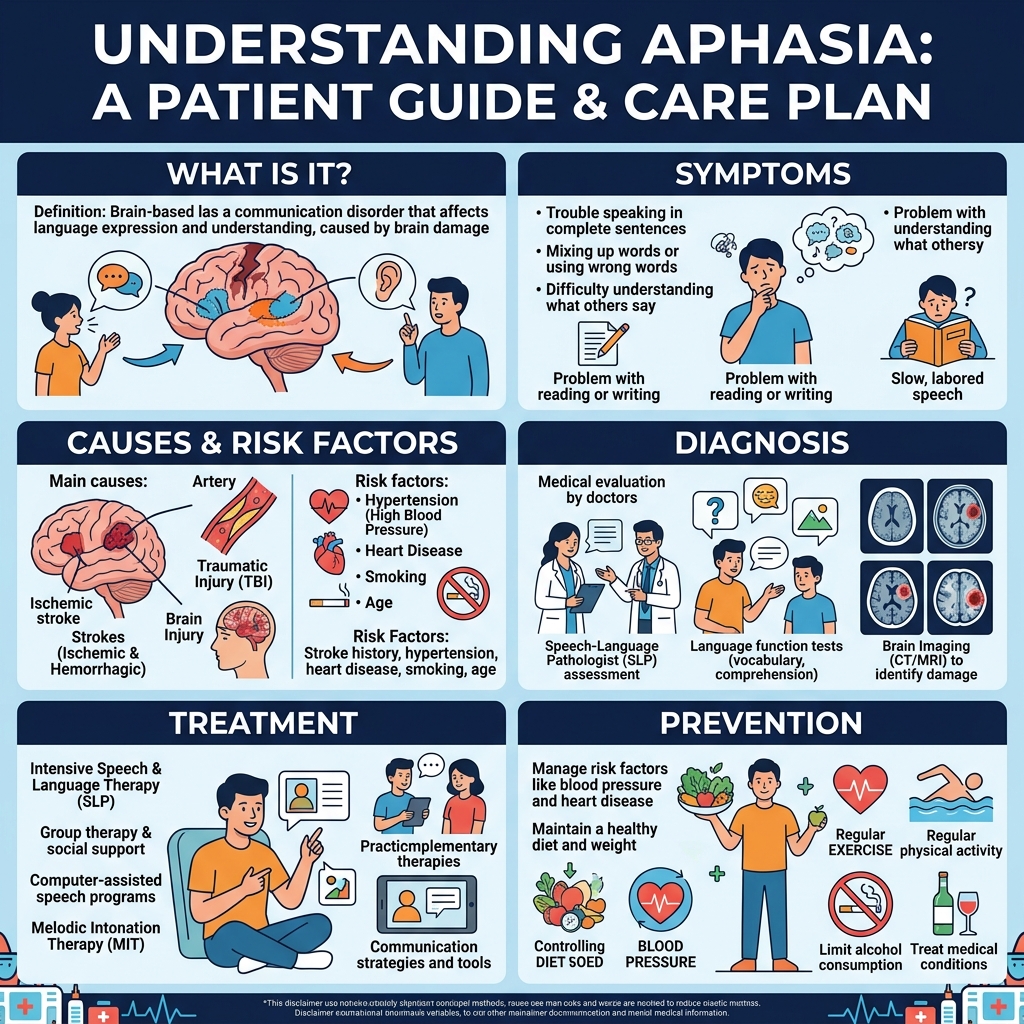
Aphasia is a condition that impacts a person's ability to communicate. It can affect how someone speaks, writes, and understands both spoken and written language. This condition typically appears suddenly after events like a stroke or head injury, but it can also develop gradually due to a slow-growing brain tumor or a progressive brain disease. The severity of aphasia varies greatly, depending on what caused it and how much of the brain was affected. Treatment primarily involves addressing the underlying cause and engaging in speech and language therapy to relearn communication skills.
Understanding the Condition
Aphasia: Understanding Communication Challenges
Understanding the Condition
Common Symptoms
Difficulty Speaking: Trouble finding the right words, speaking in short or incomplete sentences, substituting sounds or words, speaking in jumbled or meaningless sentences, or struggling to pronounce words.
Difficulty Understanding Language: Struggling to comprehend spoken conversations, even simple ones, or misunderstanding what others are saying.
Difficulty Reading: Challenges with understanding written text, whether it's books, articles, or simple signs.
Difficulty Writing: Problems with forming letters, spelling words correctly, or writing coherent sentences.
Before your appointment, make a list of all your symptoms, including when they started and how they have changed. Also, prepare a list of all medications you are taking, any other medical conditions you have, and questions you want to ask your doctor. It can be helpful to bring a family member or friend to help remember details and take notes.
Book a doctor visit near me
The doctor will ask about your medical history and perform tests to assess your mental status (alertness, memory, problem-solving), balance, coordination, reflexes, sensation, vision, and hearing. This exam can take a few minutes to over an hour, depending on your symptoms.
Brain CT Scan (Computerized Tomography)
A brain CT scan uses X-rays and a computer to create detailed cross-sectional images (like 'slices') of your brain, bone, blood vessels, and soft tissues. It provides more detail than standard X-rays and is often the first test used for sudden head injuries or stroke symptoms.
Targeted Treatment: Since aphasia is a symptom of another condition (like a stroke or brain tumor), the first step is often to treat the underlying cause. This could involve interventions to manage stroke effects, remove a brain tumor, or address other neurological issues. (Duration: Duration varies greatly depending on the specific condition being treated, ranging from acute medical management over days or weeks to long-term therapies.)
Speech and Language Therapy: This specialized therapy helps individuals with aphasia relearn and practice language skills, improve their ability to communicate, and develop alternative communication methods. It might involve exercises to improve word retrieval, sentence formation, understanding instructions, or using gestures and communication aids. (Duration: Often long-term, ranging from several months to years, with intensive initial therapy followed by ongoing maintenance or group sessions. Progress depends on the individual's condition and effort.)
Support and Communication Strategies
Managing Underlying Health Conditions: Diligent management of conditions like high blood pressure, diabetes, or heart disease is crucial, especially if they contributed to the original cause of aphasia (e.g., stroke), to prevent recurrence or worsening of symptoms.
Consultation Guide
Aphasia is a condition that impacts a person's ability to communicate. It can affect how someone speaks, writes, and understands both spoken and written language. This condition typically appears suddenly after events like a stroke or head injury, but it can also develop gradually due to a slow-growing brain tumor or a progressive brain disease. The severity of aphasia varies greatly, depending on what caused it and how much of the brain was affected. Treatment primarily involves addressing the underlying cause and engaging in speech and language therapy to relearn communication skills.
Patterns of Aphasia: Aphasia can manifest in various patterns: some people may understand well but struggle to speak; others may speak fluently but with little meaning and have difficulty understanding; and some may experience severe challenges with both understanding and expressing language. These patterns can develop slowly over time, particularly if caused by a progressive brain disease.
Consultation Guide
Which Specialist to Meet
You should consult a neurologist, a doctor specializing in brain and nervous system disorders. A speech-language pathologist, a therapist who helps with communication difficulties, will also be a key part of your care team.
Preparations Before Your Visit
This exam checks how well different parts of your nervous system are working, including your brain, spinal cord, nerves, and muscles. It helps your healthcare team identify nervous system conditions and their causes.
You will lie on a movable table that slides into a large, doughnut-shaped scanner. You need to stay very still during the scan. The process is quick and generally painless, though you might hear some whirring noises. Sometimes, a special dye called 'contrast' is given through a vein in your arm before the scan to highlight certain blood vessels or tissues. This might cause a warm sensation or a metallic taste.
Brain MRI (Magnetic Resonance Imaging)
Treating the Underlying Cause
Diagnostic Procedures
Neurological Examination
What to Expect
What to Expect
A brain MRI uses radio waves and a strong magnet to produce very detailed images of the brain, spinal cord, and neck. Unlike CT scans, it does not use radiation. It's excellent for diagnosing conditions like stroke, tumors, and multiple sclerosis.
What to Expect
You will lie on a padded table that slides into a long, tube-shaped machine. The machine makes loud knocking and banging noises, so earplugs or headphones will be provided. You must remain very still during the scan, which can last 30 to 60 minutes or longer. Some people might feel a bit enclosed within the machine. Similar to a CT scan, a contrast dye may be injected into a vein to enhance the visibility of certain structures.
Prevention & Long-Term Wellbeing
Family Involvement and Education: Family members often play a crucial role by learning strategies to help the person with aphasia communicate more effectively. This includes speaking slowly, using simple sentences, reducing distractions, and encouraging the use of gestures or pictures. (Duration: Ongoing support and adaptation throughout the recovery journey.)
Support Groups: Joining a support group allows individuals with aphasia and their caregivers to connect with others facing similar challenges, share experiences, and learn new coping strategies. (Duration: Ongoing as needed for emotional and practical support.)
Ongoing Management and Support
Consistent Communication Practice: Regularly engaging in language exercises and communication practice, both within therapy and at home, is vital for maintaining and improving skills over time.
Utilizing Communication Aids: Using visual aids, communication boards, or assistive technology can help bridge communication gaps and reduce frustration for individuals with aphasia.
Supportive Environment: Creating a calm, patient, and understanding environment at home and in social settings can significantly improve the quality of life for someone with aphasia.
Emotional and Psychological Support: Aphasia can be emotionally challenging. Seeking counseling or joining support groups can help individuals and their families cope with the frustrations and changes in lifestyle.
Preventing Further Issues
Healthy Lifestyle: Adopting a healthy lifestyle, including a balanced diet, regular physical activity, and avoiding smoking and excessive alcohol, can support overall brain health and reduce risks of further neurological events.
Tags & Topics
Notice an error or need an update?
Help us keep medical information accurate. Report incorrect info or suggest an edit.


