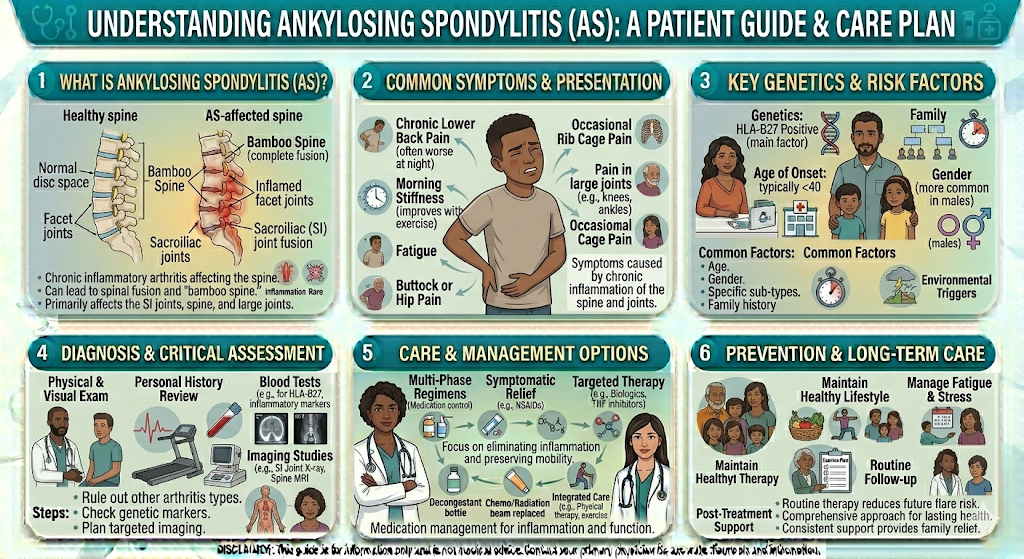
Ankylosing spondylitis (AS), often called axial spondyloarthritis, is a chronic inflammatory disease primarily affecting the spine. Over time, this inflammation can cause the small bones in the spine, called vertebrae, to fuse together. This fusion leads to reduced flexibility and can result in a stooped or hunched posture. If the joints connecting the ribs to the spine or breastbone are affected, it may also become harder to take a deep breath.
Understanding the Condition
Ankylosing Spondylitis (Axial Spondyloarthritis)
Nonradiographic Axial Spondyloarthritis: When the condition cannot be seen on X-ray but is diagnosed based on symptoms and other advanced imaging, like magnetic resonance imaging (MRI) or blood tests.
While there is currently no cure, treatment can effectively manage pain, reduce symptoms, and potentially slow the disease’s progression.
Symptoms typically begin in early adulthood. The most common initial signs include pain and stiffness, particularly in the lower back and hips. These symptoms are often worse in the morning or after long periods of sitting or rest, but they tend to improve with exercise or movement.
Other areas of the body can also experience inflammation, leading to:
Neck pain and general fatigue.
A detailed list of all symptoms you have experienced, including when they started.
Any recent test results or medical records related to your symptoms.
Book a doctor visit near me
Coping and Support: Joining a support group can be very beneficial, especially during times when symptoms are more painful or limiting.
Practice standing and sitting straight to make good posture a habit, which can help reduce symptoms.
Consuming enough calcium and vitamin D is essential to keep bones strong, as the condition can increase the risk of developing weakened bones (osteoporosis).
Consultation Guide
Ankylosing spondylitis (AS), often called axial spondyloarthritis, is a chronic inflammatory disease primarily affecting the spine. Over time, this inflammation can cause the small bones in the spine, called vertebrae, to fuse together. This fusion leads to reduced flexibility and can result in a stooped or hunched posture. If the joints connecting the ribs to the spine or breastbone are affected, it may also become harder to take a deep breath.
The condition has two main classifications:
Ankylosing Spondylitis (Radiographic Axial Spondyloarthritis): When the spinal changes caused by the inflammation are visible on a standard X-ray.
Inflammation of the eyes (uveitis), which can cause pain, redness, sensitivity to light, or blurry vision.
Skin rashes and stomach pain.
As the disease advances, the formation of new bone can cause sections of the spine to fuse, resulting in permanent stiffness and a hunched posture.
Which Specialist to Meet
If you have persistent back or buttock pain that comes on slowly, particularly if it improves with exercise and worsens with rest, you should consult a doctor who specializes in diseases of the joints and muscles, known as a Rheumatologist. If you experience a red, painful eye, light sensitivity, or blurry vision, you should seek care from an Eye Specialist right away, as this may signal inflammation associated with the condition.
Preparations Needed Before the Visit
To ensure a complete evaluation, it is helpful to prepare the following before your appointment:
Diagnostic Procedures
Diagnostics: Detailed Description of Procedures
Doctors use a combination of imaging, laboratory tests, and physical examinations to confirm a diagnosis, assess the severity, and monitor the disease.
Description: An X-ray is a quick, painless test that uses radiation to capture images of structures inside the body, particularly the bones. Dense materials, such as bone, appear white on the image. In advanced cases, an X-ray can show the characteristic fusion of the vertebrae.
What to Expect
Magnetic Resonance Imaging (MRI)
Description: MRI uses powerful magnets and radio waves to create highly detailed pictures of soft tissues and bone. It is particularly useful in detecting early signs of inflammation in the joints and spine that may not yet be visible on an X-ray.
What to Expect
Computed Tomography (CT) Scan
Description: A CT scan uses X-ray technology and computer processing to create detailed, cross-sectional images ("slices") of bones, blood vessels, and soft tissues. CT scans provide more detailed images than standard X-rays.
What to Expect
Description: Blood tests are used to check for signs of inflammation in the body and to determine if a patient carries a specific gene (HLA-B27), which is often present in people with axial spondyloarthritis. However, having the gene does not guarantee a diagnosis, and not having it does not rule out the disease.
What to Expect
Disclaimer: This article provides general health information and is not intended to be a substitute for professional medical advice, diagnosis, or treatment. Always consult your treating physician or another qualified healthcare provider with any questions you may have regarding a medical condition.
To report an error in the article, please send an email to errors@medicalwriter.com.
Treatment Options
A list of all prescription and non-prescription medications, vitamins, and supplements you are currently taking.
Treatment goals are to reduce pain and stiffness, prevent or slow complications, and maintain a good quality of life. Treatment is most successful when started early.
Medication (Duration: Long-term)
Nonsteroidal Anti-Inflammatory Drugs (NSAIDs): These are commonly the first line of treatment and work by reducing inflammation and pain.
Biologic Medications: If NSAIDs are not effective, a physician may recommend these prescription-only medications. Examples include drugs that target tumor necrosis factor (TNF blockers) or interleukin-17 (IL-17 inhibitors) to significantly reduce inflammation. These treatments can increase the risk of infections.
Procedures and Therapies (Duration: Varies)
Physical Therapy: This is a key part of treatment, focusing on exercises to maintain joint flexibility, strength, and correct posture. (Duration: Ongoing, often several sessions per week).
Steroid Injections: Injections of a potent anti-inflammatory medicine can be used directly into specific joints or tendons to quickly reduce pain and swelling (Duration: Short-term relief, repeated as needed).
Surgery is typically reserved for cases with severe joint damage.
The most common surgery is Joint Replacement, particularly for a severely damaged hip joint.
Prevention & Long-Term Wellbeing
Surgical Procedures (Duration: Recovery of several weeks to months)
Prevention and Long-term Well-being
Long-term well-being and management of Ankylosing Spondylitis rely on consistent lifestyle choices and preventative measures:
Regular movement helps lessen pain, improves posture, and reduces fatigue. This should include stretching, range-of-motion exercises, aerobic activities, and strength training.
Eat a balanced diet rich in vegetables, fruits, whole grains, and lean proteins, and limit fat and processed foods. Avoid smoking, as it can worsen breathing difficulties.
Tags & Topics
Notice an error or need an update?
Help us keep medical information accurate. Report incorrect info or suggest an edit.


