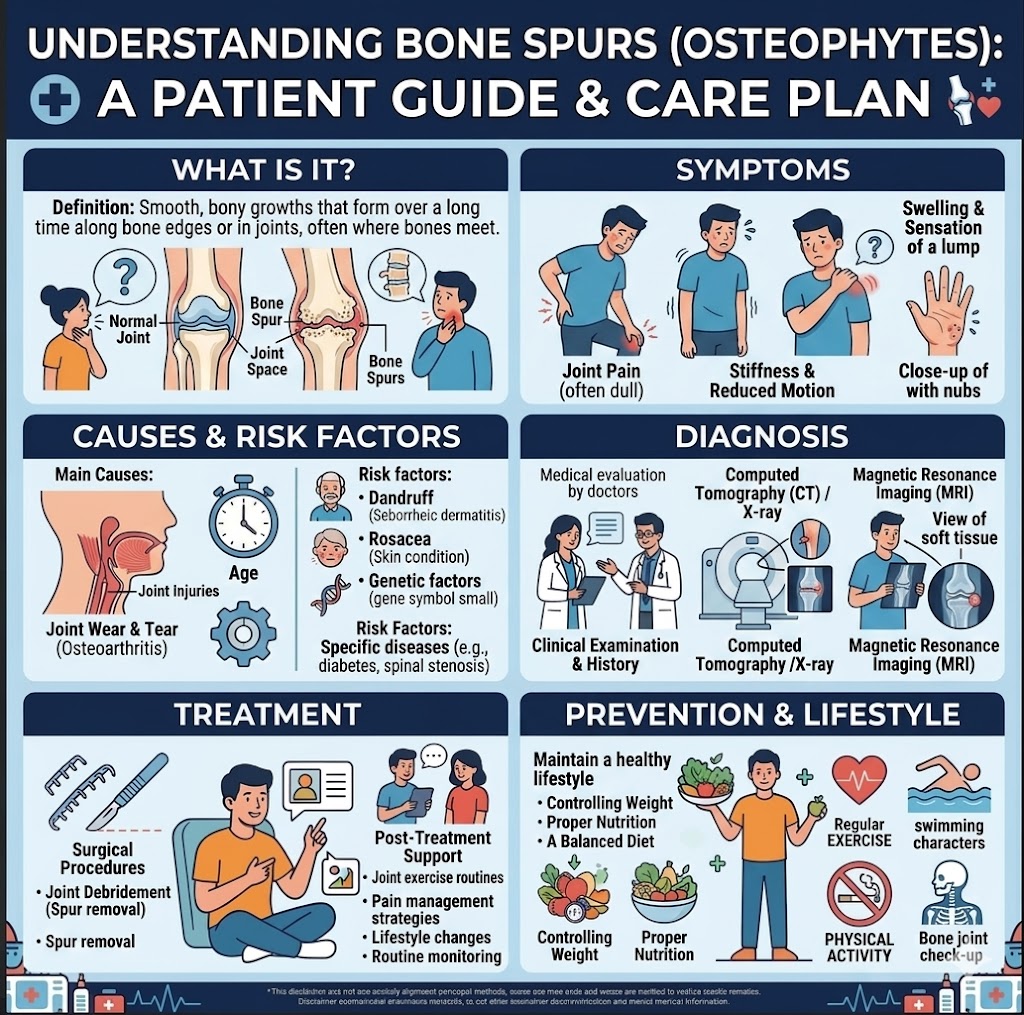
Bone spurs, also known as osteophytes, are extra growths of bone that typically form along the edges of bones, most commonly in joints where bones meet or on the bones of the spine. They are mainly caused by joint damage linked to osteoarthritis, the most common type of arthritis. Often, bone spurs cause no noticeable symptoms and may be discovered by chance during an X-ray for another condition. If they do cause issues, treatment depends on their location and how they affect your health.
Understanding the Condition
Bone Spurs: Understanding and Managing Bony Growths
Understanding the Condition
Bone spurs, also known as osteophytes, are extra growths of bone that typically form along the edges of bones, most commonly in joints where bones meet or on the bones of the spine. They are mainly caused by joint damage linked to osteoarthritis, the most common type of arthritis. Often, bone spurs cause no noticeable symptoms and may be discovered by chance during an X-ray for another condition. If they do cause issues, treatment depends on their location and how they affect your health.
Common Symptoms
General Symptoms: Many people with bone spurs experience no symptoms and might only discover them during imaging tests for other reasons. However, depending on their location, bone spurs can lead to pain and reduced movement in your joints.
Knee: Bone spurs in the knee can make it painful to straighten or bend your leg.
Before your visit, prepare by: Making a detailed list of all your symptoms, including when they started and what makes them better or worse. Bringing a list of any medications, supplements, or vitamins you currently take. Noting any other medical conditions you have. Writing down any questions you have for the doctor.
Book a doctor visit near me
Rest and Activity Modification: Reduce activities that aggravate symptoms. (Duration: As needed, ongoing)
Ice and Heat Therapy: Apply ice to reduce inflammation or heat to relax muscles. (Duration: 15-20 minutes, several times a day, as needed)
Listen to Your Body: Avoid activities that aggravate symptoms.
Consultation Guide
Spine: When bone spurs form on the small bones of the spine, they can narrow the space around the spinal cord or nerve roots. This compression can cause weakness, numbness, or tingling sensations in the arms or legs.
Hip: Bone spurs around the hip joint can cause pain during movement, which sometimes feels like it's coming from the knee or thigh. They can also limit how far you can move your hip.
When to Seek Medical Attention: Seek medical attention if you experience: Pain or swelling in one or more joints, difficulty moving a joint, or weakness, numbness, or loss of sensation in your arms or legs.
Consultation Guide
Which Specialist to Meet
Diagnostic Procedures
For concerns about bone spurs, you should first consult a primary care physician. They can help with initial diagnosis and may refer you to a specialist such as an orthopedic surgeon (bone and joint specialist), a rheumatologist (arthritis specialist), or a physical therapist. If nerve compression is suspected, a neurologist might also be involved.
Preparations Before Your Visit
A quick, painless imaging test using a small amount of radiation to create pictures of your bones. Dense materials like bone appear white. It's often the first step in diagnosis.
What to Expect
You'll remove metal objects and be positioned by a technologist. You need to stay still for a few seconds while images are captured. The process is quick and generally painless.
CT Scan (Computed Tomography Scan)
Provides more detailed images than a standard X-ray. It uses multiple X-ray beams and a computer to create cross-sectional "slices" of bones, blood vessels, and soft tissues. This helps doctors see the exact size, location, and impact of bone spurs, especially on nerves or the spinal cord.
What to Expect
You'll lie on a motorized table that slides into a large, donut-shaped machine. Remain still, and you may be asked to hold your breath. The scan takes 10-30 minutes. Sometimes, a contrast dye (given orally or intravenously) is used to highlight areas, potentially causing a temporary warm sensation or metallic taste.
Treatment Options
Medications
Over-the-Counter Pain Relievers: Such as acetaminophen or nonsteroidal anti-inflammatory drugs (NSAIDs) for pain and inflammation. (Duration: Short-term for flare-ups, or as directed)
Corticosteroid Injections: Injections directly into the affected area to reduce inflammation and pain. (Duration: Temporary relief (weeks to months), typically limited to a few injections per year)
Therapies
Physical Therapy: Exercises to improve flexibility, strength, range of motion, and posture. (Duration: Several weeks to months, with ongoing home exercise programs)
Surgical Procedures
Bone Spur Removal (Osteophyte Excision): Surgery to remove spurs causing significant pain, nerve compression, or severe movement limitation. (Duration: One-time procedure, followed by recovery and rehabilitation (typically weeks to several months))
Joint Replacement Surgery: In cases where severe osteoarthritis and bone spurs have extensively damaged a joint (e.g., knee or hip), a joint replacement may be considered. (Duration: One-time procedure, followed by extensive recovery and rehabilitation (typically several months to a year))
Pain Management: Utilize techniques like medications, heat/cold, and relaxation.
Ergonomic Adjustments: Modify your environment to reduce strain.
Prevention & Long-Term Wellbeing
Home Remedies and Lifestyle Adjustments
Weight Management: Lose excess weight to reduce stress on weight-bearing joints. (Duration: Long-term lifestyle change)
Supportive Footwear: Use shoes with good support or custom inserts. (Duration: Ongoing)
Prevention
Maintain a Healthy Weight: Reduces stress on joints.
Regular Low-Impact Exercise: Keeps joints flexible and strengthens muscles (e.g., swimming, cycling).
Practice Good Posture: Protects the spine and joints.
Protect Joints: Use appropriate gear and warm up before activity.
Wear Supportive Footwear: Choose comfortable, stable shoes.
Long-Term Wellbeing
Regular Medical Check-ups: Monitor your condition and adjust your plan.
Adherence to Therapy: Consistently follow physical therapy exercises.
Tags & Topics
Notice an error or need an update?
Help us keep medical information accurate. Report incorrect info or suggest an edit.


