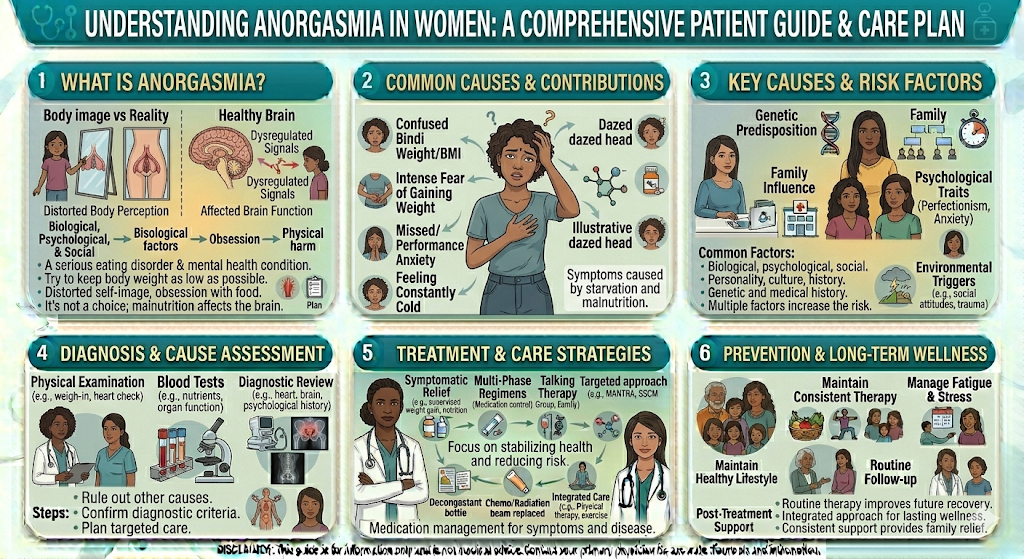
Anorgasmia refers to a condition where a person experiences delayed, infrequent, or absent orgasms, or significantly less intense orgasms, despite adequate sexual stimulation and arousal. For many women, the frequency and intensity of orgasms naturally vary, and the type of stimulation required can change over time. However, when these difficulties cause significant personal distress, a diagnosis of anorgasmia may be made.
Understanding the Condition
Anorgasmia in Women: A Comprehensive Guide
Preparations Before the Visit: Prepare a detailed list of your symptoms and how long they have occurred. Note any major life stressors, changes in your relationships, and a full list of all medications and supplements you are currently taking.
Book a doctor visit near me
Consultation Guide
Anorgasmia refers to a condition where a person experiences delayed, infrequent, or absent orgasms, or significantly less intense orgasms, despite adequate sexual stimulation and arousal. For many women, the frequency and intensity of orgasms naturally vary, and the type of stimulation required can change over time. However, when these difficulties cause significant personal distress, a diagnosis of anorgasmia may be made.
Anorgasmia, also known as female orgasmic disorder, involves experiencing one or more of the following in a way that causes distress:
Taking an unusually long time to reach orgasm (delayed orgasm).
The complete absence of orgasm.
Having fewer orgasms than in the past.
Experiencing orgasms that feel much less intense than before.
The ability to reach orgasm is a complex process influenced by physical, emotional, and psychological factors. Common contributors include:
Which Specialist to Meet: You should consult a primary care physician, a gynecologist, or a specialist in sexual medicine. Depending on the underlying cause, they may refer you to a mental health professional, such as a sex therapist or psychologist.
To understand the root cause of anorgasmia, healthcare providers use a variety of assessment tools:
Physical Examination: The doctor will perform a physical exam to check for any anatomical issues or signs of medical conditions that might be affecting sexual function.
Medication: If anorgasmia is caused by other medical conditions or as a side effect of certain drugs, adjusting existing prescriptions or using hormone-related treatments may be recommended. Duration: Varies based on the underlying cause.
Procedures: The use of sexual enhancement devices, such as vibrators, may be recommended to provide the necessary stimulation to reach orgasm. Duration: As needed during sexual activity.
Prioritize Mental and Emotional Health: Since psychological factors like anxiety and depression are common causes of anorgasmia, maintaining good mental health is crucial. This can involve practicing mindfulness, stress reduction techniques, and seeking therapy when needed.
Maintain Open Communication: Consistent, honest communication with a partner about desires, boundaries, and what feels good enhances sexual satisfaction and prevents interpersonal conflicts.
Regular Self-Exploration: Understanding one's own body and unique needs for sexual stimulation through self-exploration is a key home remedy. This knowledge can evolve over time and is foundational for long-term well-being.
Address Medical Conditions: Regular check-ups and proactive management of chronic conditions (like diabetes or neurological issues) and a careful review of medications can help mitigate physical risk factors.
Diagnostic Procedures
What to Expect
Medical and Sexual History Review: A thorough discussion regarding your sexual history, attitudes toward sex, and any past traumas or relationship issues.
What to Expect
Disclaimer: This article provides general health information and is not intended to be a substitute for professional medical advice, diagnosis, or treatment. Always consult your treating physician or another qualified healthcare provider with any questions you may have regarding a medical condition.
To report an error in the article, please send an email to errors@medicalwriter.com.
Treatment Options
Physical Factors: Medical conditions (such as diabetes or neurological issues), pelvic surgeries, or certain medications.
Psychological Factors: Mental health conditions like anxiety or depression, poor body image, or past experiences of trauma or abuse.
Interpersonal Factors: Lack of communication with a partner, relationship conflict, or a partner's sexual health issues.
If you are concerned about your sexual health, seeking professional guidance is an important step toward improvement.
Treatment is highly individualized and focuses on addressing the specific factors contributing to the condition:
Surgical Procedures: Surgery is generally not a treatment for anorgasmia unless a specific, correctable anatomical issue or complication from a previous surgery is identified. Duration: Not typically applicable.
Prevention & Long-Term Wellbeing
Home Remedies and Lifestyle Adjustments: Learning about your own anatomy and the types of stimulation that feel best through self-exploration. Improving communication with your partner about your needs and desires. Duration: Ongoing.
Therapies: Cognitive behavioral therapy (CBT) or sex therapy can help address psychological barriers, improve body image, and resolve relationship conflicts. Duration: Several months or as needed.
Prevention and Long-Term Well-being
Focusing on overall sexual health and well-being can help prevent sexual dysfunction and support long-term satisfaction. Key strategies include:
Healthy Lifestyle: A balanced diet, regular exercise, and adequate sleep support overall physical and hormonal balance, which contributes to healthy sexual function.
Tags & Topics
Notice an error or need an update?
Help us keep medical information accurate. Report incorrect info or suggest an edit.


