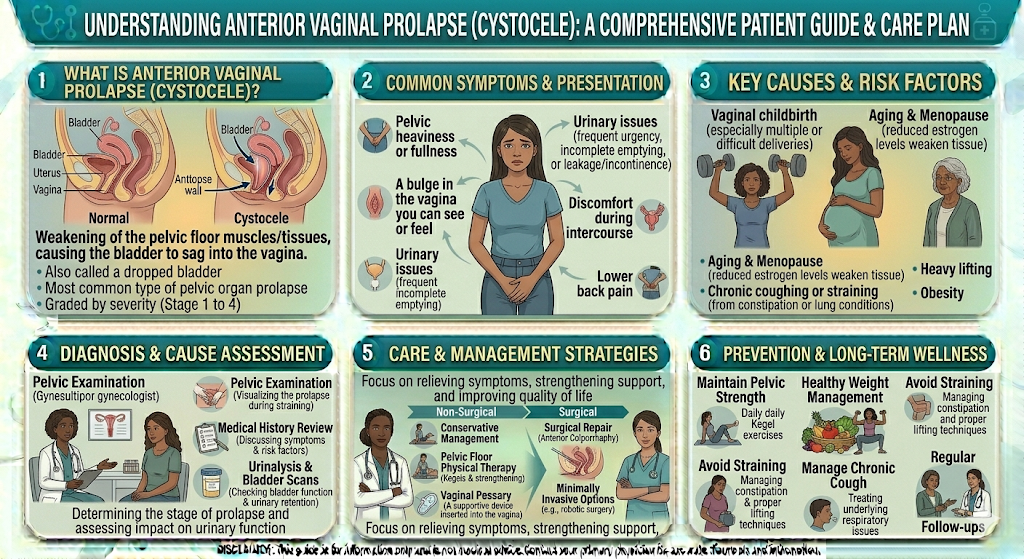
Anterior vaginal prolapse, often called a cystocele (SIS-toe-seel) or a prolapsed bladder, occurs when the bladder shifts out of its normal position in the pelvis and presses against the front wall of the vagina.
Understanding the Condition
Anterior Vaginal Prolapse (Cystocele)
Anterior vaginal prolapse, often called a cystocele (SIS-toe-seel) or a prolapsed bladder, occurs when the bladder shifts out of its normal position in the pelvis and presses against the front wall of the vagina.
If the prolapse is minor, you might not notice or feel any symptoms. When symptoms are present, they may include:
A feeling of pressure or fullness in the vagina and pelvis.
A soft bulge of tissue that you can see or feel inside the vagina.
Increased pelvic pressure when you cough, strain, or lift heavy objects.
Urinary issues, such as struggling to start urinating, feeling like the bladder is not empty after urinating, needing to urinate often, or leaking urine (urinary incontinence).
Symptoms often worsen after long periods of standing and may go away when you lie down. While a prolapsed bladder is rarely painful, it can make it difficult to completely empty the bladder, which may lead to infections.
If you have symptoms that are concerning or disrupt your daily life, you should make an appointment with your primary care provider or a gynecologist. They may refer you to a specialist in female pelvic medicine and reconstructive surgery (Urogynecologist) or a urologist if your primary concerns involve problems with urination.
Preparations Needed Before the Visit
To ensure a complete evaluation, it is helpful to prepare the following before your appointment:
A detailed list of all symptoms you have experienced, including when they started.
Consultation Guide
The organs in the pelvis, including the bladder, uterus, and rectum, are normally held in place by a supportive network of muscles and connective tissues called the pelvic floor. A prolapse happens when the pelvic floor weakens or is subjected to too much strain. Common causes of this stress include aging, vaginal childbirth, long-term constipation, chronic coughing, or heavy lifting.
The cause of anterior vaginal prolapse is the weakening of the pelvic floor muscles, ligaments, and connective tissues that normally hold the pelvic organs in place. When these supports fail, the bladder can slide down and create a bulge in the vagina.
Factors that increase strain on the pelvic floor and raise the risk include:
Pregnancy and Childbirth: Having a vaginal delivery, especially multiple deliveries, deliveries involving instruments, or delivering infants with high birth weights.
Aging: The risk increases as you get older, especially after menopause due to reduced levels of the hormone estrogen.
Obesity: Carrying extra body weight places additional stress on the pelvic floor.
Chronic Straining: Repeated activities that cause excessive pressure, such as straining during bowel movements, a long-term cough (e.g., from chronic bronchitis), or repeated heavy lifting.
Genetic Factors: Some people are born with naturally weaker connective tissues, making them more likely to develop a prolapse.
Diagnostic Procedures
Diagnostics: Detailed Description of Procedures
Doctors use physical exams and tests to confirm the diagnosis, assess the severity of the prolapse, and check for associated complications like infection.
Description: This examination checks the health of the reproductive organs, including the vagina, cervix, uterus, and ovaries. It is performed to find any unusual changes. To check for prolapse, the doctor may ask you to cough or bear down as if having a bowel movement, which helps them see how far the bladder has shifted.
What to Expect
Description: This test examines a sample of your urine to detect or manage a wide range of disorders, such as a urinary tract infection (UTI) or kidney disease. For a prolapse, this test is important to check for a UTI, which can occur if the bladder is not fully emptying.
What to Expect
Disclaimer: This article provides general health information and is not intended to be a substitute for professional medical advice, diagnosis, or treatment. Always consult your treating physician or another qualified healthcare provider with any questions you may have regarding a medical condition.
To report an error in the article, please send an email to errors@medicalwriter.com.
Treatment Options
Prior Surgery: Having the uterus removed (hysterectomy) may, in some cases, add to pelvic floor weakness.
Which Specialist to Meet
A list of all prescription and non-prescription medications, vitamins, and supplements you are currently taking.
Book a doctor visit near me
Medication (Duration: Varies, typically short-term or long-term/as prescribed)
Topical Hormone Therapy: May be prescribed to help improve the strength and elasticity of vaginal and pelvic tissues, particularly in people after menopause.
Antibiotics: Used to treat urinary tract or bladder infections that may develop as a complication of the prolapse.
Procedure/Device (Duration: Long-term, device worn daily or cleaned periodically)
Vaginal Support Device (Pessary): Insertion of a removable plastic or silicone device into the vagina to help hold the bladder in its proper position.
Corrective Surgery: A procedure to repair the weakened tissues, return the bladder to its original position, and reinforce the front wall of the vagina. This option is typically reserved for moderate to severe cases.
Preventing a prolapse or preventing a mild one from getting worse involves making long-term lifestyle changes that protect your pelvic floor. These practices are also essential for long-term wellbeing after any treatment.
Strengthen Your Pelvic Floor Muscles (Kegel Exercises): Regularly perform exercises that target the pelvic floor muscles. These exercises are the most effective way to strengthen the support system for your bladder and other pelvic organs.
Manage Your Weight: Maintaining a healthy body weight reduces the constant pressure placed on your pelvic floor tissues. Discuss your ideal weight goal with your doctor.
Control Chronic Coughing: A long-term cough (from conditions like chronic bronchitis) repeatedly pushes down on your pelvic organs. Seek treatment for any chronic cough. Additionally, avoid smoking, as it contributes to chronic coughing.
Regular Check-ups: Continue to see your gynecologist or urogynecologist for regular follow-up appointments to monitor your pelvic floor health, especially if you have been treated with a support device (Pessary) or surgery.
Prevention & Long-Term Wellbeing
Surgical Procedures (Duration: Recovery of several weeks to months)
Prevention and Long-term Wellbeing
Avoid Straining During Bowel Movements: Chronic constipation and straining put significant stress on the pelvic floor. To prevent constipation, ensure you drink enough fluids and eat a diet rich in high-fiber foods, such as whole grains, fruits, vegetables, and beans.
Lift Safely: Avoid heavy lifting whenever possible. If you must lift a heavy object, use the proper technique by bending your knees and using your leg muscles instead of straining your back or waist.
Tags & Topics
Notice an error or need an update?
Help us keep medical information accurate. Report incorrect info or suggest an edit.


