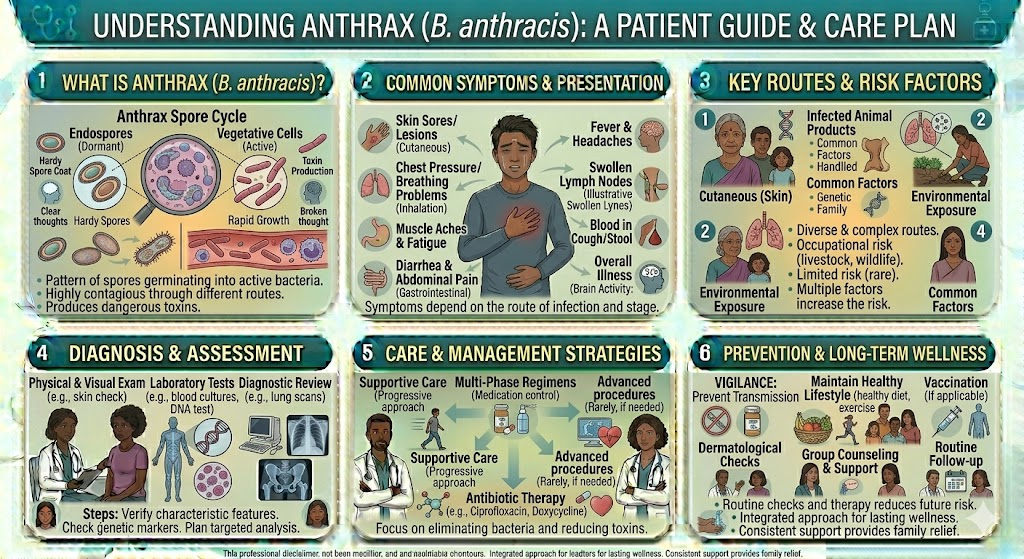
Anthrax is a rare but very serious sickness caused by a bacterium called Bacillus anthracis that forms spores. Once inside the body, these spores release toxins (poisons) that can destroy tissue. The illness primarily affects farm animals and wild game. People get infected through contact with sick animals, when spores enter the body through a cut, by breathing them in, or by eating undercooked meat from an infected animal.
Understanding the Condition
It is important to know that anthrax does not spread from person to person like a cold. Symptoms vary depending on how a person is infected but can include skin sores, vomiting, and shock. While quick antibiotic treatment can cure most anthrax infections, the inhaled form is the deadliest and can be fatal. Anthrax is a concern because the germs have been used in terrorist attacks, known as bioterrorism.
There are four common ways to be infected with anthrax, each with its own symptoms. Most often, symptoms start within seven days of contact with the bacteria, but sometimes they can take weeks to appear.
Forms of Infection and Symptoms
If you suspect exposure to anthrax or experience concerning symptoms, seek professional medical attention immediately.
A detailed list of all symptoms and when they began.
Consultation Guide
Anthrax is a rare but very serious sickness caused by a bacterium called Bacillus anthracis that forms spores. Once inside the body, these spores release toxins (poisons) that can destroy tissue. The illness primarily affects farm animals and wild game. People get infected through contact with sick animals, when spores enter the body through a cut, by breathing them in, or by eating undercooked meat from an infected animal.
Inhalation Anthrax: This is the deadliest form, caused by breathing in anthrax spores. It is often fatal, even with medical treatment.
Diagnostic Procedures
Gastrointestinal Anthrax: This results from eating undercooked meat from an infected animal. It can affect the throat, esophagus, stomach, and intestines.
Diagnostics: Detailed Description of Procedures
Diagnosis involves confirming the presence of the bacteria and assessing the severity and spread of the infection in the body.
Description: A procedure to remove cells or a small sample of skin tissue so they can be tested in a lab to diagnose or rule out skin conditions, often used for skin-related anthrax. Procedures include shave, punch, and excisional biopsy.
What to Expect
Description: Used to visually examine the upper digestive system (esophagus, stomach, and beginning of the small intestine) if gastrointestinal anthrax is suspected. A doctor uses a long, flexible tube with a tiny camera (endoscope).
What to Expect
Description: A fast, painless imaging test that uses radiation to capture pictures of your heart, lungs, blood vessels, airways, and the bones of your chest and spine. It is essential for checking for fluid in or around the lungs, which may indicate inhalation anthrax.
What to Expect
CT Scan (Computerized Tomography)
Description: An imaging test that uses X-ray technology and computer processing to create detailed cross-sectional images ("slices") of bones, blood vessels, and soft tissues. It provides more detail than a standard X-ray.
What to Expect
Lumbar Puncture (Spinal Tap)
Description: This test removes a small sample of cerebrospinal fluid (CSF)—the fluid surrounding the brain and spinal cord—for analysis. It is used to check if the infection has spread to the central nervous system.
What to Expect
Disclaimer: This article provides general health information and is not intended to be a substitute for professional medical advice, diagnosis, or treatment. Always consult your treating physician or another qualified healthcare provider with any questions you may have regarding a medical condition.
To report an error in the article, please send an email to errors@medicalwriter.com.
Treatment Options
Cutaneous (Skin) Anthrax: This is the mildest and most common form, entering the body through a cut or scrape on the skin. It starts as a raised, sometimes itchy bump that looks like an insect bite. Within a day or two, this bump turns into an open, usually painless sore with a distinctive black center. With treatment, this form is rarely fatal.
Specialist to Meet: You should first consult your primary care physician or go to an emergency room immediately. You will likely be referred to an Infectious Disease Specialist for continued treatment.
Preparations Needed Before the Visit:
A list of all prescription and non-prescription medications, vitamins, and supplements you are currently taking.
Any known personal or family history of related medical conditions.
Book a doctor visit near me
Treatment Overview (Bulleted List)
Home remedies are not applicable; this condition requires immediate medical intervention. (Duration: Not applicable)
Quick treatment with prescribed oral or intravenous medications is essential and can cure most types of anthrax infection. (Duration: Not specified, but treatment is initiated quickly)
Procedures/Therapies:
For severe forms, particularly inhalation anthrax, treatment involves intensive supportive care in a hospital setting to stabilize vital functions. (Duration: Throughout hospitalization)
Surgical Procedures:
Surgical procedures are typically not part of the primary treatment for anthrax infection. (Duration: Not applicable)
If you have been exposed to anthrax spores, doctors will often prescribe a course of preventive medication. (Duration: Not specified)
Due to the risk of bioterrorism, staying informed about public health advisories is essential for long-term safety.
Prevention & Long-Term Wellbeing
Prevention and Long-Term Wellbeing
Strategies on Prevention:
Avoid contact with sick farm animals and wild game.
Thoroughly cook all meat from game or farm animals before consumption.
Cover any open cuts or scrapes on the skin to prevent spores from entering the body.
Long-Term Wellbeing:
Tags & Topics
Notice an error or need an update?
Help us keep medical information accurate. Report incorrect info or suggest an edit.


