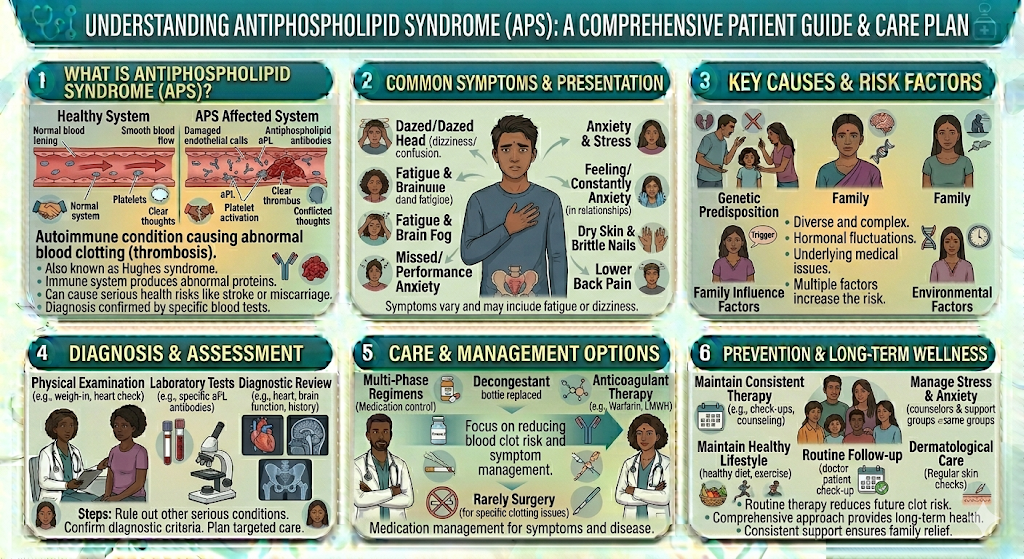
Antiphospholipid syndrome (APS) is a health condition where your body's defense system, the immune system, incorrectly creates specialized proteins called antibodies. Instead of fighting off germs like viruses and bacteria, these faulty antibodies attack your body's own tissues, which causes the blood to become much more likely to clot.
Understanding the Condition
Antiphospholipid Syndrome (APS)
While this condition is uncommon and there is currently no cure, treatment involving medication can significantly lower the risk of blood clots and complications during pregnancy. Some individuals may have the antibodies associated with APS but experience no noticeable symptoms.
Note all symptoms you have experienced, including when they first began.
List every medicine, vitamin, and herbal supplement you are currently taking.
Be ready to discuss any known medical history, particularly any history of blood clots, autoimmune conditions, or recurrent miscarriages.
Book a doctor visit near me
Consultation Guide
Antiphospholipid syndrome (APS) is a health condition where your body's defense system, the immune system, incorrectly creates specialized proteins called antibodies. Instead of fighting off germs like viruses and bacteria, these faulty antibodies attack your body's own tissues, which causes the blood to become much more likely to clot.
These harmful blood clots can form in blood vessels throughout the body, including the veins and arteries in the legs, lungs, kidneys, and spleen. These clots can lead to serious events such as a heart attack or stroke. For women who are pregnant, APS can also tragically result in a miscarriage or stillbirth.
APS develops when the immune system mistakenly produces antibodies that increase the blood's tendency to clot. It may arise on its own or as a secondary condition caused by another autoimmune disorder, such as systemic lupus erythematosus or other connective tissue diseases.
Active Risk Factor Management: Actively address co-occurring health issues, such as high blood pressure, high cholesterol, and diabetes, which can all contribute to blood vessel damage and increase clotting risk.
Avoid Smoking: Completely stop all tobacco use, as smoking severely restricts blood flow and significantly increases the risk of dangerous clots.
Stay Active and Maintain a Healthy Weight: Engage in regular, appropriate exercise to promote healthy circulation, reduce fatigue, and maintain a stable weight.
Diagnostic Procedures
APS is diagnosed more often in women than in men. Your risk of developing blood clots is higher if you already have these antibodies, especially if you also have another autoimmune condition.
Consultation and Preparation
You should consult with a general healthcare professional first, who may then refer you to specialists. The primary specialists involved in diagnosing and managing APS are a Hematologist (a physician specializing in blood disorders) or a Rheumatologist (a physician specializing in autoimmune and joint diseases).
Preparations Before the Visit
To help your doctor make the most accurate assessment, you should prepare the following information:
Diagnostics: Detailed Description of Procedures
Diagnosis involves laboratory tests to check for specific antibodies and imaging procedures to look for evidence of blood clots or related complications.
Blood Tests
Description: Blood tests are essential to measure the levels of certain substances in your blood, including specific antiphospholipid antibodies. They also assess your overall health and look for signs of clotting issues.
What to Expect
Ultrasound (Sonography)
Description: This safe imaging technique uses low-power sound waves to create live pictures of internal structures. It is commonly used to detect blood clots in the veins of the legs (a condition called deep vein thrombosis or DVT) or to examine the health of internal organs that may be affected by clotting.
What to Expect
CT Scan (Computerized Tomography)
Description: A CT scan uses X-ray technology and computer processing to create detailed, cross-sectional images, or "slices," of soft tissues and blood vessels inside the body. It provides more detail than a standard X-ray and can be used to identify blood clots in the lungs (pulmonary embolism) or other organs.
What to Expect
Echocardiogram
Description: This test uses sound waves to create moving pictures of your heart. It helps assess how blood is flowing through the heart chambers and valves, which can be affected by APS.
What to Expect
Consistent Follow-up: Maintain a regular schedule of follow-up visits and blood testing to ensure therapeutic levels of your medication are maintained and to check for any signs of complications or bleeding problems.
Disclaimer: This article provides general health information and is not intended to be a substitute for professional medical advice, diagnosis, or treatment. Always consult your treating physician or another qualified healthcare provider with any questions you may have regarding a medical condition.
To report an error in the article, please send an email to errors@medicalwriter.com.
Treatment Options
Treatment Overview (Bulleted List)
Treatment focuses on reducing the risk of blood clots and managing any resulting complications.
Medication (Duration: Long-term)
The primary treatment involves taking medicines that reduce the blood's ability to clot, such as anti-platelet drugs or stronger prescription anticoagulants (blood thinners). This helps prevent serious events like stroke or heart attack.
During pregnancy, a modified regimen of blood-thinning medicine may be used to reduce the risk of miscarriage.
Regular Monitoring: Ongoing, routine check-ups with your physician are required to ensure the medication dosage is correct and to monitor for any new clot development or potential side effects.
Physical Activity: Regular movement and exercise can help maintain good circulation and overall health, though care must be taken to avoid injury.
Surgery is typically reserved for complications related to clotting, such as when a major blood clot threatens an organ.
Procedures like opening a clogged artery using a balloon and a stabilizing tube (stent) may be necessary to restore blood flow after a clotting event (e.g., in the heart or brain).
Adherence to Medication: Strictly and consistently adhere to the prescribed regimen of blood-thinning medication to prevent clots.
Prevention & Long-Term Wellbeing
Home Remedies and Prevention (Duration: Ongoing/Long-term)
Managing other health conditions and adopting a healthy lifestyle are essential to reduce the risk of clotting.
Avoiding or limiting alcohol consumption and stopping all tobacco use are critical steps to prevent worsening blood vessel health.
Following a heart-healthy diet rich in fruits, vegetables, and whole grains helps promote long-term well-being.
Procedures and Therapies (Duration: Varies)
Surgical Procedures (Duration: Recovery of several weeks to months)
Prevention and Long-Term Wellbeing Strategies
Managing Antiphospholipid Syndrome is a lifelong commitment focused on reducing the risk of new clots and maintaining overall health.
Tags & Topics
Notice an error or need an update?
Help us keep medical information accurate. Report incorrect info or suggest an edit.


