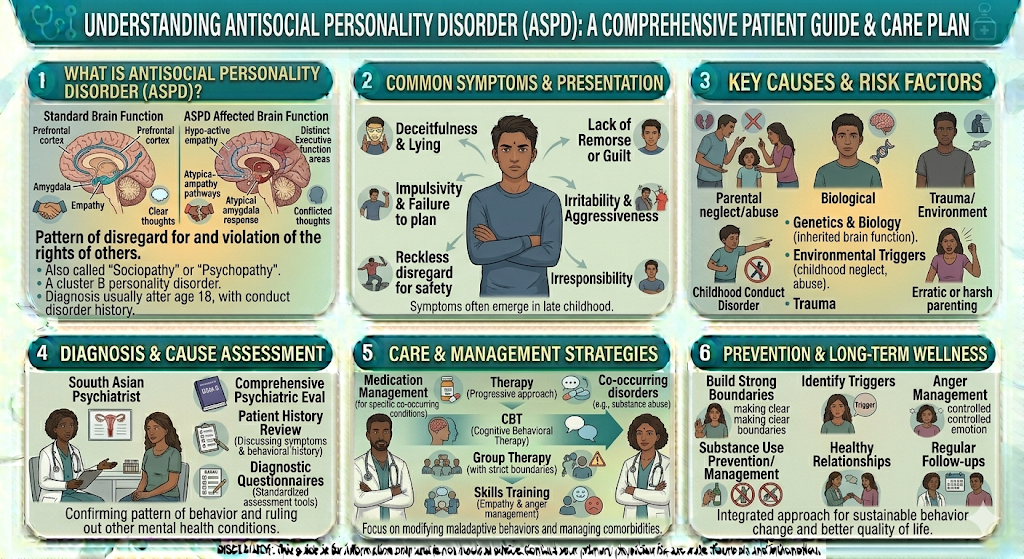
Antisocial personality disorder, sometimes referred to as sociopathy, is a chronic mental health condition where an individual consistently disregards moral standards and the rights and feelings of others. People with this condition often act with cruel indifference, may manipulate others, and generally show no regret or remorse for behavior that harms others.
Understanding the Condition
Antisocial Personality Disorder (ASPD)
Antisocial personality disorder, sometimes referred to as sociopathy, is a chronic mental health condition where an individual consistently disregards moral standards and the rights and feelings of others. People with this condition often act with cruel indifference, may manipulate others, and generally show no regret or remorse for behavior that harms others.
Individuals with ASPD frequently struggle to maintain personal and professional obligations, such as those related to family, work, or school. They may engage in impulsive, violent, or aggressive behavior, often leading to legal issues or criminal activity. Problems with drug and alcohol use are also common.
Symptoms of antisocial personality disorder involve a repeated pattern of behaviors, including:
Consistently ignoring the difference between right and wrong.
Lying to take advantage of others.
Lacking respect for or sensitivity toward others.
Using charm or cleverness to manipulate people for personal gain or enjoyment.
Feeling superior to others and holding rigid opinions.
Engaging in criminal behavior or having frequent legal difficulties.
Being aggressive, hostile, or threatening toward others.
Showing no guilt or feeling of responsibility after harming someone.
Acting recklessly without concern for the safety of themselves or others.
Failing to meet work or financial responsibilities.
If you are concerned about symptoms of ASPD in yourself or a loved one, the appropriate specialist to consult is a mental health professional, such as a psychiatrist, psychologist, or licensed clinical social worker.
Preparations Needed Before the Visit
To make the most of your appointment, you should prepare by:
Writing down any symptoms you have noticed and for how long.
Making a list of personal information, including any major stressors or recent life changes.
Gathering information about any family history of mental health conditions.
Taking note of any other medical conditions and any vitamins or supplements currently being taken.
Call-to-action: Book a doctor visit near me
Clinical Assessment and Interview (Psychological Evaluation): The specialist will conduct an in-depth conversation to understand the person’s symptoms, personality, personal history, and family history. The professional will evaluate how the person views and interacts with the world, using diagnostic criteria from the standard reference manual for mental health conditions.
Complete Blood Count (CBC): This is a routine blood test used to assess overall health and screen for a wide range of conditions, such as infection or anemia, that might contribute to or mimic certain symptoms, ensuring they are not caused by an underlying physical illness.
During the Clinical Assessment: You will spend time talking with the mental health professional. This is a non-judgmental space where you will be asked about your current mood, symptoms, thoughts, relationships, and history, including any childhood experiences or family mental health issues. This process helps the professional determine if the symptoms meet the criteria for ASPD.
During the Complete Blood Count: A small sample of blood will be drawn, usually from a vein in your arm. The process is quick and may involve a momentary sting or pinch. The sample is then sent to a lab for analysis.
Treatment for antisocial personality disorder is typically long-term and focused on reducing symptoms and managing the associated complications, often involving ongoing support and management.
Therapies and Procedures:
Psychotherapy (Talk Therapy): Involves talking with a therapist to learn about the condition and develop healthy coping mechanisms to manage challenging situations. This therapy can address a wide range of mental health issues and helps individuals gain control over their life. Duration is typically ongoing as needed for support.
Cognitive Behavioral Therapy (CBT): A structured form of therapy that often includes fewer sessions than other types of therapy and may involve "homework" to practice skills. CBT is used to manage thoughts, emotions, and behaviors, and is particularly helpful in learning new ways to deal with emotional challenges. The structured approach often involves fewer sessions than traditional therapy.
Medication: While there is no specific medicine to cure ASPD, prescription medicines may be used alongside therapy to manage severe symptoms or co-occurring conditions, such as depression, anxiety, or aggression. The duration of medication use is determined by the treating physician and may change over time.
Support and Home Remedies: Participation in support groups, avoiding drug and alcohol use, and maintaining a stable environment are crucial. The focus is on accountability, building basic life skills, and addressing immediate crises like legal or financial problems. This support is long-term and often life-long.
Consistency in Treatment: Adhering strictly to the prescribed therapy schedule and any necessary medication regimen is vital for sustained symptom management and behavioral improvements.
Managing Co-occurring Issues: Actively addressing common complications like substance abuse, anxiety, or depression through specialized programs is necessary.
Establishing Responsibility: Focusing on consistently meeting personal responsibilities related to family, work, and finances helps promote stability and reduce potential complications.
Safety Planning: For individuals with a history of impulsive or aggressive behavior, creating and practicing strategies to de-escalate crises and prevent harm to themselves or others is a critical part of long-term management.
Consultation Guide
Personality is the unique way a person thinks, feels, and behaves, which is shaped during childhood by a combination of genetics and life experiences.
While the exact cause of ASPD is not fully understood, it is believed to result from a combination of factors:
Genetics: Inherited genes may make a person more susceptible to developing the disorder.
Environment: Negative life situations, particularly childhood abuse or neglect, may trigger its development.
Brain Function: Changes in the way the brain develops or functions may also play a role.
Factors that increase the risk of developing ASPD include:
Diagnostic Procedures
A diagnosis of conduct disorder during childhood.
A family history of ASPD or other personality or mental health disorders.
Experiencing neglect or abuse as a child.
Growing up in a chaotic or violent family environment.
Men are generally at a higher risk of having this disorder than women.
Antisocial personality disorder can lead to serious problems, such as:
Abuse or neglect of a spouse or child.
Developing substance abuse problems, including issues with alcohol or drugs.
Involvement with the criminal justice system, including incarceration.
Attempted suicide or violence toward others.
Co-occurring mental health conditions, like anxiety or depression.
Significant issues with finances, education, or social relationships.
A higher risk of premature death, often due to violent circumstances.
Which Specialist to Meet
Diagnosing antisocial personality disorder involves a thorough evaluation conducted by a mental health professional.
What to Expect
Childhood Screening: Identifying children who show early warning signs, particularly those diagnosed with childhood conduct disorder, is essential.
Immediate Support: Providing early intervention and therapeutic support to at-risk children and their families can help mitigate the development of the full disorder.
Strategies for Long-Term Wellbeing:
Disclaimer: This article provides general health information and is not intended to be a substitute for professional medical advice, diagnosis, or treatment. Always consult your treating physician or another qualified healthcare provider with any questions you may have regarding a medical condition.
To report an error in the article, please send an email to errors@medicalwriter.com.
Prevention & Long-Term Wellbeing
Prevention and Long-Term Wellbeing Strategies
Long-term wellbeing for individuals with ASPD and those around them focuses on stability, managing associated behaviors, and implementing early support.
Prevention through Early Intervention:
Tags & Topics
Notice an error or need an update?
Help us keep medical information accurate. Report incorrect info or suggest an edit.


