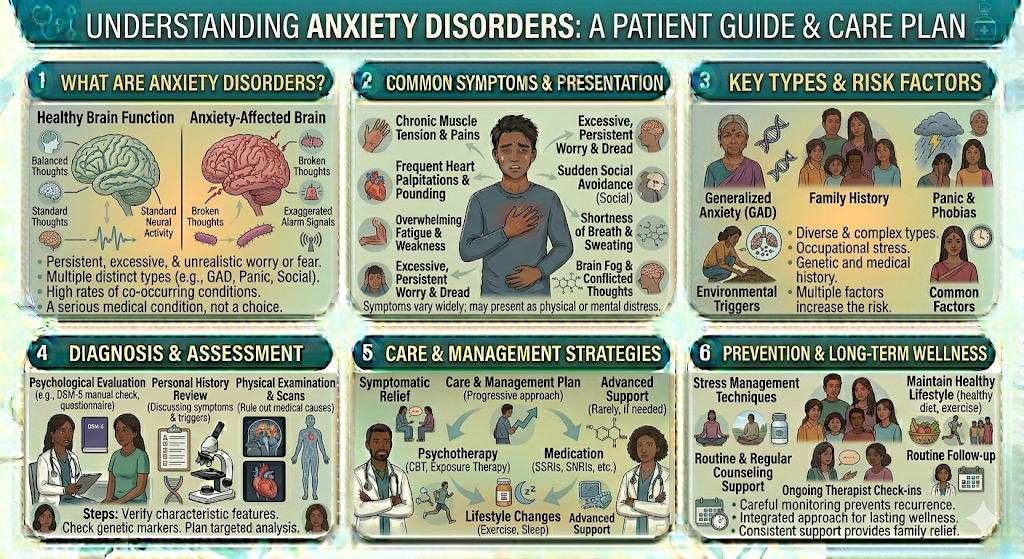
Anxiety is a normal human emotion, but an anxiety disorder is characterized by frequent, intense, excessive, and long-lasting worry and fear about everyday situations. This often includes sudden, intense feelings of fear or terror that peak within minutes, known as panic attacks. These feelings are difficult to control, are out of proportion to the actual danger, and can significantly interfere with daily life. People with these disorders may begin to avoid places or situations to prevent triggering these feelings. Symptoms can begin in childhood or adolescence and continue into adulthood.
Understanding the Condition
Anxiety is a normal human emotion, but an anxiety disorder is characterized by frequent, intense, excessive, and long-lasting worry and fear about everyday situations. This often includes sudden, intense feelings of fear or terror that peak within minutes, known as panic attacks. These feelings are difficult to control, are out of proportion to the actual danger, and can significantly interfere with daily life. People with these disorders may begin to avoid places or situations to prevent triggering these feelings. Symptoms can begin in childhood or adolescence and continue into adulthood.
Specific types of anxiety disorders include generalized anxiety disorder, social anxiety disorder (social phobia), specific phobias, and separation anxiety disorder. It is possible to have more than one anxiety disorder, and sometimes anxiety can be a symptom of another underlying health issue.
Common signs and symptoms of an anxiety disorder include:
Feeling nervous, restless, or tense.
A sense of impending danger, panic, or doom.
Increased heart rate.
Rapid breathing (hyperventilation).
Feeling weak or tired.
Difficulty concentrating or focusing on anything other than the current worry.
An upset stomach or other digestive problems.
Difficulty controlling worry.
The urge to avoid things that trigger anxiety.
Underlying Health Issues: Anxiety symptoms can sometimes be the first indicator of a medical illness, such as heart disease, thyroid issues (hyperthyroidism), respiratory disorders (like asthma), chronic pain, or withdrawal from certain substances or medications.
You can start by consulting your Primary Care Physician or Pediatrician. Depending on the severity and complexity of your symptoms, they may refer you to a mental health professional, such as a Psychiatrist, Psychologist, or Licensed Clinical Social Worker.
Preparations Needed Before the Visit
To ensure a comprehensive evaluation, prepare the following before your appointment:
A detailed list of all symptoms you have experienced, including when they started.
Description: A mental health specialist conducts an in-depth, structured conversation to understand your symptoms, thought patterns, personal history, and family history. The professional evaluates how you perceive and interact with the world using established diagnostic criteria.
What to expect during the procedure: You will have a non-judgmental discussion with the mental health professional. You will be asked sensitive questions about your current mood, specific symptoms, thoughts, relationships, and history, including any childhood experiences or family mental health issues.
Complete Blood Count (CBC)
Description: This is a routine blood test used to check your overall health and screen for a wide range of medical conditions, such as infection or anemia, which could potentially contribute to or mimic certain anxiety symptoms.
Cognitive Behavioral Therapy (CBT): A structured form of talk therapy that focuses on identifying and changing negative thought patterns that fuel anxiety symptoms.
Duration: Generally a short-term approach, often several months.
Prescription medicines are used alongside therapy to help manage severe anxiety symptoms.
Duration: Long-term, determined by the treating physician.
Seek Help Early: Anxiety is easier to treat if you seek professional advice as soon as you notice symptoms.
Avoid Unhealthy Substance Use: Strictly avoid or limit the use of alcohol, nicotine, and drugs, as these can trigger or worsen anxiety.
Prioritize and Manage Stress: Learn to recognize stress triggers and regularly practice relaxation techniques.
Consultation Guide
The exact causes of anxiety disorders are not fully understood, but they appear to stem from a complex interaction of genetic, biological, and environmental factors.
Life Experiences: Traumatic events can trigger anxiety disorders in people who are already susceptible.
Genetics: Inherited traits and a family history of anxiety disorders can be a contributing factor.
Biological: Differences in brain chemistry and function, or the way a person perceives threats, may play a role.
Risk Factors
Factors that may increase the risk of developing an anxiety disorder include:
Trauma: Experiencing or witnessing abuse or trauma, especially during childhood.
Stress Due to Illness: Having a serious or chronic medical condition can cause significant worry about treatment and the future.
Stress Buildup: Major events or a collection of smaller stressful situations can trigger excessive anxiety.
Personality: Certain personality types, such as those that are timid, negative, or overly sensitive, may be more prone to anxiety.
Other Mental Health Conditions: Anxiety disorders frequently occur alongside conditions like depression.
Substance Use: Drug or alcohol use, misuse, or withdrawal can cause or worsen anxiety.
If left untreated, an anxiety disorder can lead to or worsen other mental and physical health conditions, such as:
Depression or other mental health disorders.
Difficulty sleeping (insomnia).
Digestive or bowel problems, including irritable bowel syndrome and ulcers.
Headaches and chronic pain.
Difficulties functioning at school or work.
Poor overall quality of life.
Which Specialist to Meet
Doctors use a combination of procedures to rule out underlying medical causes and confirm a mental health diagnosis.
Clinical Assessment and Interview (Psychological Evaluation)
Diagnostic Procedures
Diagnostics: Detailed Description of Procedures
What to Expect
Disclaimer: This article provides general health information and is not intended to be a substitute for professional medical advice, diagnosis, or treatment. Always consult your treating physician or another qualified healthcare provider with any questions you may have regarding a medical condition.
To report an error in the article, please send an email to errors@medicalwriter.com.
Treatment Options
A list of all prescription and non-prescription medications, vitamins, and supplements you are currently taking.
Notes on any major life stressors, traumatic events, or significant recent changes in your life.
Treatment for anxiety disorders is highly individualized and is often most successful when it combines therapy, lifestyle changes, and sometimes medication.
Therapies and Procedures
Psychotherapy (Talk Therapy): Involves talking with a mental health professional to learn about the condition, understand how your thoughts and behaviors affect your moods, and develop healthy coping skills.
Duration: Often ongoing, varying from several months to long-term support.
Maintain Treatment Adherence: Consistently stick with your prescribed treatment plan to prevent relapses.
Prevention & Long-Term Wellbeing
Home Remedies and Lifestyle Adjustments
Focuses on making positive lifestyle changes such as maintaining a stable environment, improving sleep, and using coping skills.
Duration: Ongoing/Long-term.
Prevention and Long-Term Wellbeing Strategies
Long-term management and well-being rely on consistent lifestyle choices and early intervention.
Tags & Topics
Notice an error or need an update?
Help us keep medical information accurate. Report incorrect info or suggest an edit.


