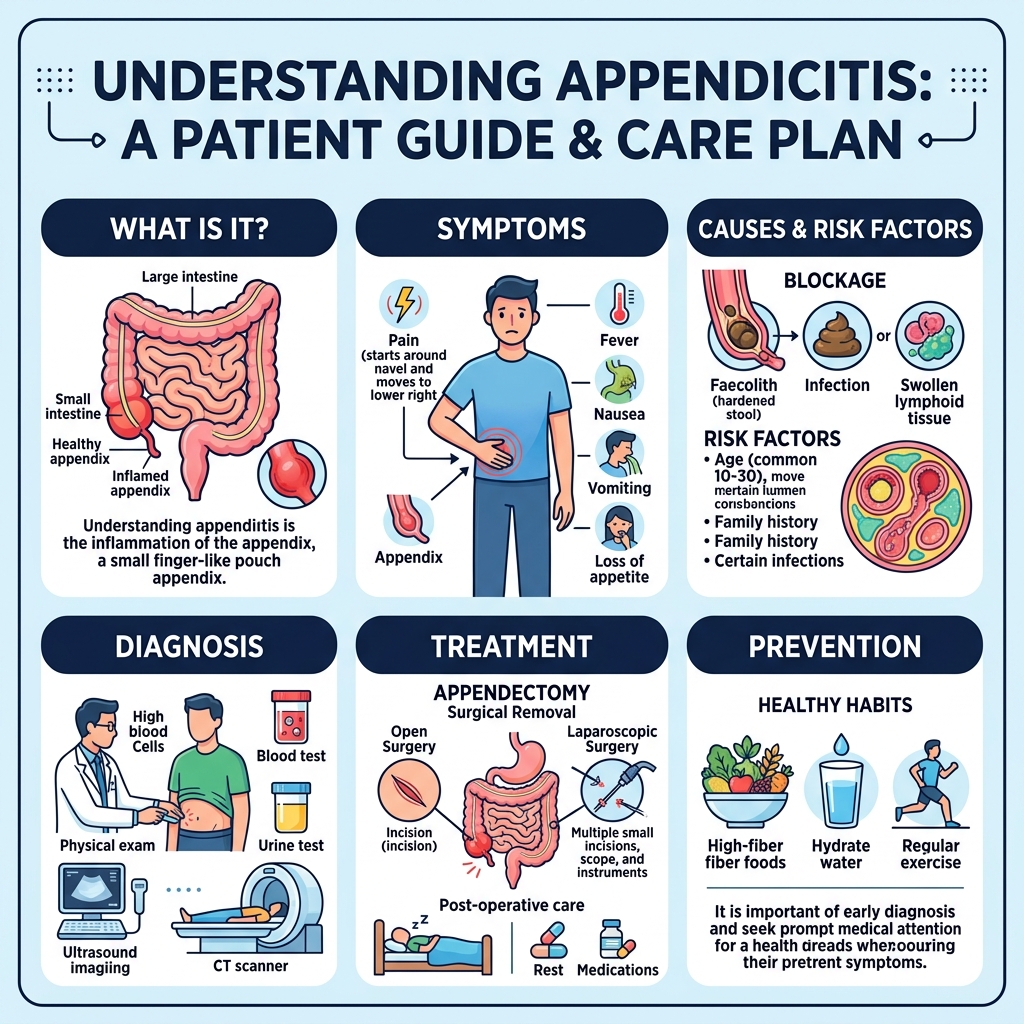
Appendicitis is a painful inflammation of the appendix, a small, finger-shaped pouch located on the lower right side of your belly, branching off from the large intestine. When the opening of this pouch becomes blocked, harmful bacteria can multiply rapidly inside it, causing the appendix to swell and fill with pus. If left untreated, the pressure can cause the appendix to burst, spreading a dangerous infection throughout the belly. Appendicitis is a medical emergency that requires immediate care, most commonly affecting individuals between the ages of 10 and 30.
Understanding the Condition
Understanding Appendicitis: Causes, Symptoms, and Treatments
Understanding the Condition
Common Symptoms
Shifting Abdominal Pain: A sudden pain that typically starts around the belly button and later moves to the lower right side of the belly. The pain becomes much sharper and more intense over a few hours.
Movement-Triggered Pain: Pain in the lower right belly that worsens significantly when coughing, walking, sneezing, or making any sudden, jarring movements.
Digestive Distress: Nausea and vomiting that begin shortly after the abdominal pain starts, often accompanied by a complete loss of appetite.
Low-Grade Fever: A mild fever that typically starts low but may steadily rise as the inflammation and infection inside the belly worsen.
Changes in Bowel Habits: Experiencing sudden constipation or diarrhea, frequently accompanied by physical bloating and swelling in the belly area.
Consultation Guide
Which Specialist to Meet
Because appendicitis often requires emergency surgery, do not eat or drink anything before your evaluation. Avoid taking pain medications, laxatives, or using enemas, as these can mask your symptoms or increase the risk of your appendix bursting. Be prepared to share exactly when your pain started, how it has moved, and a complete list of any regular medications you take.
Book a doctor visit near me
Consultation Guide
Appendicitis is a painful inflammation of the appendix, a small, finger-shaped pouch located on the lower right side of your belly, branching off from the large intestine. When the opening of this pouch becomes blocked, harmful bacteria can multiply rapidly inside it, causing the appendix to swell and fill with pus. If left untreated, the pressure can cause the appendix to burst, spreading a dangerous infection throughout the belly. Appendicitis is a medical emergency that requires immediate care, most commonly affecting individuals between the ages of 10 and 30.
A lab test analyzing a sample of your urine to rule out other potential causes of lower belly pain, such as a urinary tract infection (UTI) or kidney stones.
Diagnostic Procedures
CT Scan (Computerized Tomography)
A specialized imaging test that uses a series of computer-guided X-rays to create highly detailed, cross-sectional pictures of your abdominal organs, helping doctors clearly visualize an inflamed appendix.
What to Expect
You will lie flat on a motorized table that slowly slides into a large, doughnut-shaped scanner. You must lie very still during the scan, which takes about 10 to 15 minutes. You may be asked to drink a contrast liquid or receive it through an intravenous (IV) line in your arm to help the organs stand out clearly on the images.
A safe, painless test that uses high-frequency sound waves to create real-time images of the inside of your belly, helping to identify swelling or blockages in the appendix.
What to Expect
You will lie on your back, and a technician will apply a warm, clear gel to your lower right abdomen. They will then press a small, hand-held wand called a transducer firmly against your skin, moving it around to capture images. This test takes about 15 to 30 minutes and does not expose you to radiation.
What to Expect
You will be given a sterile cup and asked to clean your genital area before urinating. You will collect a 'midstream' sample of urine into the cup. The sample is then instantly analyzed using a test strip and sent to a lab to look for red blood cells, white blood cells, or bacteria.
Treatment Options
You will need to see an emergency medicine physician in an emergency department, who will then coordinate care with a general surgeon to perform the necessary treatment.
Preparations Before Your Visit
Surgical Procedures
Laparoscopic Appendectomy: A minimally invasive surgery to remove the appendix using several tiny incisions in the belly. The surgeon inserts a miniature camera and specialized surgical tools to detach and safely extract the appendix, leading to less pain and a faster recovery. (Duration: The surgery takes 1 to 2 hours. Hospital stay is usually less than 24 hours, with overall recovery taking about 1 to 2 weeks.)
Open Appendectomy: A traditional surgery where the appendix is removed through a single larger incision in the lower right side of the belly. This approach is preferred if the appendix has already burst or if there is widespread infection in the abdominal cavity. (Duration: The surgery takes 1 to 2 hours. Hospital stay ranges from 1 to 3 days, with overall recovery taking 2 to 4 weeks.)
Medications and Infection Control
Intravenous Antibiotics: Strong, targeted liquid medications delivered directly into a vein to destroy bacteria and treat or prevent infection before and after appendectomy surgery. (Duration: Typically administered as a single dose right before surgery, but may continue for 3 to 7 days if the appendix was ruptured.)
Abscess Drainage: If a ruptured appendix has formed a walled-off pocket of pus (an abscess), a radiologist uses ultrasound or CT guidance to insert a small tube through the skin into the pocket to drain the infected fluid. (Duration: The drainage tube and an accompanying course of antibiotics are typically kept in place for about 2 weeks before a delayed surgery is scheduled to remove the appendix.)
Gradual Activity Resumption: Avoid heavy lifting, vigorous exercise, or strenuous household chores for 1 to 2 weeks after a laparoscopic surgery, and for 4 to 6 weeks after an open surgery, to allow the abdominal muscles and incisions to heal securely.
Surgical Wound Care: Keep your incision sites clean and completely dry. Wash the area gently with mild soap and water only when advised by your surgeon, and monitor daily for signs of infection such as worsening redness, warmth, swelling, or leaking fluid.
Prevention & Long-Term Wellbeing
Prevention & Dietary Habits
High-Fiber Diet: Eating foods rich in fiber, such as whole grains, fresh vegetables, fruits, and legumes. While not a guaranteed preventative measure, a high-fiber diet helps soften stool, promoting regular bowel movements and reducing the likelihood of stool blockages that can trigger appendicitis.
Post-Surgical Long-Term Recovery
Tags & Topics
Notice an error or need an update?
Help us keep medical information accurate. Report incorrect info or suggest an edit.


