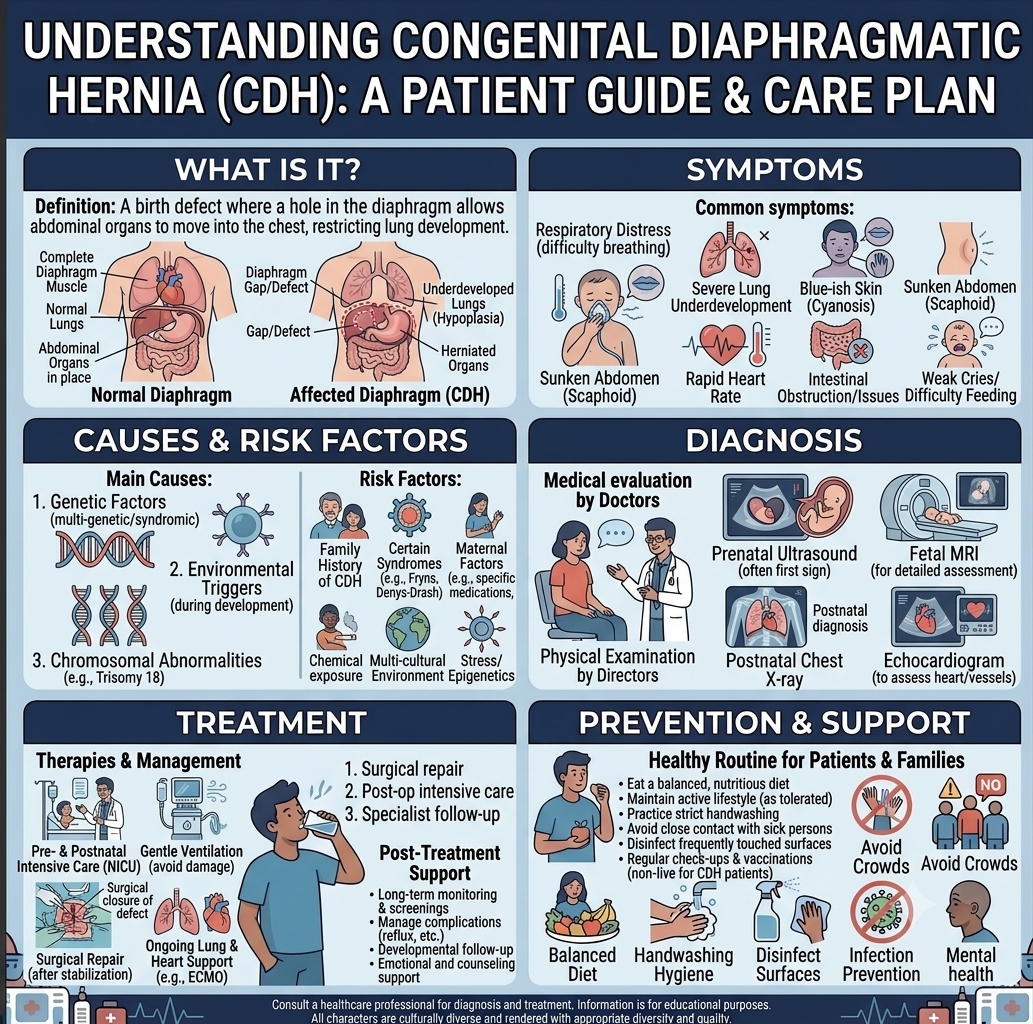
Congenital Diaphragmatic Hernia (CDH) is a rare birth condition where a baby's diaphragm, the muscle separating the chest from the belly, doesn't fully close during early pregnancy. This leaves a hole, called a hernia. Through this opening, organs from the belly like the intestines, stomach, or liver can move up into the chest cavity. When these organs are in the chest, they can prevent the lungs from developing properly, making them smaller and less functional. This can lead to serious breathing difficulties after birth due to poorly developed lungs and high blood pressure in the lung's blood vessels. Some babies may also have heart development issues. The severity and treatment depend on when it's found and the impact on the baby's health.
Understanding the Condition
Congenital Diaphragmatic Hernia (CDH)
Understanding the Condition
Common Symptoms
Consultation Guide
Severe Breathing Difficulties: Babies may struggle to breathe effectively because their lungs are underdeveloped and don't work as well as they should.
High Blood Pressure in the Lungs: A condition where the blood vessels in the lungs have abnormally high pressure, making it harder for blood to pick up oxygen and for the heart to pump effectively.
Heart Development Problems: Some infants with CDH may have additional issues with the way their heart develops.
If standard genetic tests are inconclusive but a genetic cause is suspected, this advanced test analyzes your baby's full genetic code, focusing on protein-coding parts (exome), to identify subtle variations.
Diagnostic Procedures
Congenital Diaphragmatic Hernia (CDH) is a rare birth condition where a baby's diaphragm, the muscle separating the chest from the belly, doesn't fully close during early pregnancy. This leaves a hole, called a hernia. Through this opening, organs from the belly like the intestines, stomach, or liver can move up into the chest cavity. When these organs are in the chest, they can prevent the lungs from developing properly, making them smaller and less functional. This can lead to serious breathing difficulties after birth due to poorly developed lungs and high blood pressure in the lung's blood vessels. Some babies may also have heart development issues. The severity and treatment depend on when it's found and the impact on the baby's health.
Damage to Abdominal Organs: Organs that move into the chest, such as the intestines, stomach, or liver, can become twisted or have their blood supply cut off, leading to damage.
Consultation Guide
Which Specialist to Meet
You'll meet with a team of experts, including a maternal-fetal medicine specialist (for high-risk pregnancies), a pediatric surgeon, a neonatologist (newborn care), a pediatric cardiologist, and a genetic counselor.
Preparations Before Your Visit
Before your visit, gather all medical records and ultrasound reports. Prepare questions about diagnosis, treatment, outcomes, and long-term care. Bring a trusted family member or friend for support.
Book a doctor visit near me
This imaging test uses sound waves to create pictures of your baby in the womb. It often detects CDH during routine prenatal check-ups by showing a hole in the diaphragm and abdominal organs in the chest.
What to Expect
A gel is applied to your abdomen, and a handheld device (transducer) is moved over your belly, creating images on a screen. It's painless, non-invasive, and typically lasts 30-60 minutes.
This test examines your baby's DNA for specific gene changes linked to CDH or other related genetic conditions.
What to Expect
Prenatal options (amniocentesis or chorionic villus sampling) involve fluid or tissue samples, carrying a small risk. A mother's blood can also be screened. After birth, a baby's blood sample or cheek swab is used with minimal risk. Results typically take weeks.
What to Expect
A blood sample is taken (from baby or prenatally) and analyzed in a specialized lab. This complex process can take weeks to months for results.
Treatment Options
Breathing Support: Babies often need help breathing, using ventilators for airflow or supplemental oxygen. (Duration: Days to weeks, depending on lung function.)
Medications: Medications manage high blood pressure in lungs, improve blood flow, and support heart function. (Duration: Weeks to months, with monitoring.)
Surgical Procedures
Fetal Surgery: For select severe cases, surgery on the baby in the womb may temporarily block the windpipe to help lungs grow or directly repair the diaphragm. (Duration: Single procedure, requiring significant prenatal and postnatal care.)
Diaphragm Repair Surgery (After Birth): The most common treatment after birth involves surgeons moving abdominal organs back into the belly and closing the diaphragm hole with stitches or a patch. (Duration: Single procedure, followed by extensive hospital recovery (weeks to months).)
Extracorporeal Membrane Oxygenation (ECMO): For severe heart and lung failure, ECMO acts as an artificial heart-lung machine. It oxygenates blood outside the body, allowing the baby's heart and lungs to rest and heal. (Duration: Days to weeks, providing temporary support until organs recover.)
Gastroesophageal Reflux Management: Dietary adjustments, specific feeding positions, or medications may manage stomach acid flowing back into the esophagus.
Prevention & Long-Term Wellbeing
Long-Term Monitoring & Support
Specialized Medical Follow-ups: Regular appointments with pediatric specialists (pulmonologists, cardiologists, gastroenterologists, developmental pediatricians) are crucial to monitor health, growth, and development.
Nutritional Support: Many babies face feeding and growth challenges. Strategies include special feeding plans, supplements, or temporary feeding tubes to ensure adequate nutrition and weight gain.
Respiratory Care: Ongoing lung health management includes therapies to improve breathing, prevent infections, and manage long-term difficulties.
Developmental Therapies: Physical, occupational, and speech therapy may support the child's development, address delays, and improve motor skills or learning.
Hearing and Vision Screenings: Regular checks are important to detect and address any potential hearing or vision impairments early.
Prevention (of complications)
Early Prenatal Detection: Routine prenatal ultrasounds are vital for detecting CDH before birth, allowing medical teams and families to prepare for specialized care and significantly improve outcomes.
Genetic Counseling: For families with a known genetic link or family history of CDH, genetic counseling assesses risks for future pregnancies and provides guidance.
Tags & Topics
Notice an error or need an update?
Help us keep medical information accurate. Report incorrect info or suggest an edit.


