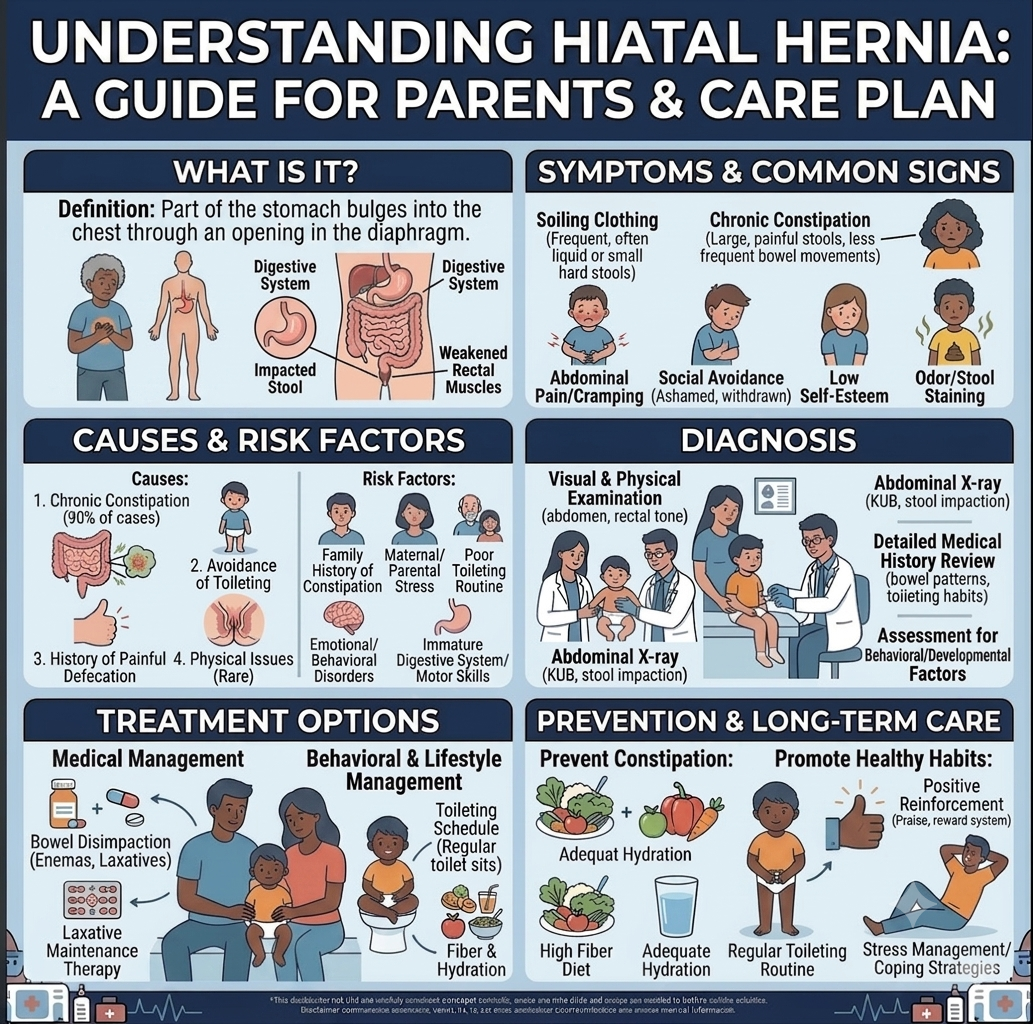
A hiatal hernia occurs when the upper part of your stomach pushes or bulges upwards through a small opening in your diaphragm, which is the large muscle separating your abdomen from your chest. This opening, called the hiatus, is where your esophagus (food pipe) normally passes to connect with your stomach. Small hiatal hernias often cause no noticeable problems and may only be discovered incidentally. However, larger hernias can allow stomach acid and food to flow back into the esophagus, leading to symptoms like heartburn. While many cases are managed with self-care or medication, very large or problematic hernias might require surgical intervention.
Understanding the Condition
Hiatal Hernia: Understanding, Symptoms, and Management
Understanding the Condition
A hiatal hernia occurs when the upper part of your stomach pushes or bulges upwards through a small opening in your diaphragm, which is the large muscle separating your abdomen from your chest. This opening, called the hiatus, is where your esophagus (food pipe) normally passes to connect with your stomach. Small hiatal hernias often cause no noticeable problems and may only be discovered incidentally. However, larger hernias can allow stomach acid and food to flow back into the esophagus, leading to symptoms like heartburn. While many cases are managed with self-care or medication, very large or problematic hernias might require surgical intervention.
Common Symptoms
No Symptoms: Most small hiatal hernias do not cause any noticeable symptoms.
Regurgitation: Backward flow of swallowed food or liquids into the mouth.
If you experience persistent or concerning symptoms, begin by consulting your primary care doctor. They can evaluate your condition and, if necessary, refer you to a gastroenterologist, a specialist who focuses on diseases of the digestive system.
Preparations Before Your Visit
Before your appointment, make a list of all your symptoms, including when they started and how often they occur. Note any factors that worsen or relieve your symptoms. Prepare a list of all medications, vitamins, and supplements you are currently taking. Also, be ready to discuss your medical history and any questions you have for your doctor.
Book a doctor visit near me
Maintain a Healthy Weight: Losing excess weight can reduce pressure on your abdomen and diaphragm, alleviating symptoms. (Duration: Ongoing, long-term)
Quit Smoking: Smoking can weaken the lower esophageal sphincter, making reflux worse. Quitting can significantly improve symptoms. (Duration: Ongoing, long-term)
Antacids: Over-the-counter medications that provide quick relief by neutralizing stomach acid. (Duration: As needed for symptom relief)
H2 Blockers (Acid Reducers): Medications that reduce the amount of acid your stomach produces. (Duration: Short-term for acute symptoms or long-term as prescribed by a doctor, typically once or twice daily.)
Hiatal Hernia Repair (Fundoplication): Surgery is typically reserved for large hernias that cause severe symptoms not controlled by lifestyle changes or medications, or if complications like bleeding or severe difficulty swallowing occur. The procedure involves pulling the stomach back into the abdomen and often wrapping the upper part of the stomach around the lower esophagus to strengthen the valve that prevents acid reflux. (Duration: Permanent repair, with a recovery period typically lasting several weeks.)
Maintain a Healthy Weight: Excess weight, especially around the abdomen, increases pressure on the diaphragm, potentially contributing to hernia formation or worsening symptoms. Achieving and maintaining a healthy weight can reduce this risk.
Avoid Straining: Minimize activities that involve intense straining, such as heavy lifting, vigorous coughing, or straining during bowel movements. If you have constipation, address it promptly to avoid prolonged straining.
Practice Good Posture: Good posture, especially when sitting or standing, can help keep abdominal pressure balanced and reduce strain on the diaphragm.
Quit Smoking: Smoking can weaken the muscles of the digestive tract, including the lower esophageal sphincter, making one more susceptible to reflux and potentially worsening hiatal hernia symptoms.
Long-Term Monitoring and Management
Regular Medical Follow-ups: Schedule regular appointments with your healthcare provider to monitor your symptoms, adjust medications if needed, and discuss any new concerns.
Adhere to Lifestyle Modifications: Consistently follow recommended lifestyle changes, such as dietary adjustments and meal timing, to effectively manage symptoms and prevent recurrence.
Report Worsening Symptoms: Promptly inform your doctor if your symptoms worsen, change, or if you develop new concerning symptoms like difficulty swallowing, vomiting blood, or black stools.
Consultation Guide
Acid Reflux (Heartburn): A burning sensation in the chest caused by stomach acid flowing back into the esophagus.
Difficulty Swallowing: A sensation of food getting stuck in the throat or chest.
Chest or Abdominal Pain: Discomfort in the chest or upper stomach area.
Early Fullness: Feeling full very soon after starting to eat.
Shortness of Breath: Can occur in very large hernias if they press on the lungs.
Signs of Digestive Tract Bleeding: Vomiting blood or passing black, tarry stools, which requires immediate medical attention.
Consultation Guide
Which Specialist to Meet
Diagnostic Procedures
Upper Endoscopy (Esophagogastroduodenoscopy - EGD)
An upper endoscopy is a procedure used to visually examine the upper part of your digestive system, which includes the esophagus, stomach, and the beginning of your small intestine (duodenum). This is performed using a long, flexible tube equipped with a tiny camera, called an endoscope. It helps doctors diagnose and sometimes treat conditions affecting these areas, including hiatal hernias, inflammation, ulcers, or abnormal growths.
What to Expect
Before the procedure, you will typically need to fast for several hours (usually 6-8 hours) as instructed by your doctor. You will receive a sedative to help you relax and make you comfortable, and possibly a local anesthetic spray for your throat. During the procedure, the endoscope will be gently guided down your throat. You might feel some pressure, but it should not be painful. The doctor will examine the lining of your esophagus, stomach, and duodenum on a video screen. Air may be gently introduced through the endoscope to improve visibility. If needed, small tissue samples (biopsies) can be taken for further analysis. The procedure usually takes 15-30 minutes. Afterward, you'll recover in a designated area as the sedative wears off. You may experience a mild sore throat, bloating, or gas. Due to the sedation, you will need someone to drive you home, and you should avoid driving or operating machinery for the rest of the day.
Treatment Options
Medications
Proton Pump Inhibitors (PPIs): Stronger medications that block acid production and allow time for damaged esophageal tissue to heal. (Duration: Typically 4-8 weeks for initial treatment, sometimes longer for maintenance, as prescribed by a doctor, usually once daily.)
Surgical Procedures
Prevention & Long-Term Wellbeing
Lifestyle and Home Remedies
Eat Smaller, More Frequent Meals: Consuming smaller portions throughout the day can reduce pressure on the stomach and diaphragm, helping to prevent reflux. (Duration: Ongoing, long-term)
Avoid Trigger Foods and Drinks: Limit foods and beverages that worsen heartburn, such as fatty or fried foods, acidic foods (e.g., citrus, tomatoes), chocolate, peppermint, caffeine, and alcohol. (Duration: Ongoing, long-term)
Do Not Lie Down After Eating: Wait at least 2-3 hours after eating before lying down or going to bed to allow food to digest and stomach acid to move out of the esophagus. (Duration: Ongoing, long-term)
Elevate the Head of Your Bed: Raising the head of your bed by 6-8 inches (using blocks under the bedposts or a wedge pillow) can help gravity keep stomach contents down during sleep. (Duration: Ongoing, long-term)
Prevention
Tags & Topics
Notice an error or need an update?
Help us keep medical information accurate. Report incorrect info or suggest an edit.


