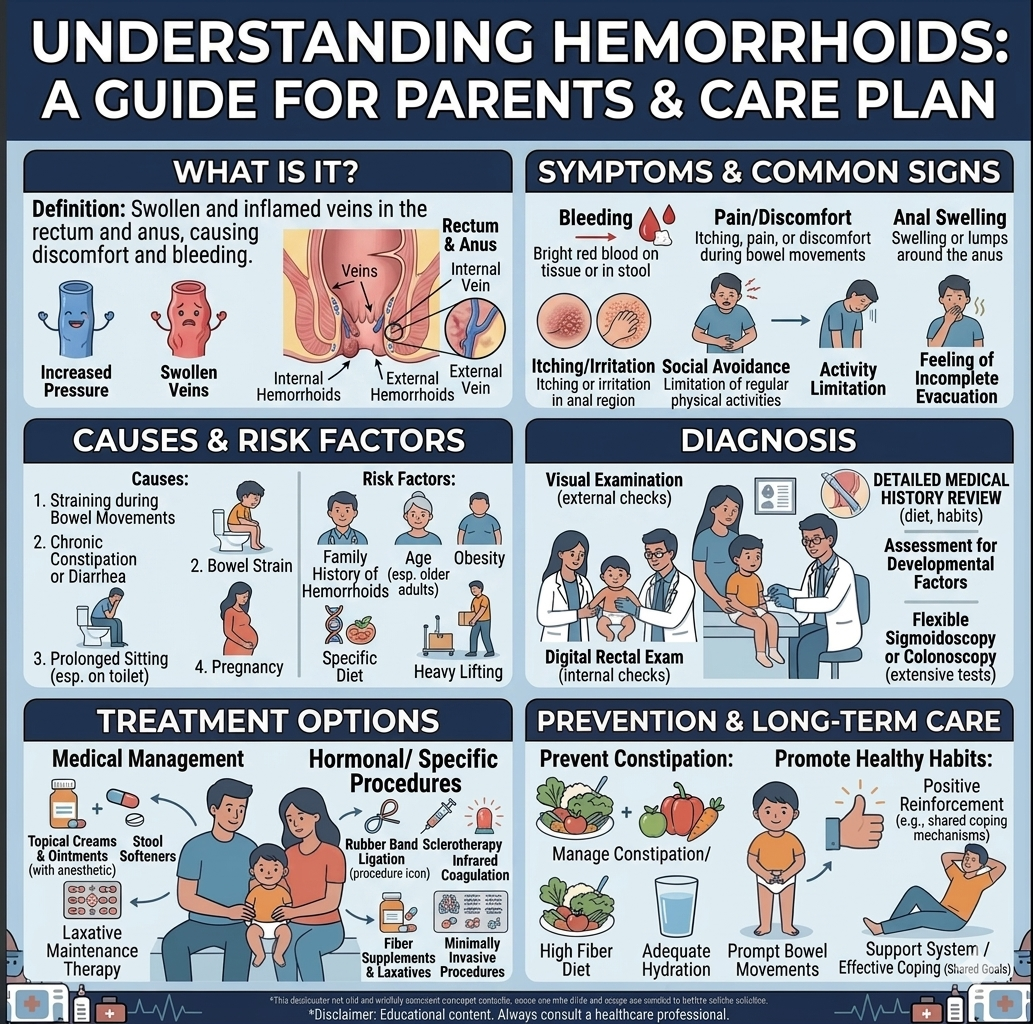
Hemorrhoids (also known as piles) are swollen veins in the anus and lower rectum, much like varicose veins found elsewhere in the body. They can be internal (inside the rectum) or external (under the skin around the anus). While common, many people find significant relief through simple home treatments and lifestyle changes.
Understanding the Condition
Understanding Hemorrhoids (Piles): Causes, Symptoms, and Treatment for Non-Medical Persons
Understanding the Condition
Common Symptoms
External Hemorrhoids: Located under the skin around the anus. Symptoms may include itching, irritation, pain, or swelling. If blood clots within an external hemorrhoid (thrombosed hemorrhoid), it can cause severe pain, inflammation, and a hard, discolored lump.
Consultation Guide
Which Specialist to Meet
Before your visit, be prepared to discuss your symptoms in detail, including when they started, how often they occur, their severity, and any factors that seem to make them better or worse. Your doctor will also want to know about your diet, bowel habits, any medications you are taking, and your family's medical history.
Book a doctor visit near me
Sitz Baths: Soak the anal area in warm water for 10-15 minutes, two to three times a day, to relieve pain, itching, and spasms. (Duration: As needed for symptom relief.)
Avoid Straining: Do not hold your breath or push excessively during bowel movements. (Duration: Ongoing for best results.)
Regular Exercise: Stay active to help prevent constipation and reduce pressure on rectal veins. (Duration: Ongoing for best results.)
Limit Sitting Time: Avoid sitting for prolonged periods, especially on the toilet, to reduce pressure. (Duration: Ongoing for best results.)
Over-the-Counter Creams and Suppositories: Products containing ingredients like hydrocortisone to reduce inflammation, or witch hazel to soothe, can relieve pain, itching, and swelling. (Duration: Typically used for a few days to a week for symptom relief, or as directed by a doctor.)
Stool Softeners: Help to make bowel movements easier and reduce straining. (Duration: As directed by a doctor, often for short periods.)
Rubber Band Ligation: Small rubber bands are placed around the base of internal hemorrhoids to cut off their blood supply. The hemorrhoid withers and falls off. (Duration: The hemorrhoid falls off within 1-2 weeks.)
Sclerotherapy: A chemical solution is injected into an internal hemorrhoid to shrink it. (Duration: Shrinking occurs over several weeks.)
Symptom Awareness: Pay attention to any recurring or worsening symptoms.
Doctor Follow-up: Consult your doctor if symptoms persist or new concerns arise for further assessment or management.
Consultation Guide
Internal Hemorrhoids: Usually inside the rectum, often painless. May cause bright red blood on toilet tissue or in the toilet after a bowel movement. Sometimes, they can push out through the anal opening (prolapsed hemorrhoid), leading to pain and irritation.
You'll usually need to follow a special diet and use laxatives or enemas beforehand. During the procedure, you'll lie on your side as the lubricated sigmoidoscope is gently inserted. Air may be gently inflated to improve visibility, which can cause a feeling of fullness or cramping. The procedure typically takes 10-20 minutes.
Coagulation (Heat-Based): Heat (infrared or laser) is used to cause small, bleeding internal hemorrhoids to harden and shrink. (Duration: Shrinking occurs over days to weeks.)
Diagnostic Procedures
You can start by consulting a general practitioner who can provide an initial diagnosis and recommend appropriate next steps. Depending on the severity or type of hemorrhoids, they may refer you to a specialist such as a gastroenterologist (a doctor specializing in the digestive system) or a colon and rectal surgeon.
Preparations Before Your Visit
A doctor inserts a gloved, lubricated finger into the rectum to feel for abnormalities, such as swollen veins.
What to Expect
You will be asked to lie on your side or bend over. The doctor will gently insert a finger into your rectum; you might feel some pressure or a slight urge to have a bowel movement, but it is usually brief and not painful.
Visual Inspection/Anoscopy
For external hemorrhoids, the doctor can often see them. For internal hemorrhoids that aren't visible, a short, lighted tube called an anoscope may be used to look inside the lower rectum.
What to Expect
The doctor will visually examine the anal area. If an anoscope is used, a short, lubricated tube will be gently inserted into the anus, causing slight pressure but the procedure is quick.
Flexible Sigmoidoscopy
This procedure uses a thin, flexible tube with a camera and light (sigmoidoscope) to examine the rectum and the lower part of the large intestine (sigmoid colon). It helps identify inflamed tissues, polyps, or other issues.
What to Expect
A longer, flexible tube with a camera (colonoscope) is used to view the entire large intestine (colon) and rectum. It's used to detect changes like swollen tissues, polyps, or cancer, and can also remove tissue samples.
What to Expect
Treatment Options
Hemorrhoids (also known as piles) are swollen veins in the anus and lower rectum, much like varicose veins found elsewhere in the body. They can be internal (inside the rectum) or external (under the skin around the anus). While common, many people find significant relief through simple home treatments and lifestyle changes.
Medications
Hemorrhoidectomy: Surgical removal of large or severe external hemorrhoids and prolapsed internal hemorrhoids. This is the most effective treatment for recurrent or severe cases. (Duration: Recovery typically takes a few weeks.)
Hemorrhoid Stapling (PPH): This procedure uses a stapling device to block blood flow to internal hemorrhoids and reposition prolapsed ones; often associated with less pain than traditional surgery. (Duration: Recovery typically takes one to two weeks.)
Prevention & Long-Term Wellbeing
This procedure requires extensive bowel preparation (clear liquid diet, strong laxatives) and usually involves sedation. You'll lie on your side, and the colonoscope will be gently guided through the entire colon. The procedure lasts 30-60 minutes, followed by recovery from the sedation.
High-Fiber Diet: Eat more fruits, vegetables, and whole grains to soften stools and prevent straining. (Duration: Ongoing for best results.)
Adequate Fluid Intake: Drink 6-8 glasses of water and other non-alcoholic liquids daily; limit alcohol. (Duration: Ongoing for best results.)
Prevention
Embrace a High-Fiber Diet: Regularly eat whole grains, fruits, and vegetables to keep stools soft and prevent straining. Introduce fiber gradually to avoid gas.
Stay Hydrated: Drink 6-8 glasses of water and other non-alcoholic liquids daily to maintain soft stools. Limit alcohol, which can contribute to dehydration.
Consider Fiber Supplements: If dietary fiber is insufficient, non-prescription supplements can help soften stools. Always drink ample water with supplements to prevent constipation.
Mindful Bowel Habits: Avoid straining or holding your breath during bowel movements, as this increases pressure in the rectum.
Regular Physical Activity: Exercise helps stimulate bowel function, prevents constipation, and reduces pressure on rectal veins. It can also help manage weight.
Avoid Prolonged Sitting: Get up and move around periodically, especially from the toilet, to reduce pressure on the anal area.
Long-Term Monitoring
Healthy Lifestyle Maintenance: Continue to implement preventive measures as part of your daily routine to reduce the likelihood of recurrence.
Tags & Topics
Notice an error or need an update?
Help us keep medical information accurate. Report incorrect info or suggest an edit.


