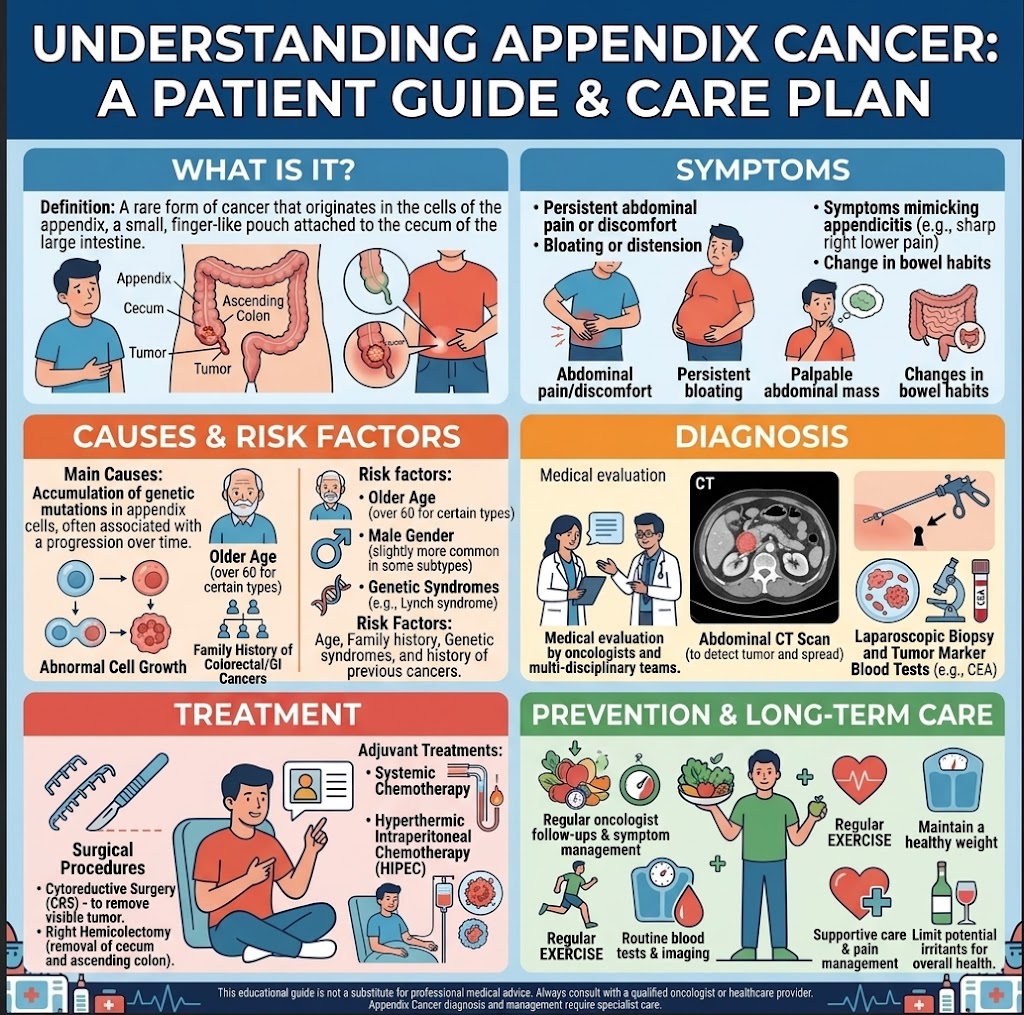
Appendix cancer is a very rare type of cancer that starts when cells in the appendix grow out of control. The appendix is a small, finger-shaped pouch attached to the first part of your large intestine. Because it's so uncommon, many people only discover they have appendix cancer accidentally during surgery for what was thought to be appendicitis. This cancer can behave very differently depending on its type; some grow slowly and stay in the appendix for years, while others can spread more quickly. Its seriousness depends on the cancer type, how far it has spread, and how the cells look under a microscope. Slow-growing appendix cancers are often curable with surgery, but more aggressive forms may require additional treatments like chemotherapy or specialized procedures.
Understanding the Condition
Understanding Appendix Cancer: A Guide for Non-Medical Persons
Understanding the Condition
Common Symptoms
No Early Symptoms: Many people with appendix cancer have no symptoms at first, making it difficult to detect early. It's often found incidentally during surgery for other abdominal issues.
Lower Right Belly Pain: As the cancer grows, you might experience pain in the lower right side of your abdomen, similar to the pain associated with appendicitis.
Growing Belly Size: A noticeable increase in belly size can occur due to mucus or fluid buildup inside the abdomen, especially with certain types of appendix tumors that produce a jelly-like substance.
Nausea or Vomiting: Digestive upset, including feelings of sickness to your stomach or actually throwing up, can be a symptom.
Feeling Full Quickly: You might feel full soon after eating, even if you've had only a small amount of food.
General Abdominal Discomfort: Vague or persistent discomfort in the abdominal area that doesn't go away.
Consultation Guide
Which Specialist to Meet
If you experience persistent or unusual abdominal symptoms, your first step should be to consult your primary care doctor. Depending on the findings, you may be referred to a gastroenterologist (a doctor specializing in digestive issues) or an oncologist (a cancer specialist). If surgery is considered, a surgical oncologist (a surgeon specializing in cancer operations) would be involved.
Preparations Before Your Visit
Before your visit, make a list of all your symptoms, including when they started, how often they occur, and how severe they are. Note any other medical conditions you have and all medications, supplements, or vitamins you're taking. Prepare a list of questions for your doctor. Be ready to discuss your medical history and any family history of cancer.
Book a doctor visit near me
Regular Check-ups: Routine medical check-ups allow your doctor to monitor your general health and address any emerging symptoms or concerns early.
Long-Term Monitoring and Support
Consultation Guide
Appendix cancer is a very rare type of cancer that starts when cells in the appendix grow out of control. The appendix is a small, finger-shaped pouch attached to the first part of your large intestine. Because it's so uncommon, many people only discover they have appendix cancer accidentally during surgery for what was thought to be appendicitis. This cancer can behave very differently depending on its type; some grow slowly and stay in the appendix for years, while others can spread more quickly. Its seriousness depends on the cancer type, how far it has spread, and how the cells look under a microscope. Slow-growing appendix cancers are often curable with surgery, but more aggressive forms may require additional treatments like chemotherapy or specialized procedures.
Diagnostic Procedures
CT Scan (Computerized Tomography Scan)
A CT scan uses special X-ray equipment and powerful computers to create detailed cross-sectional images, or 'slices,' of the body's bones, blood vessels, and soft tissues. It provides more detail than standard X-rays and is valuable for diagnosing diseases, injuries, and planning treatments.
What to Expect
You will lie on a motorized table that slides into a large, donut-shaped machine. The scanner will rotate around you as it takes images. You might be asked to hold your breath briefly at certain times. Sometimes, a special dye (contrast material) is given intravenously or swallowed to make organs and tissues show up more clearly. The procedure is generally painless and takes 10 to 30 minutes.
Ultrasound (Sonography)
An ultrasound uses high-frequency sound waves to create real-time images of structures inside your body. These sound waves bounce off organs and tissues, and a computer then converts them into visual images, helping doctors diagnose various conditions.
What to Expect
For an abdominal ultrasound, you'll lie on an examination table. A clear gel will be applied to your skin over the area to be examined. A small handheld device called a transducer is then pressed against your skin and moved over the area. The transducer sends and receives sound waves, and the images appear on a monitor. You might feel slight pressure from the transducer, but the procedure is usually painless and takes 15 to 30 minutes. In some cases, a small device may be placed inside the body.
Biopsy and Pathology Report
A biopsy is a procedure where a small tissue sample is removed from the suspicious area for examination under a microscope. A pathologist (a doctor who specializes in diagnosing diseases by examining body tissues) then analyzes the sample to determine if cancer cells are present and, if so, what type of cancer it is.
What to Expect
Colectomy (Colon Resection): If the appendix cancer is more extensive or certain types of appendix cancer are found, a more extensive surgery called a colectomy may be performed. This involves removing the appendix along with a portion of the large intestine (colon) it is attached to, and sometimes nearby lymph nodes. (Duration: This is a major surgery requiring several days of hospital stay, with a recovery period of 4 to 8 weeks at home.)
Imaging Scans: Periodic imaging tests, such as CT scans or ultrasounds, may be scheduled to check for any signs of cancer recurrence or spread. These are important tools for ongoing surveillance.
Emotional and Psychological Support: Coping with a rare cancer diagnosis and its treatment can be emotionally challenging. Seeking support from counselors, support groups, or mental health professionals can provide valuable strategies for managing stress, anxiety, and depression.
Treatment Options
Depending on the location of the suspected tumor, a biopsy might be performed using a needle guided by imaging (like CT or ultrasound) or during surgery. You will likely receive local anesthesia to numb the area, minimizing discomfort. If done during surgery, you will be under general anesthesia. After the sample is collected, it's sent to a lab for analysis, and a pathology report detailing the findings is generated. Discomfort varies depending on the biopsy type but is typically managed.
Surgical Procedures
Cytoreductive Surgery (CRS) with HIPEC: For cancers that have spread to the lining of the abdominal cavity (peritoneum), a highly specialized two-part procedure is often used. Cytoreductive surgery (CRS) involves carefully removing all visible tumor implants from the abdominal cavity. Immediately after this, Hyperthermic Intraperitoneal Chemotherapy (HIPEC) is performed. (Duration: CRS is a complex and lengthy surgery. Hospital stay can be 1-2 weeks, and full recovery can take several months due to the extensive nature of the surgery and chemotherapy.)
Chemotherapy: Chemotherapy uses powerful drugs to kill cancer cells throughout the body. These drugs target fast-growing cells, which include cancer cells. It can be given intravenously (into a vein) or orally. (Duration: Chemotherapy is typically given in cycles, with treatment periods followed by rest periods. A full course of treatment can last for several months.)
Hyperthermic Intraperitoneal Chemotherapy (HIPEC): Performed immediately after cytoreductive surgery, HIPEC involves circulating a heated chemotherapy solution directly within the abdominal cavity for a short period. Heating the chemotherapy helps it penetrate tissues more effectively and enhances its cancer-killing ability, while targeting cancer cells directly in the abdomen and limiting whole-body side effects. (Duration: The HIPEC portion of the procedure typically lasts for 60 to 120 minutes during the surgery, as a single treatment session.)
Biological Therapy: Also known as immunotherapy, biological therapy helps your body's immune system fight cancer. These treatments use substances made from living organisms or mimic natural substances to identify and destroy cancer cells or boost the immune system's response against them. (Duration: The duration varies widely depending on the specific type of biological therapy and the patient's response, often spanning several months or even longer.)
Regular Follow-up Appointments: After treatment for appendix cancer, regular follow-up appointments with your medical team are crucial. These visits allow doctors to monitor your recovery, detect any potential recurrence of cancer early, and manage treatment side effects.
Nutritional Support: Working with a dietitian can help manage any digestive issues or nutritional deficiencies that may arise from treatment or the cancer itself, ensuring your body receives adequate nutrients for healing and strength.
Prevention & Long-Term Wellbeing
Surgical Removal of the Appendix: For very early-stage appendix cancer that has not spread beyond the appendix, surgical removal of the appendix (appendectomy) may be sufficient to cure the cancer. (Duration: Recovery typically takes a few weeks, with full recovery possible over several weeks.)
Prevention
Maintain a Healthy Lifestyle: While there are no specific lifestyle choices known to prevent appendix cancer, adopting a generally healthy lifestyle—including a balanced diet rich in fruits and vegetables, regular physical activity, and maintaining a healthy weight—supports overall health and may reduce the risk of other cancers.
Tags & Topics
Notice an error or need an update?
Help us keep medical information accurate. Report incorrect info or suggest an edit.


