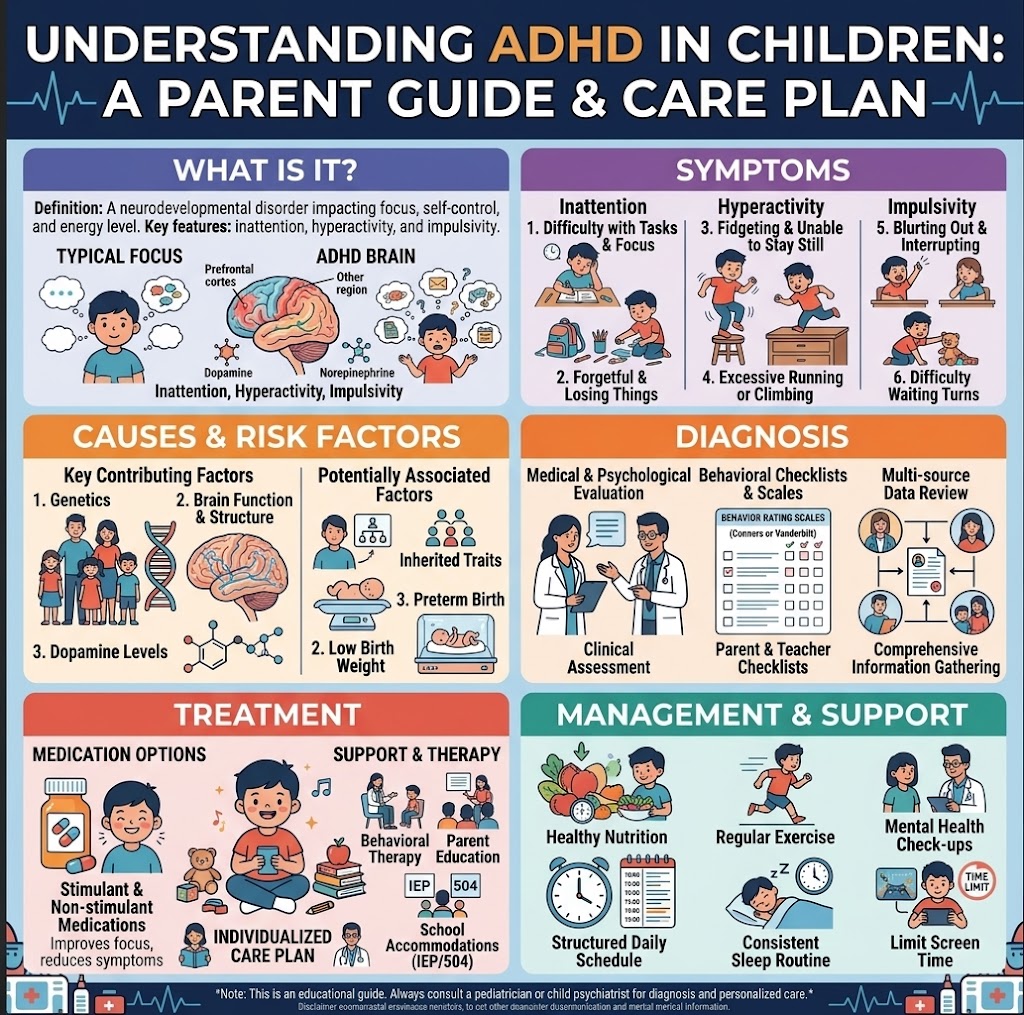
Attention-Deficit/Hyperactivity Disorder (ADHD) is a common, long-lasting condition that affects millions, often starting in childhood and continuing into adulthood. It involves ongoing challenges with paying attention, controlling impulsive behaviors, and managing hyperactivity. Children with ADHD may struggle with self-esteem, relationships, and school performance. While there's no cure, effective treatments like therapy and medication can significantly improve symptoms. Early diagnosis and intervention are crucial for better long-term outcomes, helping individuals learn strategies to succeed.
Understanding the Condition
Understanding Attention-Deficit/Hyperactivity Disorder (ADHD)
Understanding the Condition
Attention-Deficit/Hyperactivity Disorder (ADHD) is a common, long-lasting condition that affects millions, often starting in childhood and continuing into adulthood. It involves ongoing challenges with paying attention, controlling impulsive behaviors, and managing hyperactivity. Children with ADHD may struggle with self-esteem, relationships, and school performance. While there's no cure, effective treatments like therapy and medication can significantly improve symptoms. Early diagnosis and intervention are crucial for better long-term outcomes, helping individuals learn strategies to succeed.
Common Symptoms
Difficulty Paying Attention (Inattention): Individuals may frequently overlook details, make careless mistakes in schoolwork, or struggle to stay focused on tasks or during play. They might appear not to listen when spoken to directly, have trouble following instructions or completing tasks, and find it hard to organize activities. They often avoid or dislike tasks requiring sustained mental effort, lose necessary items, get easily distracted, and forget daily chores.
Hyperactivity: This involves excessive energy and restlessness. Individuals might fidget, squirm, leave their seat in situations where they are expected to stay seated, run or climb excessively, have trouble playing quietly, and talk too much. Their constant motion can sometimes be disruptive.
Impulsivity: Impulsive individuals often act without considering the consequences. They might blurt out answers before questions are finished, have difficulty waiting their turn, interrupt others, and engage in risky behaviors without thinking. ADHD symptoms typically emerge before age 12, sometimes as early as 3, and can range from mild to severe. To be diagnosed, these symptoms must be observed in at least two different settings, such as at home and school, and significantly impact development and daily life. While boys often display more overt hyperactivity, girls may more commonly exhibit quiet inattention.
Consultation Guide
Which Specialist to Meet
For concerns about ADHD, you should consult a pediatrician. They may refer you to specialists like a child psychiatrist, child psychologist, or a developmental-behavioral pediatrician for a comprehensive evaluation and management plan.
Preparations Before Your Visit
Before your visit, it's helpful to write down a detailed list of your child's symptoms, noting when they started, their severity, and in what situations they occur. Gather information about your child's medical history, family medical history (especially mental health conditions), and prepare a list of questions you have.
Book a doctor visit near me
Diagnosing ADHD involves a thorough assessment by a healthcare professional, as there is no single medical test like a blood test or brain scan. The diagnosis is based on a detailed review of an individual's symptoms, developmental history, and behavior patterns according to established diagnostic criteria. Input from parents, teachers, and other caregivers is crucial.
The evaluation typically includes several components. The specialist will conduct in-depth interviews with parents and, if age-appropriate, with the child, asking about the nature, onset, and duration of symptoms, and how they affect daily life. Standardized questionnaires and rating scales will be provided to parents and teachers to gather consistent information across different environments. A physical exam may be performed to rule out other medical conditions that could cause similar symptoms. Psychological testing might also be used to assess cognitive abilities, rule out learning disabilities, or identify co-occurring conditions, providing a complete picture of the child's strengths and challenges.
Psychotherapy (Talk Therapy): A mental health professional helps the individual understand their thoughts, emotions, and behaviors, and develop healthier ways to respond to difficult situations. It can improve self-esteem, relationships, and problem-solving skills. (Duration: Varies widely, from several weeks to many months or even years, depending on individual needs and the complexity of symptoms or co-occurring conditions.)
Non-Stimulant Medications: An alternative for individuals who don't respond well to stimulants or experience significant side effects. They work differently to affect brain chemicals and also help manage ADHD symptoms. (Duration: Long-term, taken daily, requiring consistent medical supervision and dosage adjustments.)
Supportive Strategies
Parent Education and Training: Provides parents with specific tools and techniques to manage their child's behaviors, reinforce positive actions, and create a structured home environment. (Duration: Initial intensive training (several weeks), with ongoing application and refinement.)
School Accommodations: Involves collaborating with educators to implement strategies within the school setting, such as preferential seating, extended time for assignments, or modified workloads, to support academic success and social integration. (Duration: Ongoing throughout the child's educational journey, reviewed periodically.)
Establish Consistent Routines and Structure: Creating predictable daily schedules for meals, homework, and bedtime, along with clear rules and expectations, can significantly help manage ADHD symptoms.
Ongoing Monitoring and Adjustment: Regularly consult with healthcare providers to monitor symptoms, review treatment effectiveness, and adjust strategies as the child grows and their needs evolve.
Consultation Guide
Limit Screen Time: While not fully proven as a cause, reducing excessive screen time for young children may support better attention and reduce overstimulation, contributing to overall cognitive health.
Diagnostic Procedures
Comprehensive Clinical Evaluation
What to Expect
Treatment Options
Therapies
Behavioral Therapy: Teaches strategies to manage challenging behaviors and develop positive coping skills. This often involves parent training to learn effective ways to interact with and support their child, and for children, learning self-regulation techniques. (Duration: Often ongoing, with initial intensive phases (several weeks to months) followed by long-term support and adjustments as needed.)
Medications
Stimulant Medications: These are the most commonly prescribed medications, working by balancing brain chemicals to help improve focus, reduce impulsivity, and control hyperactivity. (Duration: Long-term, taken daily, with regular monitoring by a doctor to adjust dosage and manage potential side effects.)
Prevention & Long-Term Wellbeing
Prevention
Healthy Pregnancy Practices: Avoiding alcohol, recreational drugs, and tobacco during pregnancy is essential to protect the baby's brain development and may help lower the risk of ADHD.
Minimizing Environmental Toxin Exposure: Protect children from exposure to pollutants and toxins, such as lead (found in old paint and pipes) and secondhand cigarette smoke, which can impact neurological development.
Long-Term Management and Support
Promote Healthy Lifestyle Habits: Encourage a balanced diet, regular physical activity, and adequate sleep. These fundamental habits can improve mood, focus, and overall well-being for individuals with ADHD.
Develop Social and Emotional Skills: Support children in learning effective communication, problem-solving, and emotional regulation techniques to navigate social interactions and manage frustrations.
Tags & Topics
Notice an error or need an update?
Help us keep medical information accurate. Report incorrect info or suggest an edit.


