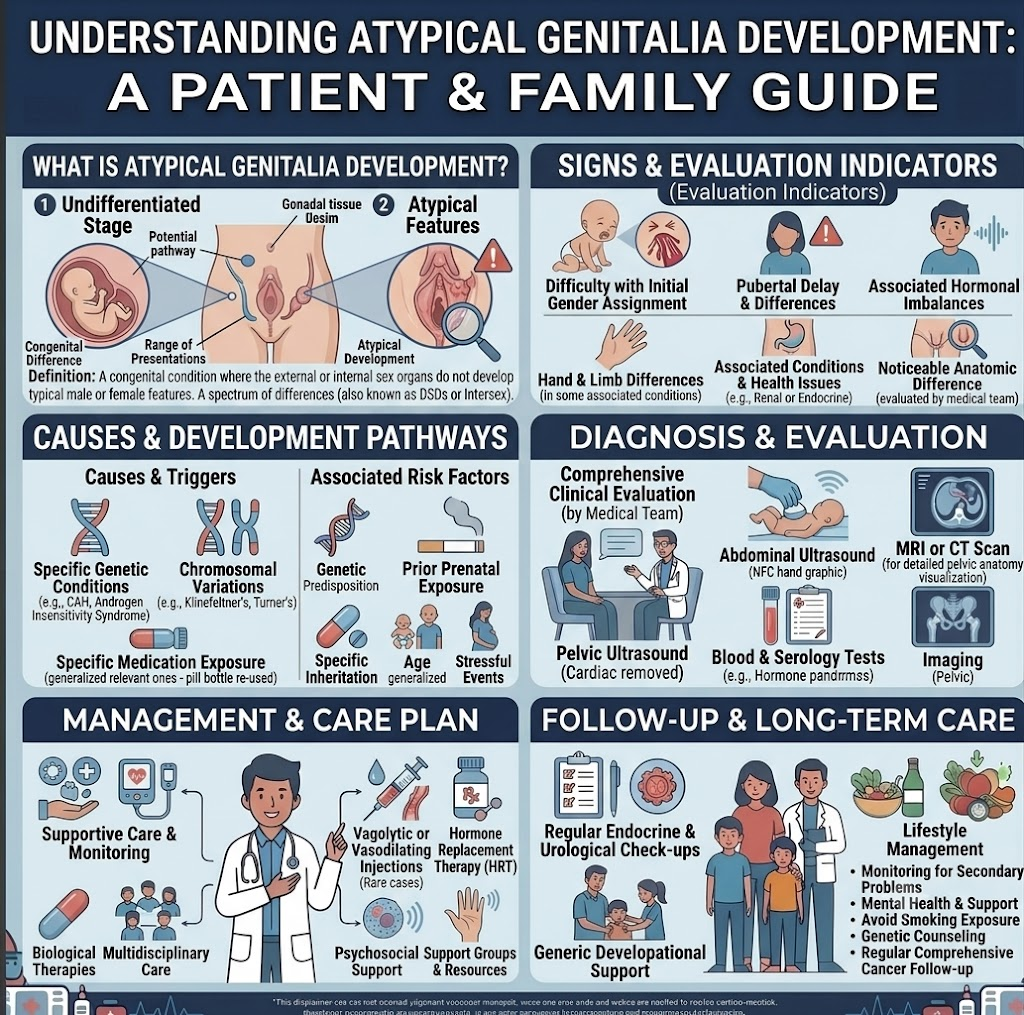
Atypical genitalia (previously called ambiguous genitalia) is a rare condition where a newborn baby's external sex organs do not clearly look male or female. It is not a disease, but rather a variation in how the reproductive organs develop before birth. In some cases, a baby's external organs might not match their internal reproductive organs (like ovaries or testicles) or their genetic chromosomes (typically XX for females and XY for males). Prompt evaluation by a medical team helps families understand the cause and plan appropriate care.
Understanding the Condition
Understanding Atypical Genitalia
Understanding the Condition
Common Symptoms
Atypical Female Genitals (XX Chromosomes): Symptoms may include an enlarged clitoris that resembles a small penis, closed labia (the outer lips of the vagina) that may look like a scrotum, or small lumps inside the fused labia that feel like testicles.
Atypical Male Genitals (XY Chromosomes): Symptoms may include a very small penis (micropenis), a misplaced urinary opening on the underside of the penis rather than the tip (hypospadias), an empty scrotum that looks like labia, or testicles that have not descended into the scrotum.
Consultation Guide
Which Specialist to Meet
You will need to consult a specialized multidisciplinary pediatric team. This team typically includes a pediatric endocrinologist (hormone expert), a pediatric urologist or general surgeon, a medical geneticist, and a pediatric psychologist or counselor.
Preparations Before Your Visit
Before your visit, gather a detailed family history, paying special attention to any relatives with fertility problems, early infant deaths, missing menstrual cycles, or hormone conditions like congenital adrenal hyperplasia. Bring all prenatal ultrasound records and write down questions about your baby's development.
Book a doctor visit near me
Consultation Guide
Atypical genitalia (previously called ambiguous genitalia) is a rare condition where a newborn baby's external sex organs do not clearly look male or female. It is not a disease, but rather a variation in how the reproductive organs develop before birth. In some cases, a baby's external organs might not match their internal reproductive organs (like ovaries or testicles) or their genetic chromosomes (typically XX for females and XY for males). Prompt evaluation by a medical team helps families understand the cause and plan appropriate care.
Diagnostic Procedures
An imaging test that uses high-frequency sound waves to create real-time pictures of your baby's internal structures. It helps doctors locate internal reproductive organs, such as a uterus, ovaries, or undescended testicles.
What to Expect
Your baby will lie comfortably on an exam table. A technician will apply a warm, non-greasy gel to the baby's lower stomach and gently glide a small wand over the area. The scan is completely painless and takes about 15 to 30 minutes.
A test that analyzes your baby's DNA to determine their chromosomal sex (typically XX or XY) and look for specific gene mutations linked to differences in sex development.
What to Expect
A nurse will collect a small blood sample from your baby (usually through a heel prick) or gently swab the inside of their cheek. The sample is sent to a lab, and results typically take several days to a few weeks. The procedure is quick with minimal discomfort.
Diagnostic X-ray (Genitogram)
An X-ray procedure that uses contrast dye to clearly map out the baby's internal urinary and reproductive pathways, helping to show how the bladder, urethra, and vagina connect.
What to Expect
A medical professional will gently insert a tiny catheter into the baby's urinary opening to introduce a liquid dye. X-ray images are then taken. This allows doctors to see internal shapes clearly. The baby must remain still for a few seconds during the scan.
Hormone Replacement Therapy: Medications that replace missing hormones or correct imbalances, supporting typical growth, puberty, and secondary sex characteristics. This does not involve brand-name medications and is tailored to the child's specific diagnosis. (Duration: Often lifelong, beginning in infancy or around the age of puberty, depending on the child's specific medical needs.)
Psychological and Decision-Making Support: Professional counseling to help parents process the diagnosis, make informed decisions, and assist the child with healthy identity development and self-esteem as they grow. (Duration: Ongoing and available on an as-needed basis from infancy through adolescence and young adulthood.)
Treatment Options
Reconstructive Surgery: Surgeries designed to improve the function of the urinary tract and reproductive organs, or to align the appearance of the external genitalia with the child's assigned sex. (Duration: Typically performed as one or more planned procedures during infancy or early childhood, with follow-up monitoring as the child grows.)
Prevention & Long-Term Wellbeing
Prevention & Family Planning
Preconception Genetic Counseling: Families with a history of congenital adrenal hyperplasia, infertility, or atypical genitalia should meet with a genetic counselor before trying to conceive to understand inheritance risks.
Long-Term Monitoring
Cancer Risk Screening: Some internal reproductive tissue may carry a higher risk of developing tumors. Regular medical imaging and evaluations are vital to ensure early detection and management.
Hormone and Growth Tracking: Schedule routine follow-up visits with a pediatric endocrinologist to monitor the child's natural growth, physical changes, and overall hormone balance as they enter puberty.
Peer and Family Support: Engage with specialized family advocacy groups and support networks to share experiences, build confidence, and reduce social stigma.
Tags & Topics
Notice an error or need an update?
Help us keep medical information accurate. Report incorrect info or suggest an edit.


