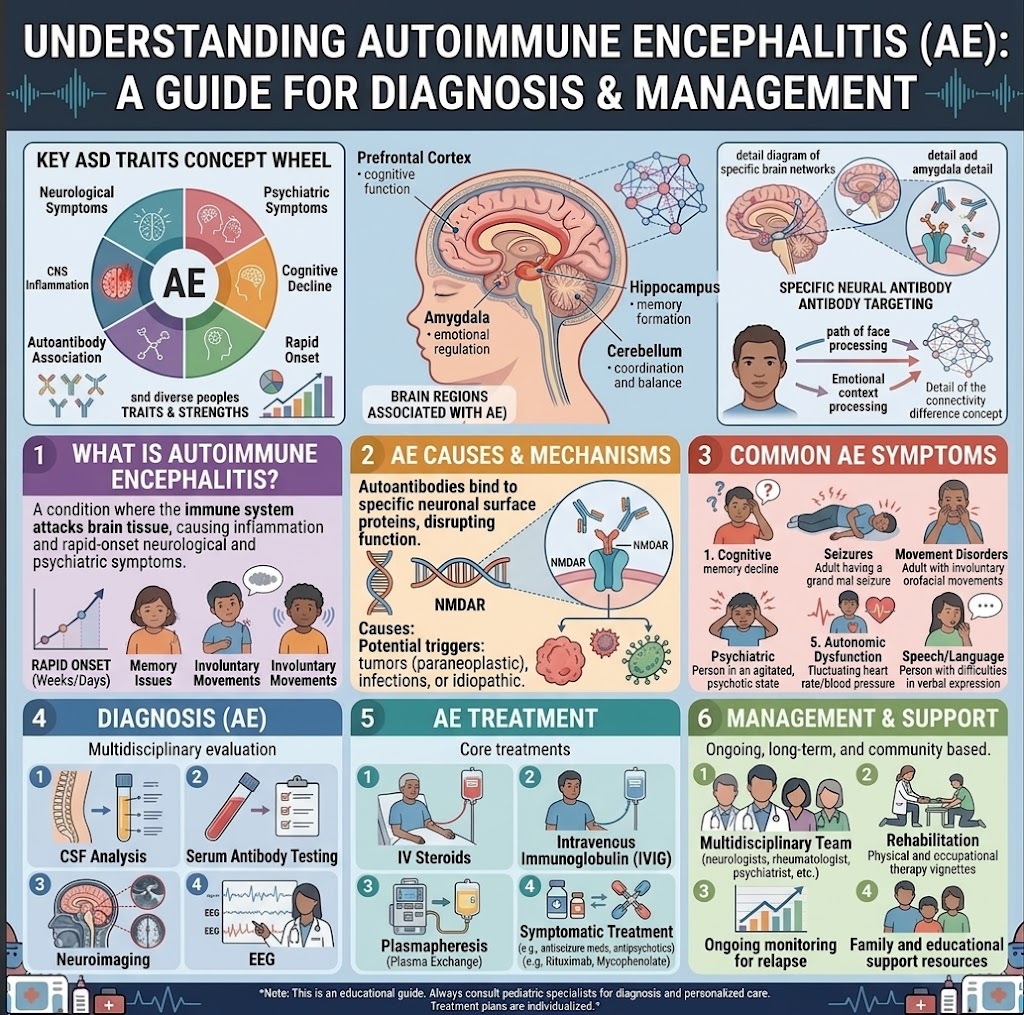
Autoimmune encephalitis (pronounced en-sef-uh-LIE-tis) is a severe brain condition where the body's own defense system, the immune system, mistakenly attacks healthy brain cells. This causes inflammation, or swelling, in the brain. Symptoms vary widely but often include memory, thinking, behavior problems, and seizures. It differs from brain infections, requiring distinct treatments. While causes aren't fully known, some cases link to cancers, infections, or medicines. Those with autoimmune diseases or a family history may have higher risk. Early diagnosis and treatment are crucial for recovery, preventing severe complications or death. Many recover fully, but some may have lasting symptoms.
Understanding the Condition
Autoimmune Encephalitis: When the Body's Defenses Attack the Brain
Understanding the Condition
Autoimmune encephalitis (pronounced en-sef-uh-LIE-tis) is a severe brain condition where the body's own defense system, the immune system, mistakenly attacks healthy brain cells. This causes inflammation, or swelling, in the brain. Symptoms vary widely but often include memory, thinking, behavior problems, and seizures. It differs from brain infections, requiring distinct treatments. While causes aren't fully known, some cases link to cancers, infections, or medicines. Those with autoimmune diseases or a family history may have higher risk. Early diagnosis and treatment are crucial for recovery, preventing severe complications or death. Many recover fully, but some may have lasting symptoms.
Common Symptoms
Early Signs: Often resemble infection, like headache and fever.
Behavioral and Mood Changes: Anxiety, panic attacks, new behaviors, agitation, hallucinations (seeing/hearing things that aren't real), delusions (false beliefs), disorganized thoughts.
Memory Problems: Difficulty recalling new or past information.
Language Difficulties: Reduced talking, repeating words/phrases, trouble forming sentences.
Involuntary Movements: Uncontrolled twitching or jerking of the body.
Changes in Awareness: Confusion, disorientation, reduced consciousness.
Course of Illness: Symptoms can worsen progressively or fluctuate (improving then worsening again, known as relapsing-remitting).
Emergency Care: Seek immediate help for severe seizures (over 5 minutes or recurrent with unconsciousness), very high fevers, or breathing difficulties.
Consultation Guide
Which Specialist to Meet
A neurologist (brain and nervous system specialist) and possibly a neuroimmunologist (specializing in immune-related nervous system conditions) or oncologist (if cancer-related) should be consulted.
Preparations Before Your Visit
List all symptoms, their onset, and changes. Include full medical history, past infections, current medications/supplements, and family history of autoimmune diseases. Prepare questions for the doctor.
Book a doctor visit near me
Symptomatic Management
Supportive Care: Managing specific symptoms like fever, agitation, and sleep issues to ensure stability during acute illness. (Duration: As needed during acute phase and recovery.)
Physical, Occupational, and Speech Therapy: Helps regain strength, coordination, cognitive function, and communication skills following lasting symptoms. (Duration: Ongoing for months or years, adapted to needs.)
Ongoing Medical Monitoring: Regular neurologist visits monitor for lasting symptoms, relapses (return of symptoms), or medication side effects.
Symptom Management: Work with your care team to address persistent issues like memory or mood changes using medication, lifestyle adjustments, and therapeutic support.
Rehabilitation Programs: Engage in recommended therapies (physical, occupational, speech, cognitive) to recover functions and improve daily living.
Emotional and Psychological Support: Seek professional help or support groups for managing stress, anxiety, or depression that may arise.
Disease Education: Understanding your specific type of autoimmune encephalitis helps empower you to recognize early signs of a relapse and seek timely medical attention.
Diagnostic Procedures
Analyze blood for specific antibodies that mistakenly target brain cells in autoimmune encephalitis.
What to Expect
Blood is drawn from a vein in your arm. Expect a brief pinch.
Lumbar Puncture (Spinal Tap)
Collects cerebrospinal fluid (CSF) – the fluid surrounding your brain and spinal cord – for testing abnormal antibodies or inflammation markers.
What to Expect
While sitting or lying on your side, your lower back is numbed. A thin needle collects fluid. You'll feel pressure. The procedure takes 30-45 minutes. You may be asked to lie flat afterward to prevent headaches.
Uses magnets and radio waves to create detailed brain images, identifying inflammation, swelling, or structural changes.
What to Expect
You will lie still on a table inside a noisy, tunnel-like machine for 30-60 minutes. Earplugs are provided.
Electroencephalogram (EEG)
Measures brain electrical activity to detect unusual patterns linked to seizures or altered consciousness.
What to Expect
Small sensors are painlessly attached to your scalp. You'll sit or lie comfortably while brain activity is recorded for 20-60 minutes.
If an underlying cancer is suspected as a trigger, various tests (e.g., CT, PET scans, blood tests) may be used to locate tumors.
What to Expect
Procedures vary by test but may involve lying still for scans or providing blood samples. Your doctor will explain specifics.
Treatment Options
Immunotherapy (to calm the immune system)
High-Dose Steroids: Intravenous anti-inflammatory medications to rapidly reduce brain swelling and suppress immune overactivity. (Duration: Days to weeks, with gradual reduction.)
Intravenous Immunoglobulin (IVIG): Donated antibodies given intravenously to modulate the immune response. (Duration: Cycles over several days, possibly repeated monthly for months.)
Plasma Exchange (Plasmapheresis): Harmful antibodies are filtered from your blood plasma; 'cleaned' plasma or replacement fluid is returned. (Duration: Several sessions over 1-2 weeks.)
Other Immune-Modulating Medications: Used if initial treatments are insufficient, these medicines further suppress or modulate the immune system. (Duration: Can be long-term (months to years).)
Cancer Treatment: If AE is triggered by cancer, treating the tumor (surgery, chemotherapy, radiation) is vital for resolving brain inflammation. (Duration: Varies by cancer type and stage.)
Anti-Seizure Medications: Medicines to control and prevent seizures. (Duration: Often long-term, potentially years.)
Prevention & Long-Term Wellbeing
Sleep Disturbances: Initial sleeplessness, followed by excessive sleep during recovery.
Severe Seizures: Require emergency care. Last over five minutes, or occur consecutively without consciousness regained.
Prevention
Regular Cancer Screenings: For those at risk, appropriate cancer screenings can detect and treat tumors early, potentially preventing or reducing AE severity triggered by cancer. Discuss recommendations with your doctor.
Long-Term Support
Tags & Topics
Notice an error or need an update?
Help us keep medical information accurate. Report incorrect info or suggest an edit.


