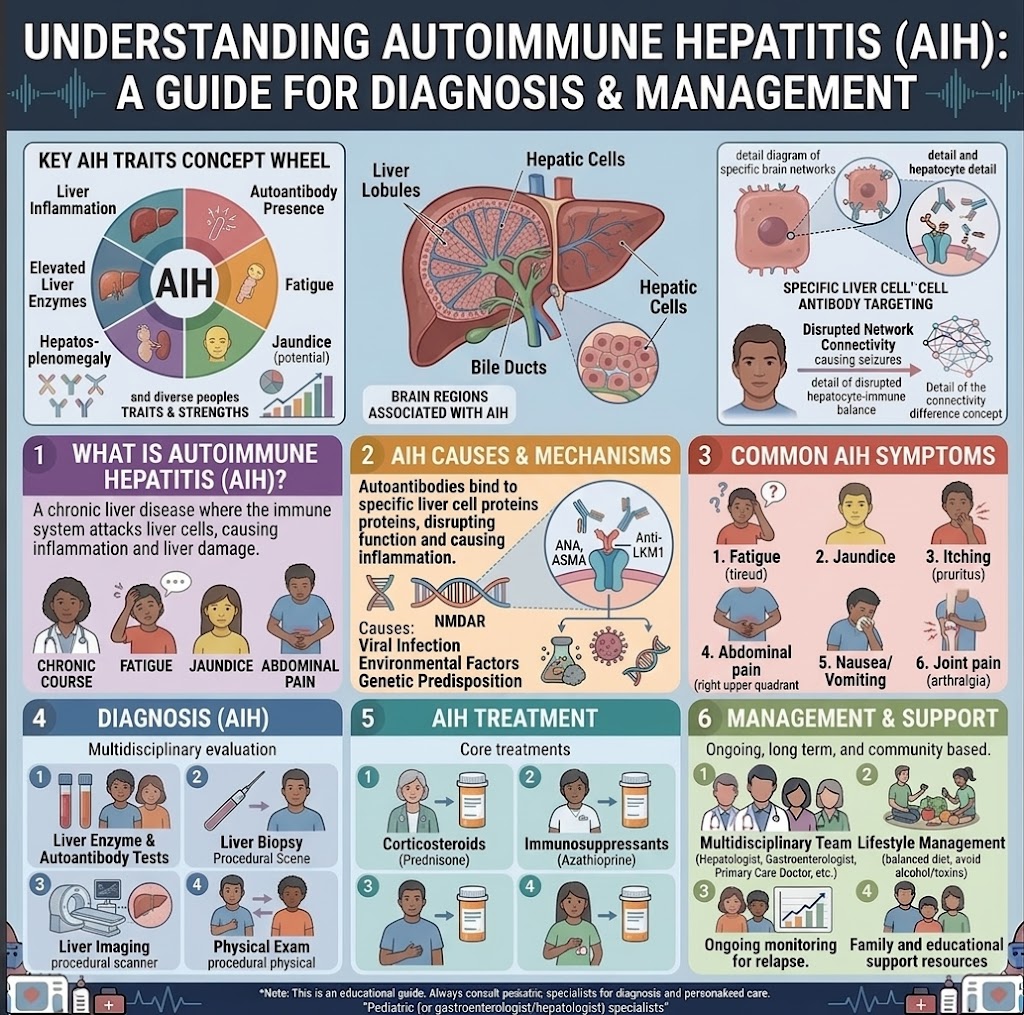
Autoimmune hepatitis is a chronic liver disease where your body's own immune system, which normally fights off infections, mistakenly attacks your liver cells. This attack causes ongoing swelling, irritation, and damage to the liver. While the exact reason for this mistaken attack isn't fully understood, it's thought to involve a combination of genetic factors and environmental triggers over time. If left untreated, autoimmune hepatitis can lead to severe scarring of the liver, known as cirrhosis, and eventually liver failure. However, with early diagnosis and proper medical treatment, often involving medications that calm the immune system, the condition can usually be controlled effectively. In advanced cases or when medicines don't work, a liver transplant might be considered.
Understanding the Condition
Autoimmune Hepatitis: Understanding Your Liver Condition
Understanding the Condition
Common Symptoms
Belly Discomfort: Aching or pain in the stomach area.
Jaundice: Yellowing of the skin or the whites of the eyes, which can be more or less noticeable depending on a person's skin tone.
Enlarged Liver: The liver may become larger than normal, sometimes felt during a physical exam.
Spider Angiomas: Small, spider-like red blood vessels that appear on the skin, often on the chest or face.
Joint Pain: Aches and stiffness in the joints.
Loss of Menstrual Periods: Women may experience irregular or absent periods.
Fatigue: Feeling unusually tired or lacking energy.
Consultation Guide
Which Specialist to Meet
You should consult a gastroenterologist (a doctor specializing in digestive system disorders) or a hepatologist (a doctor specifically focused on liver diseases).
Preparations Before Your Visit
Before your visit, make a list of all your symptoms, including when they started and how severe they are. Note any medications you're taking (prescription, over-the-counter, supplements), your complete medical history, and any questions you have for the doctor. This helps them understand your condition better.
Book a doctor visit near me
Consultation Guide
Autoimmune hepatitis is a chronic liver disease where your body's own immune system, which normally fights off infections, mistakenly attacks your liver cells. This attack causes ongoing swelling, irritation, and damage to the liver. While the exact reason for this mistaken attack isn't fully understood, it's thought to involve a combination of genetic factors and environmental triggers over time. If left untreated, autoimmune hepatitis can lead to severe scarring of the liver, known as cirrhosis, and eventually liver failure. However, with early diagnosis and proper medical treatment, often involving medications that calm the immune system, the condition can usually be controlled effectively. In advanced cases or when medicines don't work, a liver transplant might be considered.
Various blood tests are used to check liver function, look for specific antibodies that suggest an autoimmune condition, and rule out other liver diseases caused by viruses or other factors.
A healthcare professional will draw a small sample of blood, usually from a vein in your arm. This is a quick procedure and generally causes only mild discomfort.
Techniques like ultrasound, CT scans, or MRI scans can provide detailed pictures of your liver to assess its size, shape, and look for signs of damage or scarring.
Diagnostic Procedures
What to Expect
What to Expect
You will lie on a table while a machine scans your abdomen. These procedures are typically painless, though some may involve lying still for a period or receiving an injection of a contrast dye.
A liver biopsy is a procedure to remove a tiny piece of liver tissue, which is then examined under a microscope in a lab. This helps doctors diagnose liver conditions, determine the severity of damage, and guide treatment decisions. There are a few ways to perform a biopsy:- Percutaneous biopsy: The most common type, where a thin needle is inserted through the skin and into the liver.- Transjugular biopsy: The needle is guided through a vein in the neck down to the liver. This is often used if there's a higher risk of bleeding.- Laparoscopic biopsy: Involves inserting instruments through a small cut in the abdomen to view the liver directly and take a sample.
What to Expect
Before the procedure, you'll likely receive a local anesthetic to numb the area, or sometimes light sedation. For a percutaneous biopsy, you'll lie on your back or side, and the doctor will guide a needle through your skin into the liver to collect a tissue sample. You might feel pressure or a brief, sharp pain. For a transjugular biopsy, a catheter is inserted into a neck vein. For a laparoscopic biopsy, small incisions are made. After the biopsy, you'll need to rest for several hours and will be monitored for any bleeding or complications. You might feel some soreness at the biopsy site for a few days. Risks, though rare, include bleeding or pain.
Treatment Options
Medications
Immune-Suppressing Medications: These medicines work by calming down your overactive immune system, preventing it from attacking your liver. This reduces inflammation and helps protect your liver from further damage. They are the cornerstone of treatment for autoimmune hepatitis. (Duration: Often long-term, possibly for life, to keep the condition under control and prevent relapses.)
Surgical Procedures
Liver Transplant: A major surgery where a diseased, failing liver is removed and replaced with a healthy liver from a deceased donor, or a portion of a healthy liver from a living donor. The transplanted liver piece from a living donor can regenerate and grow to full size. This option is considered when autoimmune hepatitis does not respond to other treatments, or when the liver damage is too severe, leading to liver failure or life-threatening complications. (Duration: A one-time surgical procedure, followed by lifelong anti-rejection medications and monitoring.)
Regular Medical Check-ups: Consistent follow-up appointments with your gastroenterologist or hepatologist are crucial. These visits allow your doctor to monitor your liver function, adjust medications as needed, and check for any signs of complications or disease progression.
Medication Adherence: Taking your prescribed immune-suppressing medications exactly as directed by your doctor is vital for controlling the disease and preventing flare-ups or further liver damage. Do not stop or change doses without medical advice.
Monitoring for Complications: Your doctor will regularly screen for potential complications such as cirrhosis, enlarged veins in the esophagus (varices), fluid buildup in the abdomen (ascites), or liver cancer, especially if cirrhosis has developed. Early detection allows for prompt management.
Prevention & Long-Term Wellbeing
Prevention
Managing Existing Autoimmune Conditions: If you have other autoimmune diseases (like celiac disease or rheumatoid arthritis), working closely with your doctor to manage them might help reduce the overall autoimmune response in your body, though it's not a direct prevention for autoimmune hepatitis itself.
Healthy Lifestyle: While there's no specific way to prevent autoimmune hepatitis, maintaining a generally healthy lifestyle—eating a balanced diet, staying physically active, avoiding excessive alcohol, and limiting exposure to liver-damaging toxins—can support overall liver health.
Long-Term Monitoring
Tags & Topics
Notice an error or need an update?
Help us keep medical information accurate. Report incorrect info or suggest an edit.


