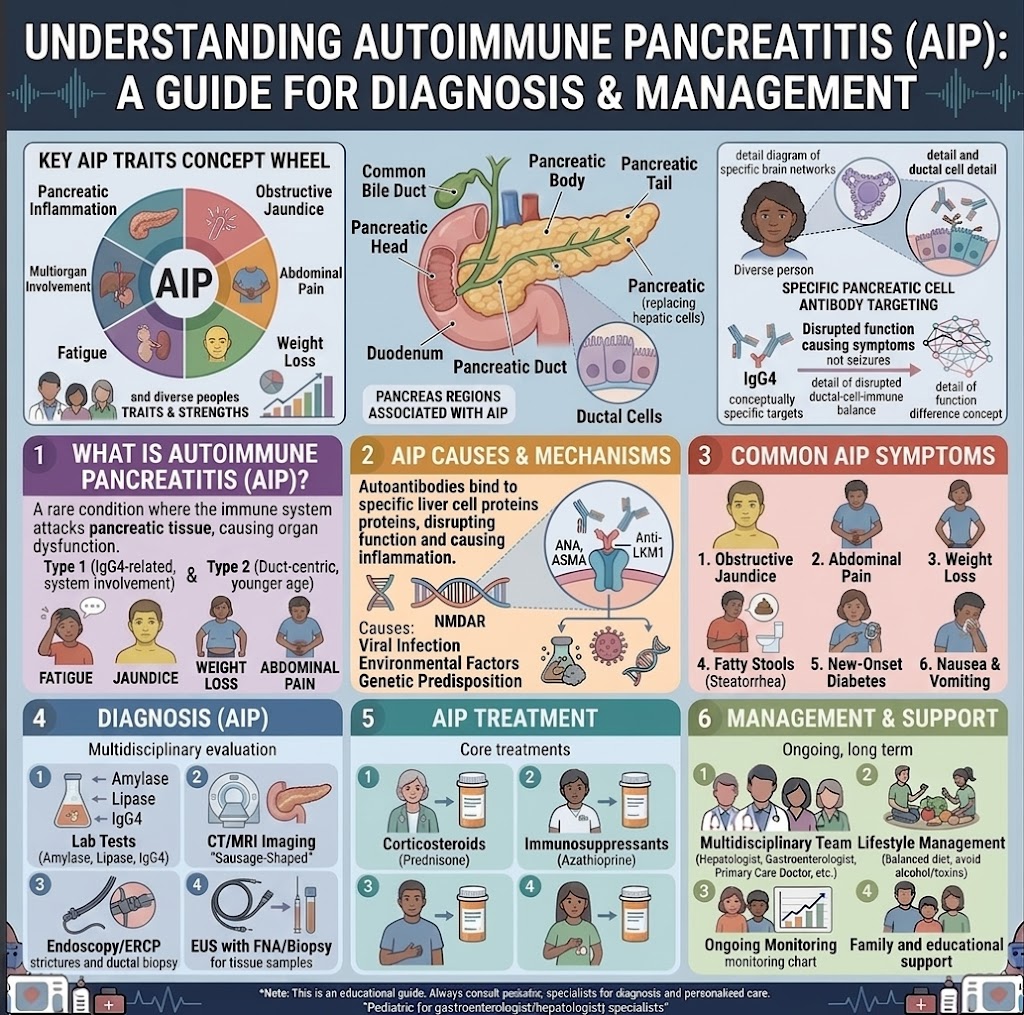
Autoimmune pancreatitis (AIP) is a chronic condition where the body's immune system mistakenly attacks the pancreas, leading to inflammation and damage. The pancreas is an organ located behind the stomach that produces digestive enzymes and hormones like insulin. This immune system attack is characteristic of an autoimmune disease. AIP is categorized into two main types: Type 1 and Type 2. Type 1 AIP, also known as IgG4-related disease, frequently impacts multiple organs beyond the pancreas, including bile ducts, salivary glands, kidneys, and lymph nodes. Type 2 AIP typically affects only the pancreas, though it is often associated with inflammatory bowel disease. Diagnosing AIP can be challenging because its symptoms often mimic those of pancreatic cancer, making accurate differentiation crucial for effective and distinct treatment.
Understanding the Condition
Autoimmune Pancreatitis: An Immune System Disorder of the Pancreas
Understanding the Condition
Autoimmune pancreatitis (AIP) is a chronic condition where the body's immune system mistakenly attacks the pancreas, leading to inflammation and damage. The pancreas is an organ located behind the stomach that produces digestive enzymes and hormones like insulin. This immune system attack is characteristic of an autoimmune disease. AIP is categorized into two main types: Type 1 and Type 2. Type 1 AIP, also known as IgG4-related disease, frequently impacts multiple organs beyond the pancreas, including bile ducts, salivary glands, kidneys, and lymph nodes. Type 2 AIP typically affects only the pancreas, though it is often associated with inflammatory bowel disease. Diagnosing AIP can be challenging because its symptoms often mimic those of pancreatic cancer, making accurate differentiation crucial for effective and distinct treatment.
Common Symptoms
Difficulty Diagnosing and Overlapping Symptoms: Autoimmune pancreatitis can be hard to diagnose as it often shows no symptoms in its early stages. When symptoms do appear, especially with Type 1 AIP, they can be very similar to those of pancreatic cancer.
Dark Urine: Urine may appear unusually dark, like cola or strong tea.
Pale or Floating Stools: Stools may lose their typical brown color, appearing pale or clay-colored, and may float in the toilet due to unabsorbed fat.
Yellow Skin and Eyes (Jaundice): The skin and whites of the eyes can turn yellow, a condition known as jaundice, indicating a blockage in bile flow.
Abdominal or Back Pain: Pain can occur in the upper part of your belly or spread to the middle of your back.
Nausea and Vomiting: Feelings of sickness in the stomach leading to throwing up.
Weakness or Extreme Tiredness: Feeling unusually weak or exhausted, often beyond what rest can fix.
Loss of Appetite or Feeling Full Quickly: A decreased desire to eat, or feeling full after consuming only a small amount of food.
Unexplained Weight Loss: Losing weight without intentionally trying to.
Consultation Guide
Which Specialist to Meet
You should consult a gastroenterologist, a doctor specializing in digestive system disorders. Depending on which other organs are affected, you might also see an endocrinologist (for diabetes management) or a hepatologist (for liver and bile duct issues). A multidisciplinary team approach is common for complex cases.
Preparations Before Your Visit
Before your appointment, gather all relevant medical information: a detailed list of your symptoms, including when they started and how often they occur; your complete medical history, including any other conditions you have; all medications you currently take (prescription, over-the-counter, and supplements); and any previous test results related to your symptoms. Prepare a list of questions you have for the doctor. Be ready to discuss your lifestyle habits, including diet, alcohol consumption, and smoking.
Book a doctor visit near me
Duct Dilation and Stenting: If narrowing of the bile or pancreatic ducts causes blockages and symptoms like jaundice, an endoscopic procedure can be performed to widen the duct and sometimes place a small tube (stent) to keep it open, improving drainage. (Duration: The procedure typically takes 30-60 minutes; stents may be temporary (removed after a few months) or require periodic replacement.)
Pain Management: Strategies to manage any abdominal or back pain, which may include over-the-counter pain relievers or prescribed medications. (Duration: As needed for symptom relief.)
Monitoring for Complications: Be vigilant for new or worsening symptoms that could indicate complications, such as increased thirst and frequent urination (diabetes), unexplained weight loss, or fatty stools (pancreatic exocrine insufficiency). Report any concerns promptly to your doctor.
Diagnostic Procedures
These tests check for markers of inflammation, specific immune system proteins (like IgG4, which is elevated in Type 1 AIP), liver function, and levels of pancreatic enzymes. They can help rule out other conditions and provide clues about AIP.
What to Expect
A healthcare professional will draw a small sample of blood from a vein in your arm, typically in the crook of your elbow. You might feel a brief sting or pinch. The process is quick, usually lasting a few minutes.
Imaging Scans (CT, MRI/MRCP)
Computed Tomography (CT) scans use X-rays to create detailed cross-sectional images of the pancreas and surrounding areas. Magnetic Resonance Imaging (MRI) uses powerful magnets and radio waves for even more detailed soft tissue images. Magnetic Resonance Cholangiopancreatography (MRCP) is a specific type of MRI that focuses on the bile and pancreatic ducts to detect blockages or narrowing.
What to Expect
You will lie on a movable table that slides into a large, tunnel-like machine. For some scans, you may receive a contrast dye intravenously to enhance visibility. You'll need to remain very still during the scan, which can take 20 minutes to over an hour. MRIs can be noisy, so you might be offered earplugs.
Endoscopic Ultrasound (EUS) with Biopsy
EUS involves inserting a thin, flexible tube with an ultrasound probe and camera down your throat, into your stomach and the first part of your small intestine. This provides high-resolution images of the pancreas. If abnormalities are found, a very thin needle can be passed through the scope to collect a small tissue sample (biopsy) for laboratory analysis, which is crucial for confirming AIP and ruling out cancer.
What to Expect
You will be given sedation or general anesthesia to ensure you are comfortable and relaxed. The scope is gently guided. If a biopsy is performed, you will not feel it. The procedure typically lasts 30 to 90 minutes. You will need someone to drive you home afterward due to the effects of sedation.
Regular Medical Follow-ups: Consistent appointments with your specialist are crucial to monitor disease activity, adjust treatment, and screen for complications like diabetes or pancreatic enzyme insufficiency. Imaging and blood tests may be repeated periodically.
Treatment Options
Medications
Anti-inflammatory Medications: These are often the first treatment, working to reduce inflammation in the pancreas and suppress the immune system's attack. They are typically started at a higher dose and gradually reduced over time. (Duration: Initial treatment for several weeks to months, followed by a tapering period, and potentially low-dose maintenance for long periods.)
Immune-Modulating Medications: If initial anti-inflammatory drugs are not effective, or for long-term management to prevent recurrence, other medications may be used to further calm the immune system. (Duration: Long-term, often for months to years, depending on the individual's response and disease activity.)
Pancreatic Enzyme Supplements: If AIP damages the pancreas's ability to produce enough digestive enzymes, these supplements are taken with meals to help the body break down food and absorb essential nutrients. (Duration: Ongoing, with meals, for as long as enzyme deficiency persists.)
Diabetes Management Medications: For individuals who develop diabetes as a complication of pancreatic damage, treatment may involve oral medications or insulin injections to control blood sugar levels. (Duration: Ongoing, as prescribed, for life if diabetes is permanent.)
Adherence to Treatment: It is vital to take all prescribed medications as directed, even if you feel well, to maintain remission, prevent flare-ups, and minimize long-term damage to the pancreas and other organs.
Bone Health Awareness: Long-term use of certain anti-inflammatory medications can affect bone density. Your doctor may recommend monitoring bone health and strategies to maintain strong bones, such as calcium and vitamin D supplements.
Mental and Emotional Support: Living with a chronic condition can be challenging. Seeking support from healthcare professionals, joining support groups, or consulting mental health specialists can provide valuable coping strategies and emotional well-being.
Prevention & Long-Term Wellbeing
Nutritional Counseling: Working with a dietitian can help ensure adequate nutrition, especially if digestive enzymes are low. This may involve specific dietary adjustments, such as a low-fat diet, or vitamin and mineral supplements to address deficiencies. (Duration: Ongoing, as needed, with regular reassessment.)
Healthy Lifestyle Choices: Maintain a balanced, nutritious diet. It is important to avoid smoking and limit alcohol consumption, as these can negatively impact pancreatic health and overall well-being.
Tags & Topics
Notice an error or need an update?
Help us keep medical information accurate. Report incorrect info or suggest an edit.


