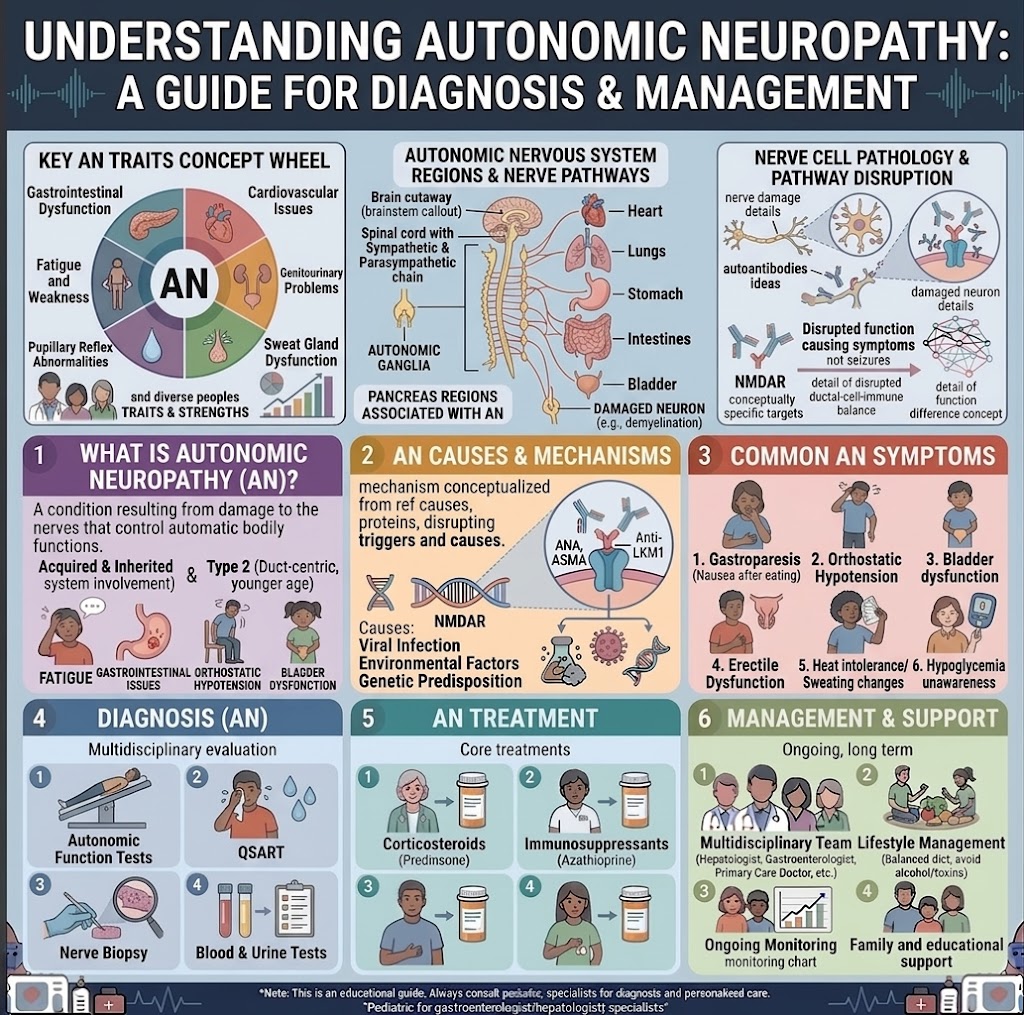
Autonomic neuropathy is a condition that results from damage to nerves controlling essential, automatic bodily functions. These include heart rate, blood pressure, digestion, temperature regulation, bladder control, and sexual function. When these nerves are damaged, communication between the brain and vital organs like the heart, blood vessels, and sweat glands is disrupted. Diabetes is the most common cause, but other health conditions, infections (viral or bacterial), or certain medications can also trigger it. Symptoms and treatment vary based on which nerves are affected.
Understanding the Condition
Autonomic Neuropathy: Understanding Your Body's Automatic Systems
Understanding the Condition
Autonomic neuropathy is a condition that results from damage to nerves controlling essential, automatic bodily functions. These include heart rate, blood pressure, digestion, temperature regulation, bladder control, and sexual function. When these nerves are damaged, communication between the brain and vital organs like the heart, blood vessels, and sweat glands is disrupted. Diabetes is the most common cause, but other health conditions, infections (viral or bacterial), or certain medications can also trigger it. Symptoms and treatment vary based on which nerves are affected.
Common Symptoms
Dizziness and Fainting: Sudden drops in blood pressure upon standing (orthostatic hypotension), leading to lightheadedness or passing out.
Digestive Issues: Nausea, vomiting, bloating, feeling full quickly, loss of appetite, diarrhea, or constipation. This can also include difficulty swallowing.
Urinary Problems: Difficulty starting urination, feeling of incomplete bladder emptying, leakage, or frequent nighttime urination.
Sexual Dysfunction: For men, erectile dysfunction. For women, difficulty with arousal, lubrication, or orgasm.
Sweating Abnormalities: Either reduced ability to sweat, leading to heat intolerance, or excessive sweating, particularly at night or while eating.
Vision Problems: Difficulty adjusting vision when moving between bright and dim light.
Exercise Intolerance: Rapid heart rate or extreme fatigue during physical activity due to the heart's inability to respond normally.
Trouble Regulating Body Temperature: Inability to adjust to hot or cold environments effectively.
Low Blood Sugar Unawareness: For people with diabetes, not experiencing typical warning signs of low blood sugar, such as shakiness or sweating.
Consultation Guide
Which Specialist to Meet
Your initial visit should be with a primary care physician. Depending on your symptoms and the suspected cause, they may refer you to a neurologist (a doctor specializing in nerve conditions), an endocrinologist (if diabetes is involved), a cardiologist (for heart-related symptoms), or a gastroenterologist (for digestive issues).
Preparations Before Your Visit
Before your appointment, it's helpful to: log your symptoms (when they occur, what makes them better or worse, how long they last), list all medications, vitamins, and supplements you currently take, and be prepared to discuss your medical history and questions you have for the doctor.
Book a doctor visit near me
You will lie flat on a special table with straps to keep you secure. Electrodes will be placed on your chest to monitor your heart rate, and a blood pressure cuff will be on your arm. After a period of lying flat, the table will slowly tilt upward, mimicking a standing position. Your heart rate and blood pressure will be continuously monitored for a set duration or until symptoms occur. If you experience symptoms like dizziness or fainting, the table will be returned to a flat position. The test is generally safe, though you might feel dizzy or lightheaded, which typically resolves quickly once you are flat again.
Blood Sugar Control: For neuropathy caused by diabetes, strict management of blood sugar levels through diet, exercise, and medication is crucial to prevent further nerve damage and potentially improve existing symptoms. (Duration: Ongoing)
Dizziness and Blood Pressure Issues: Medications to raise blood pressure or control heart rate. Increasing fluid and salt intake (under medical guidance). Wearing compression stockings. Elevating the head of the bed. (Duration: Ongoing, as long as symptoms persist)
Digestive Problems: Medications to improve stomach emptying, reduce nausea, or manage diarrhea/constipation. Dietary changes, such as eating smaller, more frequent meals. (Duration: Ongoing, as long as symptoms persist)
Urinary Problems: Medications to improve bladder function or reduce overactivity. Techniques like timed voiding or self-catheterization in severe cases. (Duration: Ongoing, as long as symptoms persist)
Regular Exercise: Engage in moderate physical activity as advised by your doctor. This can improve overall health and aid in symptom management.
Blood Pressure and Cholesterol Management: Work with your doctor to keep blood pressure and cholesterol levels within healthy ranges, as these can contribute to nerve damage.
Avoid Triggers: Identify and avoid factors that worsen your symptoms, such as certain foods, extreme temperatures, or prolonged standing.
Hydration: Ensure adequate fluid intake, especially if experiencing blood pressure drops.
Foot Care: If you have diabetes, diligent foot care is essential to prevent infections and complications, as nerve damage can reduce sensation.
Consultation Guide
Treating Autoimmune Diseases: If an autoimmune condition is the cause, medications to suppress the immune system (e.g., corticosteroids or other immunosuppressants) may be prescribed to reduce nerve inflammation and damage. (Duration: Varies, often long-term)
Infection Treatment: Antibiotics or antiviral medications are used if a bacterial or viral infection is identified as the cause. (Duration: Course of medication, typically days to weeks)
Addressing Underlying Causes
Diagnostic Procedures
This test helps determine how your heart and nervous system react to changes in body position. It's often used when you experience unexplained fainting or dizziness, as it can reveal issues with blood pressure regulation.
What to Expect
Also known as sonography, this diagnostic imaging technique uses high-frequency sound waves to create live images of internal body structures. It helps guide diagnosis and treatment by visualizing organs and tissues, though it's less effective for areas with gas or bone.
What to Expect
Most ultrasounds involve a technician moving a small, handheld device (transducer) over the skin in the area being examined. A special gel is applied to the skin to help the sound waves transmit effectively. You may be asked to hold your breath or change positions. For some specific tests, a smaller device might be inserted into a body opening. You will typically feel some pressure from the transducer but no pain. The procedure is non-invasive and uses low-power sound waves, carrying no known risks. You might be asked to wear loose clothing and remove jewelry for the exam. For some specific exams, you might need to fast or have a full bladder.
Other Nerve Function Tests
To specifically assess autonomic nerve function, your doctor may order tests to measure heart rate variability (how your heart rate changes with breathing), evaluate sweat production (e.g., quantitative sudomotor axon reflex test or QSART), or assess bladder emptying. These specialized tests provide insight into the specific autonomic nerves that might be damaged.
What to Expect
These tests vary. For heart rate variability, you may be asked to breathe in specific patterns while heart rate is monitored. For sweat tests, small electrical currents might stimulate sweat glands, and sweat volume is measured. For bladder function, tests might involve measuring urine flow or bladder pressure. Your doctor will explain the specifics of any recommended tests.
Annual Screening: Annual autonomic neuropathy screenings are recommended for individuals with type 2 diabetes starting at diagnosis, and for those with type 1 diabetes beginning five years post-diagnosis.
Prompt Treatment: Seek prompt diagnosis and treatment of any underlying autoimmune diseases, infections, or other health conditions contributing to neuropathy.
Support and Education
Seek Support: Seek support from healthcare professionals and support groups to learn more about managing your condition and coping with its impact on daily life.
Treatment Options
Managing Underlying Conditions
Sexual Dysfunction: Medications or devices to aid erectile function or lubrication. (Duration: As needed)
Sweating Abnormalities: Medications to reduce excessive sweating. Lifestyle adjustments for heat intolerance (e.g., cooling vests). (Duration: As needed)
Therapies and Procedures
Acupuncture: A traditional Chinese medicine technique involving the insertion of very thin needles into specific points on the body. It is often used to relieve pain and promote overall well-being by stimulating nerves, muscles, and connective tissue, which some believe boosts the body's natural pain relievers. (Duration: Typically involves several sessions over weeks to months, with maintenance sessions as needed)
Physical Therapy: May be recommended to help manage balance issues, improve strength, and maintain mobility if muscle weakness or coordination problems arise. (Duration: Varies based on individual needs, from weeks to months)
Routine Check-ups: Regular check-ups with your doctor are important to monitor your condition, adjust treatments, and screen for complications.
Prevention & Long-Term Wellbeing
Regular Medical Monitoring
Lifestyle Management
Blood Sugar Control: Maintain strict blood glucose control if you have diabetes. This is the most critical step in preventing further nerve damage.
Healthy Diet: Adopt a balanced diet rich in fruits, vegetables, and whole grains. Manage portion sizes and limit processed foods.
Tags & Topics
Notice an error or need an update?
Help us keep medical information accurate. Report incorrect info or suggest an edit.


