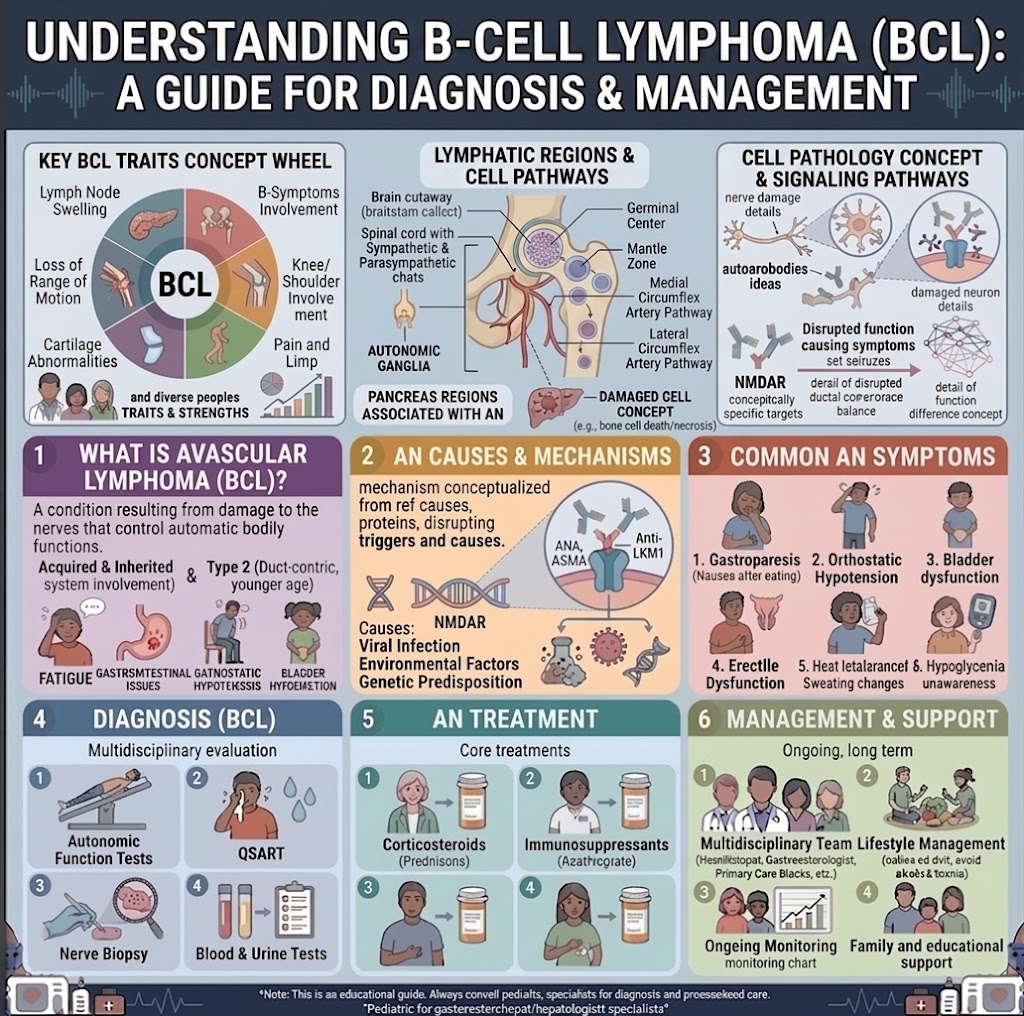
B-cell lymphoma is a type of cancer that begins in specialized white blood cells called B cells (also known as B lymphocytes), which are a vital part of your body's immune system, fighting off germs and infections. This cancer is a form of non-Hodgkin lymphoma and affects the lymphatic system, a network of organs, glands, vessels, and lymph nodes that helps your body defend against disease. B-cell lymphomas can occur in lymph nodes, blood, bone marrow, and various other body tissues, including the digestive system, brain and spinal cord, bones, or skin. These lymphomas vary greatly, with some growing slowly and others rapidly, necessitating immediate treatment.
Understanding the Condition
Understanding B-Cell Lymphoma
Understanding the Condition
Common Symptoms
Swollen Lymph Nodes: Enlarged, often painless, lumps found in areas like the neck, armpit, or groin.
Drenching Night Sweats: Severe sweating during the night that soaks clothing or bedding.
To make the most of your visit, come prepared. Write down any symptoms you've experienced, even if they seem unrelated. List all medications, vitamins, and supplements you take, including dosages. Note any personal and family medical history, especially a history of lymphoma or autoimmune conditions. Prepare a list of questions for your doctor.
Book a doctor visit near me
Watch and Wait: For certain slow-growing types of B-cell lymphoma, active treatment may be delayed. Instead, your doctor will closely monitor the lymphoma's progression and your symptoms. (Duration: Can last months to years, with ongoing check-ups, until symptoms appear or the disease progresses.)
Symptom Vigilance: Be aware of any new or returning symptoms, even subtle ones, and report them to your doctor immediately.
Consultation Guide
Managing Risk Factors
Diagnostic Procedures
Bone Marrow Biopsy and Aspiration
These procedures collect liquid and solid samples from your bone marrow to assess blood cell health and detect cancer.
What to Expect
You'll typically lie on your side or stomach. After numbing your hip bone, a needle is used to draw fluid (aspiration) and then a tissue sample (biopsy). You may feel pressure or a brief, sharp pain. The procedure takes about 30 minutes, with potential soreness afterward.
CT Scan (Computed Tomography Scan)
This imaging test uses X-rays and computer processing to create detailed cross-sectional images of your bones, blood vessels, and soft tissues.
What to Expect
You will lie on a narrow table that slides into a ring-shaped scanner. The scan is painless and typically takes 10-30 minutes. Contrast dye might be injected to highlight certain areas.
PET Scan (Positron Emission Tomography Scan)
A PET scan reveals the metabolic activity of your body's tissues and organs by using a radioactive tracer; cancer cells often show higher metabolic rates, appearing as bright spots.
What to Expect
A small amount of radioactive tracer is injected, usually into your arm. You'll wait about an hour for it to spread. Then, you'll lie on a narrow table that slides into a scanner for about 30 minutes. It's painless, and often combined with CT or MRI for clearer images.
Lumbar Puncture (Spinal Tap)
This procedure collects a sample of cerebrospinal fluid (CSF) – the fluid surrounding your brain and spinal cord – for testing, which can help detect cancer spread to the central nervous system.
What to Expect
You will usually lie on your side with your knees drawn toward your chest or sit leaning forward. The doctor will numb an area in your lower back. A thin needle is then carefully inserted between two vertebrae to collect CSF. You may feel pressure. The procedure takes about 30-60 minutes, and rest is advised afterward to reduce headache risk.
This procedure uses a long, flexible tube with a camera (endoscope) to visually examine your upper digestive system (esophagus, stomach, and beginning of the small intestine).
What to Expect
You will likely receive a sedative to help you relax and a local anesthetic to numb your throat. The endoscope is gently passed down your throat. You might feel some pressure or fullness, but it should not be painful. The procedure usually takes 15-30 minutes.
Biopsy (Tissue Sample)
A general biopsy involves removing a small piece of tissue from an affected area (e.g., a swollen lymph node or organ) to be examined under a microscope, crucial for diagnosing B-cell lymphoma and determining its specific type.
What to Expect
The procedure varies based on the location of the tissue. It might be done with a needle (core needle biopsy) under local anesthesia, or it might involve a minor surgical procedure to remove a larger sample. Your doctor will provide specific preparation and post-procedure care instructions.
Seek Emotional Support: Connect with support groups, family, or friends. Consider speaking with a mental health professional to help cope with the emotional and psychological challenges of a cancer diagnosis and treatment.
Practice Stress Management: Incorporate stress-reducing techniques such as mindfulness, meditation, deep breathing exercises, or gentle yoga into your daily routine.
Treatment Options
B-cell lymphoma is a type of cancer that begins in specialized white blood cells called B cells (also known as B lymphocytes), which are a vital part of your body's immune system, fighting off germs and infections. This cancer is a form of non-Hodgkin lymphoma and affects the lymphatic system, a network of organs, glands, vessels, and lymph nodes that helps your body defend against disease. B-cell lymphomas can occur in lymph nodes, blood, bone marrow, and various other body tissues, including the digestive system, brain and spinal cord, bones, or skin. These lymphomas vary greatly, with some growing slowly and others rapidly, necessitating immediate treatment.
Medication-Based Therapies
Clinical Trials: Offers access to new, experimental treatments that are not yet widely available, under strict medical supervision and research protocols. (Duration: Varies widely depending on the specific trial protocol and the treatment being studied.)
Regular Follow-Up Care: After treatment, ongoing medical check-ups are crucial to monitor for any signs of relapse (the cancer returning) or transformation (slow-growing lymphoma changing into a more aggressive type).
Maintain a Healthy Lifestyle: Embrace a balanced diet, engage in regular, moderate exercise, and ensure adequate sleep to support your overall health and recovery during and after treatment.
Prevention & Long-Term Wellbeing
Unexplained Weight Loss: Losing weight without making changes to diet or exercise habits.
Loss of Appetite: A noticeable decrease in the desire to eat food.
- Consultation Guide
Which Specialist to Meet
You should initially consult with your primary care doctor. If B-cell lymphoma is suspected, you will likely be referred to a hematologist-oncologist, a doctor specializing in blood disorders and cancer.
Preparations Before Your Visit
Chemotherapy: Uses powerful drugs, given orally or intravenously, to kill rapidly dividing cancer cells throughout the body. (Duration: Typically administered in cycles over several months, with breaks in between for recovery.)
Immunotherapy: Harnesses your body's own immune system to recognize and attack cancer cells, either by boosting immune cells or blocking signals that cancer uses to hide. (Duration: Administered in cycles, often over several weeks or months, sometimes continuously.)
Targeted Therapy: Uses drugs that specifically block molecular pathways or features unique to cancer cells, inhibiting their growth or survival while minimizing harm to healthy cells. (Duration: Can be continuous for an extended period or given in cycles, depending on the specific therapy.)
Radiation Therapy: Uses high-energy beams (like X-rays or protons) precisely aimed at the tumor to damage and destroy cancer cells and shrink tumors. (Duration: Often given in daily sessions over several weeks.)
Advanced Cell Therapies
CAR-T Cell Therapy (Chimeric Antigen Receptor T-cell Therapy): Your own T cells (a type of immune cell) are collected, genetically modified in a lab to better identify and kill cancer cells, and then infused back into your body. (Duration: A single infusion, but the entire process of cell collection, modification, and preparation can take several weeks, followed by intensive monitoring.)
Bone Marrow Transplant (Stem Cell Transplant): Replaces unhealthy, diseased bone marrow with healthy blood-forming stem cells, either from your own body (autologous transplant) or a donor (allogeneic transplant), often after high-dose chemotherapy. (Duration: The preparation and transplant procedure takes several weeks, followed by a recovery period of several months, with ongoing monitoring.)
Immune System Health Management: If you have a weakened immune system or an autoimmune condition, work closely with your doctor to manage these conditions, as they can be associated with increased risk. Direct prevention of lymphoma isn't always possible.
Infection Control: Promptly treat chronic infections (e.g., human immunodeficiency virus (HIV), Hepatitis C, H. pylori) linked to lymphoma risk, as advised by your healthcare provider.
Long-Term Monitoring
Tags & Topics
Notice an error or need an update?
Help us keep medical information accurate. Report incorrect info or suggest an edit.


