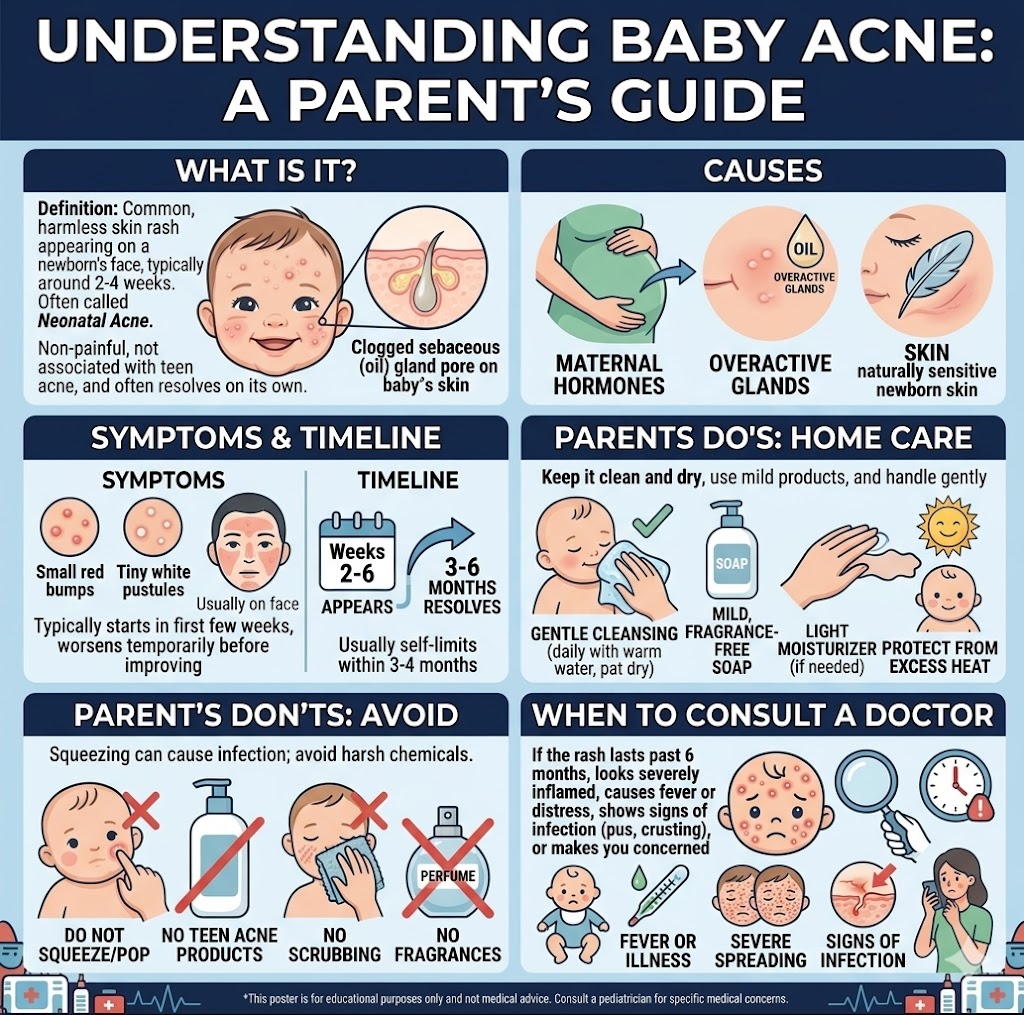
Baby acne is a common and temporary skin condition that causes small bumps on a newborn's skin, typically appearing on the face and neck. Also known as infantile acne or neonatal acne, it usually develops within 2 to 4 weeks after birth. This condition often clears up on its own without requiring specific treatment and generally doesn't leave scars. Baby acne is caused by hormones that the baby is exposed to before birth and is not related to the bacterial type of acne seen in teenagers or adults. It's important to distinguish it from milia (tiny, harmless pimple-like bumps that also disappear on their own) and benign cephalic pustulosis, a rash caused by yeast on the skin.
Understanding the Condition
Baby Acne: Understanding Bumps on Your Newborn's Skin
Understanding the Condition
Common Symptoms
Small, Red Bumps: The primary symptom of baby acne is the appearance of small, inflamed, red bumps. These can sometimes have a white center, resembling pimples.
Common Locations: These bumps are most frequently observed on a baby's cheeks, chin, and forehead. However, they can also appear on the neck, back, or chest.
Consultation Guide
Which Specialist to Meet
If you are concerned about your baby's skin, it is best to consult with your pediatrician. For persistent, severe, or unusual skin conditions, your pediatrician might refer you to a pediatric dermatologist, a skin specialist for children.
Preparations Before Your Visit
Before your visit, take clear photos of your baby's skin in good lighting to show the doctor how the acne looks. Note when the bumps first appeared, how they have changed over time, and any home remedies you may have tried. Prepare a list of questions you have regarding your baby's skin condition.
Book a doctor visit near me
Diagnosing baby acne primarily involves a thorough visual examination of your baby's skin by a healthcare professional. They will carefully inspect the characteristics of the bumps, including their size, color, shape, and where they are located on the body. The doctor will also ask you about your baby's health history, when the rash started, and if there are any other symptoms. This helps to differentiate baby acne from other common newborn skin conditions like milia, heat rash, or benign cephalic pustulosis.
Consultation Guide
Baby acne is a common and temporary skin condition that causes small bumps on a newborn's skin, typically appearing on the face and neck. Also known as infantile acne or neonatal acne, it usually develops within 2 to 4 weeks after birth. This condition often clears up on its own without requiring specific treatment and generally doesn't leave scars. Baby acne is caused by hormones that the baby is exposed to before birth and is not related to the bacterial type of acne seen in teenagers or adults. It's important to distinguish it from milia (tiny, harmless pimple-like bumps that also disappear on their own) and benign cephalic pustulosis, a rash caused by yeast on the skin.
Avoid Irritants: Do not apply lotions, oils, or any creams to the acne unless specifically recommended by your doctor. Avoid rubbing, scrubbing, or picking at the bumps, as this can cause irritation or infection. (Duration: Until acne resolves)
Keep Skin Dry and Clean: Ensure your baby's skin is kept as clean and dry as possible, especially after feeding, spitting up, or if they have excess saliva around their mouth. (Duration: Ongoing)
Patience and Observation: Baby acne is almost always temporary and clears up on its own. Focus on gentle care and monitor the condition. (Duration: Throughout the condition's course)
Diagnostic Procedures
What to Expect
During the examination, the doctor will gently look at your baby's face, neck, and any other areas where the bumps are present. This is a quick and painless process, usually involving just a visual inspection. They may use a magnifying glass for a closer look. You will be asked questions about your baby's general health and the timeline of the skin changes. Typically, no blood tests, skin scrapings, or other invasive procedures are needed to diagnose standard baby acne.
Treatment Options
Gentle Cleansing: Wash the affected areas of your baby's skin with plain, lukewarm water once a day. Gently pat the skin dry with a soft cloth. Avoid harsh soaps, cleansers, or scrubbing. (Duration: Ongoing, until the acne resolves (typically weeks to a few months))
Topical Treatments (if advised by a doctor)
Mild Topical Solution: For more persistent or severe cases, a doctor might recommend a very mild, non-irritating topical solution. These products are formulated to gently reduce inflammation and promote clearer skin without harsh chemicals. (Duration: As prescribed by a doctor, typically for a few weeks)
Prevention & Long-Term Wellbeing
Prevention and Long-Term Monitoring
Gentle Skin Care Practices: Continue to use mild, fragrance-free cleansers and avoid harsh products on your baby's delicate skin. This helps maintain the skin's natural protective barrier and can prevent irritation, even after the acne clears.
Maintain Cleanliness: Regularly and gently clean your baby's skin, particularly after feedings or if they spit up, to prevent irritation from food residues or moisture. Ensure the skin folds are kept dry.
Avoid Overheating: Dress your baby in light, breathable clothing to prevent overheating and excessive sweating, which can sometimes irritate sensitive skin and exacerbate skin issues.
Monitor Skin Changes: Continuously observe your baby's skin for any new or persistent rashes or changes. While baby acne is harmless, other conditions may require medical attention, especially if accompanied by fever, discomfort, or behavioral changes.
Regular Pediatric Check-ups: Attend all scheduled well-baby check-ups. These visits are opportunities to discuss any concerns about your baby's skin or overall health with your pediatrician.
Seek Professional Advice: If baby acne persists for several months, becomes particularly severe, or you notice any signs of infection (like pus, redness, warmth, or tenderness), seek further evaluation from a healthcare professional to rule out other conditions and ensure appropriate management.
Tags & Topics
Notice an error or need an update?
Help us keep medical information accurate. Report incorrect info or suggest an edit.


