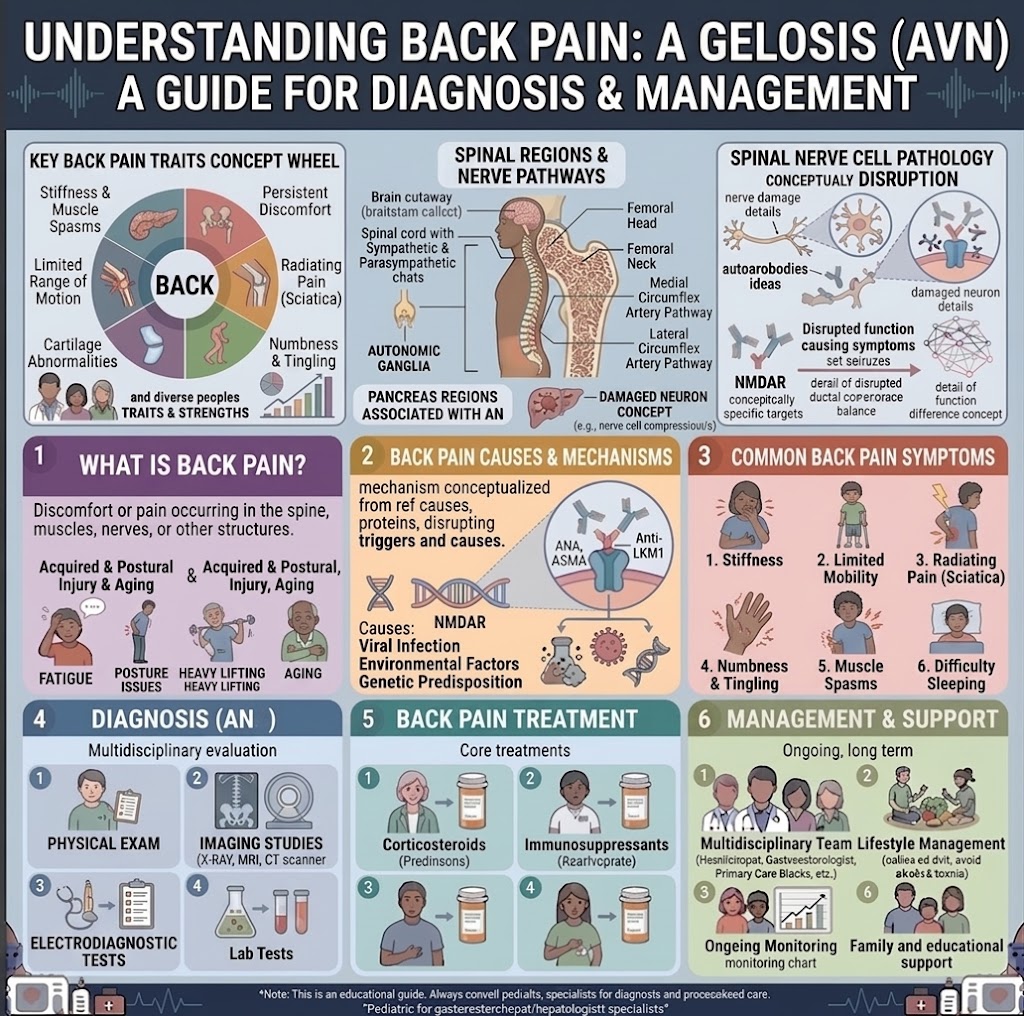
Back pain is a very common issue that affects many people, often leading them to seek medical help or miss work. It is a leading cause of disability worldwide. Fortunately, most back pain can be prevented or relieved, especially in people under 60. Simple home remedies and good body mechanics often resolve the pain within a few weeks, and surgery is rarely necessary.
Understanding the Condition
Back Pain: Understanding, Managing, and Preventing
Understanding the Condition
Common Symptoms
General Symptoms: Back pain can range from a dull muscle ache to a sharp, burning, or stabbing sensation. The pain might also travel down a leg. Activities like bending, twisting, lifting, standing, or walking can make the pain worse.
Consultation Guide
Back pain is a very common issue that affects many people, often leading them to seek medical help or miss work. It is a leading cause of disability worldwide. Fortunately, most back pain can be prevented or relieved, especially in people under 60. Simple home remedies and good body mechanics often resolve the pain within a few weeks, and surgery is rarely necessary.
When to Contact a Doctor: Most back pain improves with time and self-care. However, contact your doctor if the pain: lasts longer than a few weeks; is severe and doesn't get better with rest; spreads down one or both legs, especially below the knee; causes weakness, numbness, or tingling in one or both legs; or is accompanied by unexplained weight loss.
When to Seek Immediate Medical Attention: Though rare, back pain can sometimes signal a serious medical issue. Seek immediate care if your back pain: causes new bowel or bladder problems; is accompanied by a fever; or follows a fall, a blow to the back, or another injury.
Consultation Guide
Which Specialist to Meet
You should initially consult your primary care physician. Depending on the cause and severity of your back pain, they may refer you to specialists such as an orthopedist (bone and joint specialist), a neurologist (nerve specialist), a physical therapist, a pain management specialist, or a chiropractor.
Preparations Before Your Visit
A urinalysis is a test of your urine to detect and manage a wide range of disorders, such as urinary tract infections or kidney disease, which can sometimes cause referred back pain.
Quit Smoking: Smoking can increase the risk of back pain by contributing to coughing, which can cause disc issues, and by reducing blood flow to the spine and increasing osteoporosis risk. Quitting can help reduce these risks.
Long-Term Management and Healthy Body Mechanics
Practice Good Posture: Stand tall, keeping your pelvis in a neutral position, not slouching. If standing for long periods, rest one foot on a low footstool and alternate feet to relieve lower back pressure.
Sit Smart: Choose a chair with good lower back support, armrests, and a swivel base. Placing a rolled towel or pillow in the curve of your lower back can help maintain its natural alignment. Keep your knees and hips level, and change your sitting position frequently, ideally every 30 minutes.
Lift Correctly: Avoid heavy lifting whenever possible. If you must lift something heavy, bend at your knees (not your back), keep your back straight, and hold the object close to your body. Do not twist while lifting. For very heavy or awkward objects, ask for help.
Optimize Sleeping Position: If you sleep on your side, draw your legs slightly towards your chest and place a pillow between your knees to align your spine, pelvis, and hips. If you sleep on your back, place a pillow under your knees to support the natural curve of your lower back and relax muscles. Avoid sleeping on your stomach if possible, but if you must, place a pillow under your hips and lower stomach.
Manage Stress: Stress can lead to muscle tension and contribute to back pain. Incorporate stress-reducing techniques such as mindfulness, meditation, or relaxation exercises into your daily routine.
Diagnostic Procedures
An X-ray is a quick, painless imaging test that uses radiation to create pictures of the bones inside your body. It can help detect broken bones, changes due to arthritis, or other bone-related issues.
What to Expect
You will be asked to remove any metal objects or jewelry. You will lie or stand in various positions while a machine takes images of your back. The process usually takes a few minutes and is not painful.
CT Scan (Computerized Tomography)
A CT scan uses multiple X-ray images taken from different angles to create detailed cross-sectional pictures of your bones, blood vessels, and soft tissues. It provides more detail than a standard X-ray.
What to Expect
You will lie on a narrow table that slides into a large, donut-shaped machine. You may hear humming or clicking sounds. You might receive a contrast dye, either orally or through an IV, to enhance the images. You'll need to remain still during the scan, which typically lasts 15-30 minutes.
MRI (Magnetic Resonance Imaging)
An MRI uses powerful magnets and radio waves to produce detailed images of organs, soft tissues, bone, and virtually all other internal body structures. It's particularly useful for seeing discs, nerves, and ligaments.
What to Expect
You will lie on a movable table that slides into a long, narrow tube. The machine makes loud knocking or thumping noises, so earplugs or headphones are often provided. You must remain very still. Some people experience claustrophobia in the enclosed space. The scan can take 30-60 minutes or longer.
A bone scan uses a small amount of radioactive material (tracer) injected into your bloodstream to detect and track various bone diseases. The tracer is absorbed more by areas of bone with increased activity, which can indicate infection, fractures, or cancer.
What to Expect
First, a small amount of radioactive tracer is injected into a vein, and you'll wait a few hours for it to travel through your body and be absorbed by your bones. Then, you'll lie on a table while a special camera scans your body, detecting the radiation emitted by the tracer. The scan itself is painless and takes about 30 minutes to an hour.
Electromyography (EMG) and Nerve Conduction Study
An EMG assesses the health of muscles and the nerves that control them (motor neurons). A nerve conduction study measures how fast and strong electrical signals travel through nerves.
What to Expect
For an EMG, tiny needle electrodes are inserted into specific muscles to record their electrical activity. For a nerve conduction study, surface electrodes are taped to your skin over nerves, and small electrical pulses are delivered to stimulate the nerves and measure their response. You might feel mild discomfort or twitching from the electrical pulses and needle insertions. The procedure typically takes 30-60 minutes.
A discogram is an invasive imaging test used to determine if a specific spinal disc is causing back pain. It involves injecting a dye into the soft center of a disc and observing the pain response and how the dye spreads.
What to Expect
You will lie on an X-ray table. After numbing the skin, a thin needle is guided into the center of the suspected disc using X-ray guidance. A small amount of contrast dye is then injected. You will be asked if you feel pain, and if it mimics your usual back pain. X-rays or a CT scan are then taken. This procedure can be uncomfortable and is generally reserved for specific cases where other tests haven't identified the pain source.
Ultrasound uses high-frequency sound waves to create images of structures inside the body. While not ideal for bones or areas hidden by bone, it can be useful for imaging soft tissues, muscles, and ligaments.
What to Expect
You will lie on an examination table. A gel is applied to your skin over the area to be examined. A handheld device called a transducer is moved over the gelled area, sending and receiving sound waves. The images are displayed on a monitor. The procedure is painless and usually takes 15-30 minutes.
What to Expect
You will be given a sterile container and instructed on how to provide a clean-catch urine sample. This involves cleaning the genital area before urinating a small amount into the toilet, then collecting the midstream urine in the container. The sample is then sent to a lab for analysis.
Treatment Options
Before your appointment, gather information about your medical history, including any past injuries or conditions. Make a list of all medications, supplements, and vitamins you are currently taking. Be prepared to describe your pain in detail: when it started, what it feels like (e.g., sharp, dull, burning), where it's located, what makes it better or worse, and how it affects your daily activities. Also, prepare a list of any questions you have for your doctor.
Book a doctor visit near me
Home Remedies and Self-Care
Rest: Brief rest can help, but avoid prolonged bed rest as it can worsen pain. (Duration: A few days, as needed)
Heat or Ice: Applying heat packs or ice packs to the painful area can reduce discomfort. (Duration: 15-20 minutes, several times a day)
Gentle Movement: Light activities like walking can help reduce stiffness once acute pain subsides. (Duration: Ongoing, as tolerated)
Medications
Over-the-Counter Pain Relievers: Non-steroidal anti-inflammatory drugs (NSAIDs) or acetaminophen can help reduce mild to moderate pain and inflammation. (Duration: As needed, typically for short-term relief (weeks))
Muscle Relaxants: These prescription medications can help relieve muscle spasms. (Duration: Short-term, as prescribed by a doctor)
Topical Pain Relievers: Creams, salves, or patches containing pain-relieving ingredients can be applied directly to the skin. (Duration: As needed)
Antidepressants: Certain types of antidepressants, particularly tricyclics, can be effective for chronic pain, even without depression. They may help by affecting nerve signals. (Duration: Several weeks to months for full effect; long-term as prescribed)
Therapies
Physical Therapy: A physical therapist can teach exercises to improve flexibility, strengthen core muscles, and correct posture to support your back. (Duration: Several weeks to months, with ongoing home exercises)
Chiropractic Adjustment (Spinal Manipulation): A chiropractor uses hands or small instruments to apply controlled force to spinal joints to improve movement and reduce pain. (Duration: Multiple sessions over weeks to months, as determined by a chiropractor)
Acupuncture: Involves inserting very thin needles into specific points on the body to stimulate nerves, muscles, and connective tissue, which may boost natural painkillers. (Duration: Multiple sessions, typically weekly for several weeks)
Myofascial Release Therapy: A massage technique focused on releasing stiffness in myofascial tissues, the tough coverings around muscles, to improve flexibility and ease muscle pain. (Duration: Multiple sessions, as recommended by a therapist)
Injections: Steroid injections (e.g., epidural injections) near the spinal cord or nerve roots can help reduce inflammation and pain temporarily. (Duration: Temporary relief for weeks to months; repeated as advised by a doctor)
Radiofrequency Neurotomy (Radiofrequency Ablation): Uses heat from radio waves to temporarily block pain signals from specific nerves, often used for chronic back or neck pain that hasn't responded to other treatments. (Duration: Pain relief can last for 6-12 months or longer)
Surgical Procedures
Spinal Fusion: Surgery to permanently connect two or more spinal bones, preventing movement between them to reduce pain or stabilize the spine. Bone or bone-like material is used, sometimes with metal hardware. (Duration: Full fusion can take several months, with ongoing recovery)
Prevention & Long-Term Wellbeing
Diskectomy: Surgical removal of the damaged part of a herniated (slipped) disc to relieve pressure on nearby nerves. This is often more effective for leg pain than back pain. (Duration: Recovery typically takes several weeks to months)
Laminectomy: Removal of a part of the spinal bone (lamina) to enlarge the spinal canal and relieve pressure on the spinal cord or nerves, often due to bone overgrowths. (Duration: Recovery typically takes several weeks to months)
Prevention
Exercise Regularly: Engage in low-impact aerobic activities like walking, bicycling, or swimming to build strength and endurance in your back muscles without jarring your spine. Include exercises that strengthen your core (abdominal and back muscles) and improve flexibility.
Maintain a Healthy Weight: Excess body weight puts additional stress on your back muscles and spine. Maintaining a healthy weight can significantly reduce this strain.
Tags & Topics
Notice an error or need an update?
Help us keep medical information accurate. Report incorrect info or suggest an edit.


