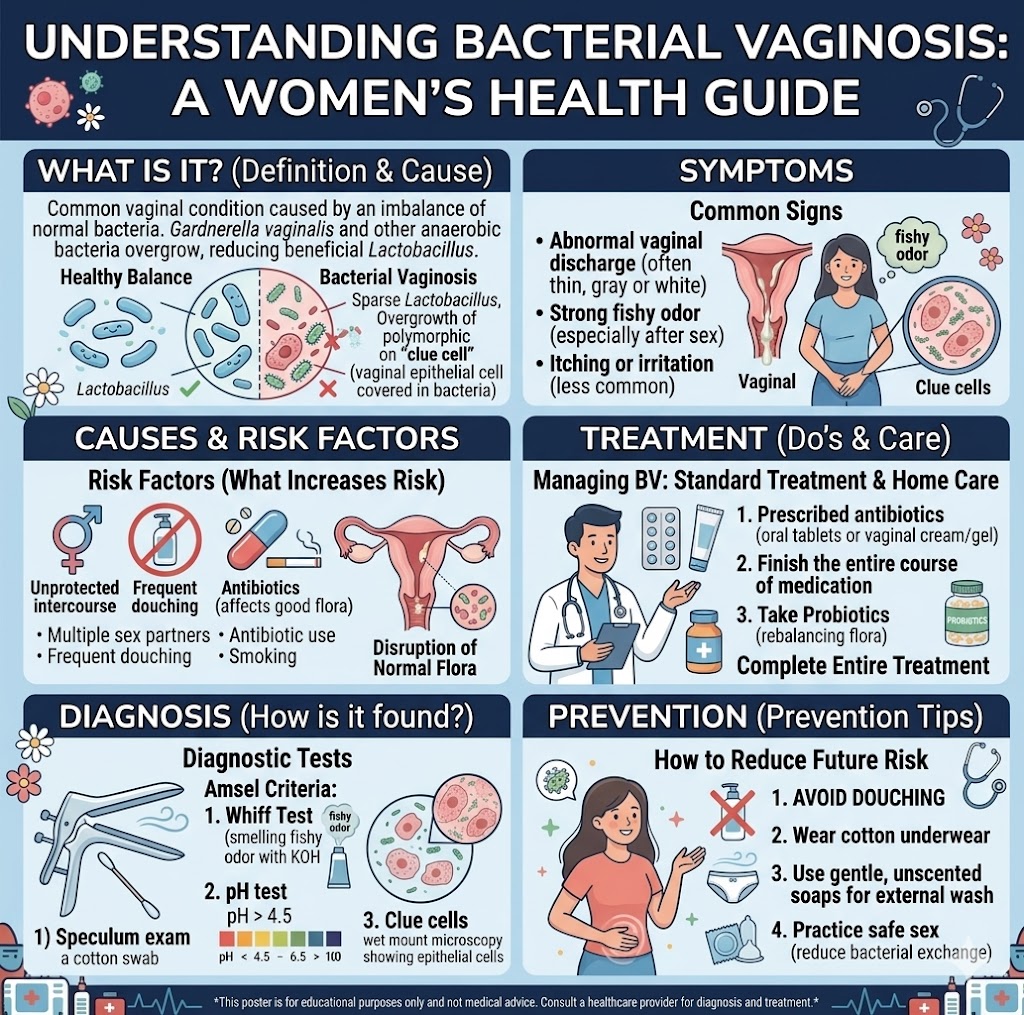
Bacterial vaginosis (BV) is a common condition that occurs when the natural balance of bacteria in the vagina is disrupted. Normally, 'good' bacteria help keep the vagina healthy, but an overgrowth of 'bad' bacteria can lead to BV, causing discomfort and other symptoms. While often mild, untreated BV can sometimes lead to more serious health issues. It can affect women of any age, but is most prevalent during the reproductive years and is often associated with sexual activity, though the exact link is not fully understood.
Understanding the Condition
Bacterial Vaginosis: Understanding Vaginal Health
Understanding the Condition
Bacterial vaginosis (BV) is a common condition that occurs when the natural balance of bacteria in the vagina is disrupted. Normally, 'good' bacteria help keep the vagina healthy, but an overgrowth of 'bad' bacteria can lead to BV, causing discomfort and other symptoms. While often mild, untreated BV can sometimes lead to more serious health issues. It can affect women of any age, but is most prevalent during the reproductive years and is often associated with sexual activity, though the exact link is not fully understood.
Common Symptoms
Unusual Discharge: Thin vaginal discharge that may appear gray, white, or greenish.
Foul Odor: A strong, 'fishy' smelling vaginal odor, which may become more noticeable after sex.
Vaginal Itching: Itching or irritation in and around the vagina.
Burning During Urination: A burning sensation when urinating.
No Symptoms: Many individuals with bacterial vaginosis experience no symptoms at all.
Consultation Guide
Which Specialist to Meet
Before your visit, avoid douching, using vaginal deodorants, or having sex for at least 24 hours, as these actions can interfere with accurate test results. Be prepared to discuss your symptoms in detail, including when they started, their severity, and any factors that seem to make them better or worse. Your healthcare provider will also likely ask about your sexual history and any previous vaginal infections to help rule out other conditions like sexually transmitted infections (STIs) which can have similar symptoms.
Book a doctor visit near me
Seek Prompt Medical Attention for Recurring Symptoms: If symptoms of unusual discharge, odor, itching, or burning reappear after treatment or at any other time, promptly consult a healthcare professional for diagnosis and appropriate management, as BV can sometimes recur.
Consultation Guide
During your pelvic exam, a small sample of your vaginal discharge will be collected. This sample is then examined under a microscope to identify specific types of bacteria and cells that indicate a bacterial imbalance, which is characteristic of bacterial vaginosis. The acidity level (pH) of the vaginal fluid may also be measured, as BV often causes a higher (less acidic) pH.
A small, sterile swab will be used to gently collect a sample of discharge from your vagina or cervix during the speculum examination. This process is quick and typically causes no discomfort beyond the sensation of the speculum itself. The sample is then prepared for microscopic analysis, either immediately in the clinic or sent to a laboratory.
Maintain Regular Check-ups: Discuss with your healthcare provider the appropriate frequency for routine gynecological exams based on your individual health profile, medical history, and risk factors for vaginal infections.
Diagnostic Procedures
You should consult a primary care physician (PCP), a gynecologist, or a women's health specialist. These medical professionals are equipped to diagnose and treat vaginal conditions.
Preparations Before Your Visit
A physical examination performed to assess the health of your female reproductive organs. This includes checking the vulva, vagina, cervix, uterus, and ovaries for any signs of inflammation, unusual discharge, or other abnormalities. A Pap test, which screens for cervical cancer, may also be performed during this exam.
What to Expect
You will lie on an exam table with your feet resting in stirrups. The doctor will first visually inspect your external genital area. Next, they will gently insert a speculum, a medical instrument designed to hold the vaginal walls open, to allow for a clear view of your vagina and cervix. During this step, a sample of vaginal discharge or cells may be collected. After removing the speculum, the doctor will perform a bimanual exam, gently inserting two gloved fingers into your vagina while pressing on your abdomen with their other hand. This allows them to feel the size and shape of your uterus and ovaries. You may feel some pressure during this part, but it should not be painful.
Vaginal Fluid Analysis
What to Expect
Treatment Options
Medications
Oral Antibiotic Treatment: Prescription medication taken by mouth to target and reduce the overgrowth of the harmful bacteria causing BV throughout your body. (Duration: Typically 5 to 7 days)
Vaginal Gels or Creams: Prescription medication applied directly into the vagina as a gel or cream to treat the bacterial imbalance locally. (Duration: Typically 5 to 7 days)
Avoiding Irritants: While not a direct treatment, avoiding perfumed soaps, douches, and harsh cleansers during treatment and recovery can help prevent further irritation, reduce discomfort, and support the healing process. (Duration: As advised)
Prevention & Long-Term Wellbeing
Prevention
Avoid Scented Products: Wash your genital area with warm water only. Steer clear of scented soaps, bubble baths, vaginal deodorants, and scented tampons or pads, as these can irritate vaginal tissues and disrupt the natural bacterial balance.
Do Not Douche: The vagina is naturally self-cleaning and does not require douching. Douching can upset the healthy balance of vaginal bacteria, leading to an overgrowth of harmful bacteria and increasing the risk of BV.
Practice Safe Sex: Use barrier methods such as latex condoms or dental dams consistently and correctly to reduce the risk of sexually transmitted infections (STIs), which can sometimes be confused with or increase the risk of BV. Ensure sex toys are thoroughly cleaned after each use. Limiting the number of sex partners, or abstaining from sex, can also help reduce risk. BV is more common when both partners are female, highlighting the importance of safe practices.
Wear Breathable Underwear: Choose underwear made from breathable fabrics, such as cotton. This helps promote airflow and keeps the genital area dry, which reduces the likelihood of bacterial overgrowth.
Long-Term Monitoring
Tags & Topics
Notice an error or need an update?
Help us keep medical information accurate. Report incorrect info or suggest an edit.


