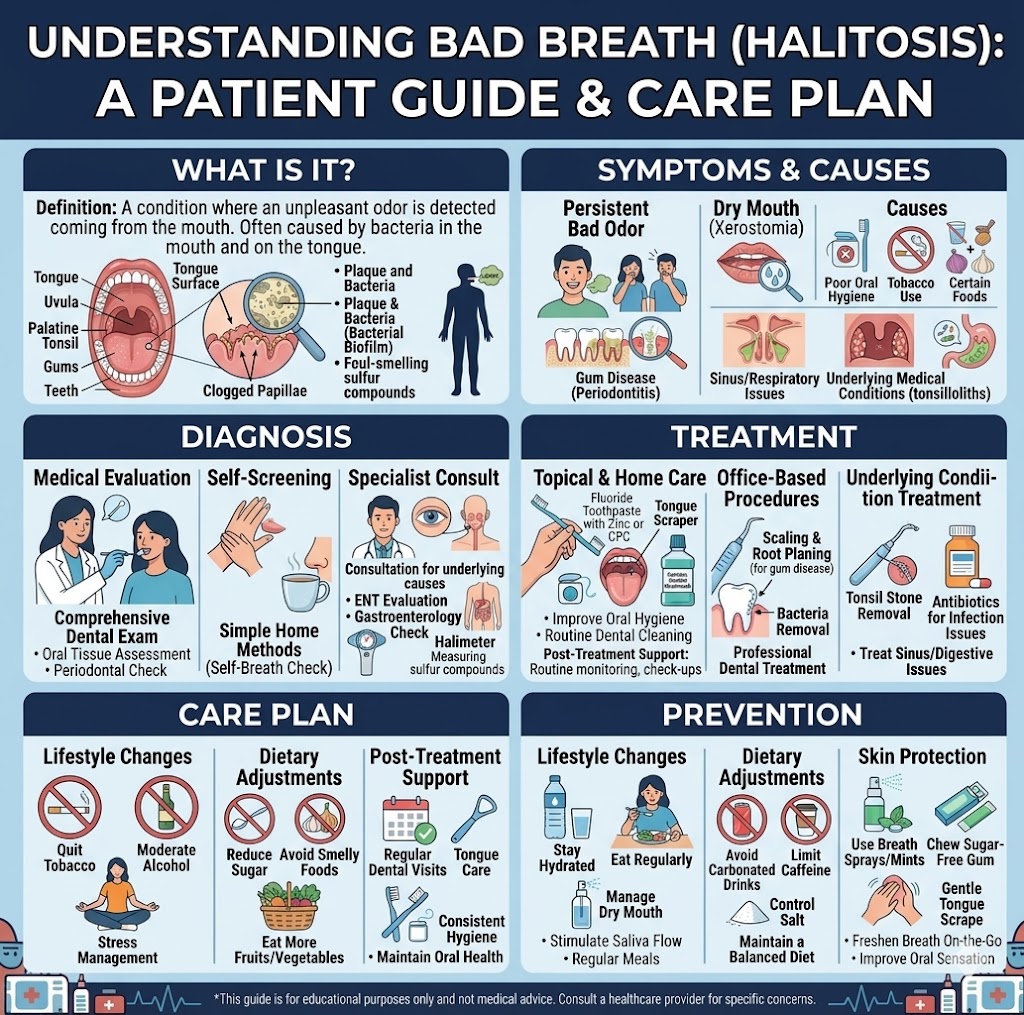
Bad breath, medically known as halitosis, is a common and often embarrassing condition that can even cause anxiety. While many products offer temporary relief, they rarely address the root cause. Bad breath can stem from various sources, including certain foods, poor oral hygiene, underlying health conditions, and lifestyle habits. In many cases, improving oral care can resolve the issue. If self-care isn't enough, consulting a healthcare professional is crucial to identify and treat the underlying problem.
Understanding the Condition
Understanding and Managing Bad Breath (Halitosis)
Understanding the Condition
Common Symptoms
Varied Odors: The specific smell of bad breath can differ significantly depending on what's causing it.
Unawareness: Many individuals with bad breath don't realize they have it. Since it's challenging to assess your own breath, it's often best to ask a trusted friend or family member for an honest assessment.
Consultation Guide
Which Specialist to Meet
Start by visiting your dentist. They can identify most oral causes of bad breath. If an oral cause isn't found, or if symptoms suggest a broader health issue, your dentist may refer you to an Ear, Nose, and Throat (ENT) specialist or a general physician.
Preparations Before Your Visit
This involves a conversation with your dentist or doctor, where you'll answer questions about your health, lifestyle, and symptoms.
Consultation Guide
Bad breath, medically known as halitosis, is a common and often embarrassing condition that can even cause anxiety. While many products offer temporary relief, they rarely address the root cause. Bad breath can stem from various sources, including certain foods, poor oral hygiene, underlying health conditions, and lifestyle habits. In many cases, improving oral care can resolve the issue. If self-care isn't enough, consulting a healthcare professional is crucial to identify and treat the underlying problem.
If the cause isn't found in the mouth, or if an underlying systemic condition is suspected, you may be referred to another specialist (like an ENT) for tests such as imaging of the sinuses or throat, or blood tests to check for conditions like diabetes or kidney/liver issues.
Hydration and Diet Modification: Drink plenty of water throughout the day to keep your mouth moist and help wash away food particles. Limit or avoid foods known to cause bad breath, such as garlic, onions, and certain spices. (Duration: Ongoing, daily practice.)
Quitting Tobacco: Discontinuing the use of tobacco products, including smoking, can significantly improve breath odor and reduce the risk of gum disease. (Duration: Long-term commitment.)
Diagnostic Procedures
Your dentist will thoroughly examine your mouth, teeth, gums, and tongue. They will look for signs of tooth decay, gum disease, infections, and assess your saliva flow. The back of your tongue, a common place for odor-causing bacteria, will also be checked.
What to Expect
You will sit in a dental chair. The dentist will use a small mirror and light to look inside your mouth. They might gently probe your gums to check for signs of gum disease. This is usually a quick and painless procedure.
The dentist may ask you to breathe directly into their nose to assess the odor. Sometimes, they might scrape a small sample from the back of your tongue and smell it directly to identify specific odor-producing bacteria.
What to Expect
You might be asked to breathe normally or exhale into a specific area for the dentist to smell your breath directly. This is a quick and subjective assessment.
What to Expect
Referral for Further Tests
What to Expect
If a referral is made, the new specialist will explain any further tests. These could range from examining your nose and throat with a small scope to blood draws or X-rays, depending on the suspected condition.
Treatment Options
Before your visit, make a list of all medications you're taking, any recent illnesses, and your complete medical history. Also, be ready to discuss your daily diet, oral hygiene routine (how often you brush, floss, and clean your tongue), and any tobacco use. It's helpful to avoid using mouthwash or strong-smelling foods right before your appointment so the doctor can accurately assess your breath.
Book a doctor visit near me
The healthcare professional will ask detailed questions about your daily habits, including your diet, oral hygiene practices, tobacco use, and any existing medical conditions or medications you are taking, as these can significantly contribute to bad breath.
Professional Dental Cleanings: Regular professional cleanings remove stubborn plaque and tartar buildup that at-home brushing can't. Your dentist can also identify and treat any cavities or gum disease. (Duration: Typically every six months.)
Treatment of Oral Conditions: Addressing underlying oral issues like tooth decay, gum disease (gingivitis or periodontitis), or ill-fitting dentures/oral appliances can eliminate sources of bad breath. This might involve fillings, deep cleanings (scaling and root planing), or denture adjustments. (Duration: Varies based on the condition, from a single appointment to several weeks or months for complex gum disease.)
Medical Interventions
Managing Dry Mouth: For dry mouth (xerostomia), your doctor might recommend saliva substitutes, oral rinses, or specific medications that stimulate saliva production. Staying hydrated is also key. (Duration: Ongoing, as long as dry mouth persists.)
Treating Infections and Other Conditions: If bad breath is due to oral infections, tonsil stones, sinus issues, or other medical conditions like GERD (gastroesophageal reflux disease) or systemic diseases, the underlying condition will be treated. This could involve antibiotics, removal of tonsil stones, or specific treatments for the non-oral condition. (Duration: Varies widely depending on the condition, from a few days for antibiotics to long-term management for chronic diseases.)
Monitor for Dry Mouth: If you experience persistent dry mouth, discuss it with your doctor or dentist, as it can indicate an underlying condition or a side effect of medication.
Address Underlying Health Conditions: Work with your healthcare providers to manage chronic conditions like GERD, diabetes, or sinus problems, as these can contribute to bad breath.
Self-Awareness and Feedback: Be open to feedback from trusted individuals about your breath, as you may not always notice it yourself. If bad breath returns despite good hygiene, consult your dentist again.
Prevention & Long-Term Wellbeing
Review of Medical History and Lifestyle
Oral Hygiene & Lifestyle Adjustments
Brushing and Flossing: Brush your teeth and tongue thoroughly at least twice a day, especially after meals, using a soft-bristled toothbrush. Floss daily to remove food particles and plaque from between teeth and under the gum line. Pay special attention to cleaning the back of your tongue, as it can harbor odor-causing bacteria. (Duration: Ongoing, daily practice.)
Prevention
Consistent Oral Hygiene: Brush your teeth at least twice daily and floss once daily. Include cleaning your tongue with a brush or scraper to remove bacteria and food debris.
Regular Dental Check-ups: Visit your dentist for professional cleanings and check-ups at least twice a year to maintain oral health and catch potential issues early.
Stay Hydrated: Drink plenty of water throughout the day to promote saliva production, which naturally cleanses the mouth.
Mindful Eating: Limit foods and drinks that can contribute to bad breath, such as garlic, onions, and sugary beverages. Eating crunchy fruits and vegetables can also help clean teeth naturally.
Avoid Tobacco Products: Quitting smoking and other tobacco use is crucial for preventing bad breath and improving overall oral and general health.
Long-Term Monitoring and Management
Tags & Topics
Notice an error or need an update?
Help us keep medical information accurate. Report incorrect info or suggest an edit.


