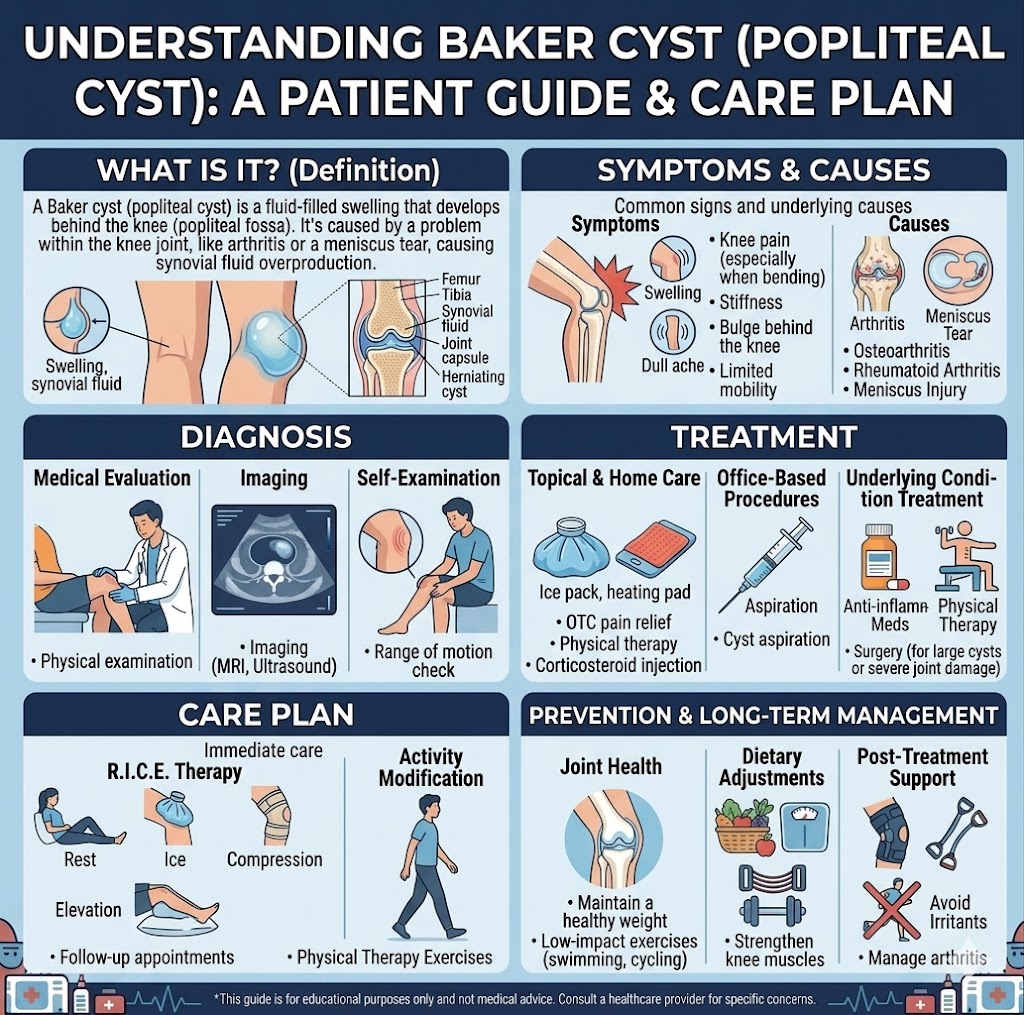
A Baker's cyst, also known as a popliteal cyst, is a fluid-filled sac that forms behind the knee, creating a noticeable bulge and a feeling of tightness. This cyst can sometimes cause pain, which may worsen with activity or when the knee is fully bent or straightened. It typically develops as a result of an underlying problem within the knee joint, such as arthritis, a cartilage tear, or other inflammatory conditions. These issues can cause the knee to produce an excess amount of lubricating fluid, which then accumulates to form the cyst. While it may cause swelling and discomfort, effectively addressing the root cause of the cyst often leads to significant relief.
Understanding the Condition
Baker's Cyst: Understanding a Fluid Buildup Behind the Knee
Understanding the Condition
Common Symptoms
Swelling and Bulge: A noticeable lump or swelling behind the knee, which can sometimes extend into the calf.
Tightness: A persistent feeling of pressure or tightness behind the knee.
Pain: Aching or pain in the knee, particularly when physically active or when fully bending or straightening the knee. Symptoms may worsen after prolonged activity or standing.
Stiffness: Difficulty fully bending or extending the knee joint.
Urgent Medical Attention: Seek immediate medical attention if you experience sudden, sharp pain and significant swelling behind your knee and in your calf, especially with redness or warmth. Although rare, these symptoms could indicate a blood clot in the leg, which requires urgent medical evaluation.
Consultation Guide
Which Specialist to Meet
You should initially consult with your family doctor or general practitioner. They can assess your condition and, if necessary, refer you to a specialist such as an orthopedic surgeon (a doctor specializing in bones and joints) or a sports medicine doctor.
Preparations Before Your Visit
Before your visit, prepare a detailed list of your symptoms, including when they started, what makes them better or worse, and any activities that trigger them. Be ready to discuss your complete medical history, any past knee injuries, and all medications or supplements you are currently taking. Wear loose, comfortable clothing that allows for easy examination of your knee.
Book a doctor visit near me
Rest, Ice, Compression, Elevation (R.I.C.E.): Resting the affected knee, applying ice packs (15-20 minutes, several times a day), using a compression bandage to reduce swelling, and elevating the leg can significantly help alleviate pain and swelling. (Duration: As needed for symptom relief, typically several days to weeks.)
Over-the-counter pain relievers: Non-prescription pain relievers can help manage discomfort. (Duration: As needed for symptom relief.)
Monitor Symptoms: Pay close attention to any recurrence of swelling, pain, or stiffness behind the knee. If symptoms return or worsen, consult your doctor promptly.
Regular Medical Check-ups: If you have chronic knee conditions like arthritis, regular follow-up appointments with your doctor can help manage these conditions and prevent associated complications like Baker's cysts.
Consultation Guide
A Baker's cyst, also known as a popliteal cyst, is a fluid-filled sac that forms behind the knee, creating a noticeable bulge and a feeling of tightness. This cyst can sometimes cause pain, which may worsen with activity or when the knee is fully bent or straightened. It typically develops as a result of an underlying problem within the knee joint, such as arthritis, a cartilage tear, or other inflammatory conditions. These issues can cause the knee to produce an excess amount of lubricating fluid, which then accumulates to form the cyst. While it may cause swelling and discomfort, effectively addressing the root cause of the cyst often leads to significant relief.
Fluid Aspiration: A procedure where a needle is used to drain excess fluid from the cyst. This can relieve pressure and reduce the size of the cyst. It is often performed with ultrasound guidance. (Duration: Immediate relief, but the cyst may refill if the underlying cause is not addressed.)
Physical Therapy: A tailored program of exercises designed to strengthen the muscles around the knee, improve range of motion, and reduce pain. A physical therapist can provide a personalized program. (Duration: Typically several weeks to months, depending on the severity and underlying cause.)
Arthroscopic Repair of Underlying Knee Problem: If the Baker's cyst is caused by a significant underlying issue like a meniscal tear, a surgeon may use arthroscopy to repair the damage. Treating the root cause is often the most effective way to resolve a persistent Baker's cyst. Direct removal of the cyst is rarely necessary unless it's very large, painful, or causing complications, and the underlying cause cannot be treated otherwise. (Duration: Recovery time for arthroscopic knee surgery varies, usually several weeks to months of rehabilitation.)
Manage Underlying Conditions: Effectively treating conditions like arthritis, gout, or knee injuries (e.g., meniscus tears) is crucial, as they are common causes of Baker's cysts.
Maintain a Healthy Weight: Reducing excess weight lessens the strain on your knee joints, potentially preventing or reducing the severity of knee problems that can lead to cysts.
Engage in Proper Exercise Techniques: Always warm up before exercise and cool down afterward. Use appropriate form and equipment to minimize stress on your knees and prevent injury.
Strengthen Leg Muscles: Regular exercises that strengthen the quadriceps and hamstrings can help stabilize the knee joint and protect it from injury.
Diagnostic Procedures
Ultrasound (Sonography)
Ultrasound is a non-invasive imaging test that uses high-frequency sound waves to create live images of structures inside your body, including soft tissues like fluid-filled cysts. It is particularly useful for confirming the presence of a Baker's cyst, assessing its size, and distinguishing it from other conditions, such as a blood clot.
What to Expect
You will typically lie down on an examination table. A clear, water-based gel will be applied to the skin over your knee. The technician will then press a small handheld device called a transducer against your skin, moving it around the area. The transducer sends sound waves into your body, which bounce back and are converted into images on a monitor. You may feel slight pressure from the transducer, but the procedure is generally painless and takes about 15-30 minutes. Most ultrasound exams require no special preparation.
Arthroscopy is a minimally invasive surgical procedure that allows a surgeon to look inside a joint using a small camera (arthroscope) inserted through a tiny incision. While not typically a primary diagnostic for a simple Baker's cyst, it may be used if other imaging tests haven't provided clear answers about an underlying knee problem, or it can be performed to treat the underlying issue causing the cyst, such as a cartilage tear.
What to Expect
Treatment Options
Arthroscopy is usually performed as an outpatient procedure under local, regional, or general anesthesia. You will receive specific instructions on fasting before the procedure. The surgeon will make one or more small incisions (often referred to as 'buttonhole' size) around the knee. The arthroscope is inserted through one incision, transmitting live video images of the joint's interior to a monitor. If necessary, thin surgical instruments can be inserted through other small incisions to repair problems like torn cartilage. After the procedure, the incisions are closed, and a dressing is applied. You will likely experience some pain and swelling, which can be managed with medication, and will need to follow post-operative instructions for rest, ice, and physical therapy. Recovery time varies depending on the extent of the repair.
Anti-inflammatory medications: Your doctor may prescribe or recommend non-steroidal anti-inflammatory drugs (NSAIDs) to reduce pain and inflammation. (Duration: Short-term, as directed by a doctor, usually days to weeks.)
Corticosteroid Injections: An anti-inflammatory medication injected directly into the knee joint to reduce inflammation and swelling. This may offer temporary relief from pain and swelling, but it doesn't always prevent the cyst from recurring if the underlying problem persists. (Duration: Provides temporary relief, lasting weeks to months; injections are typically not given frequently.)
Prevention & Long-Term Wellbeing
Home Remedies and Lifestyle Adjustments
Prevention
Tags & Topics
Notice an error or need an update?
Help us keep medical information accurate. Report incorrect info or suggest an edit.


