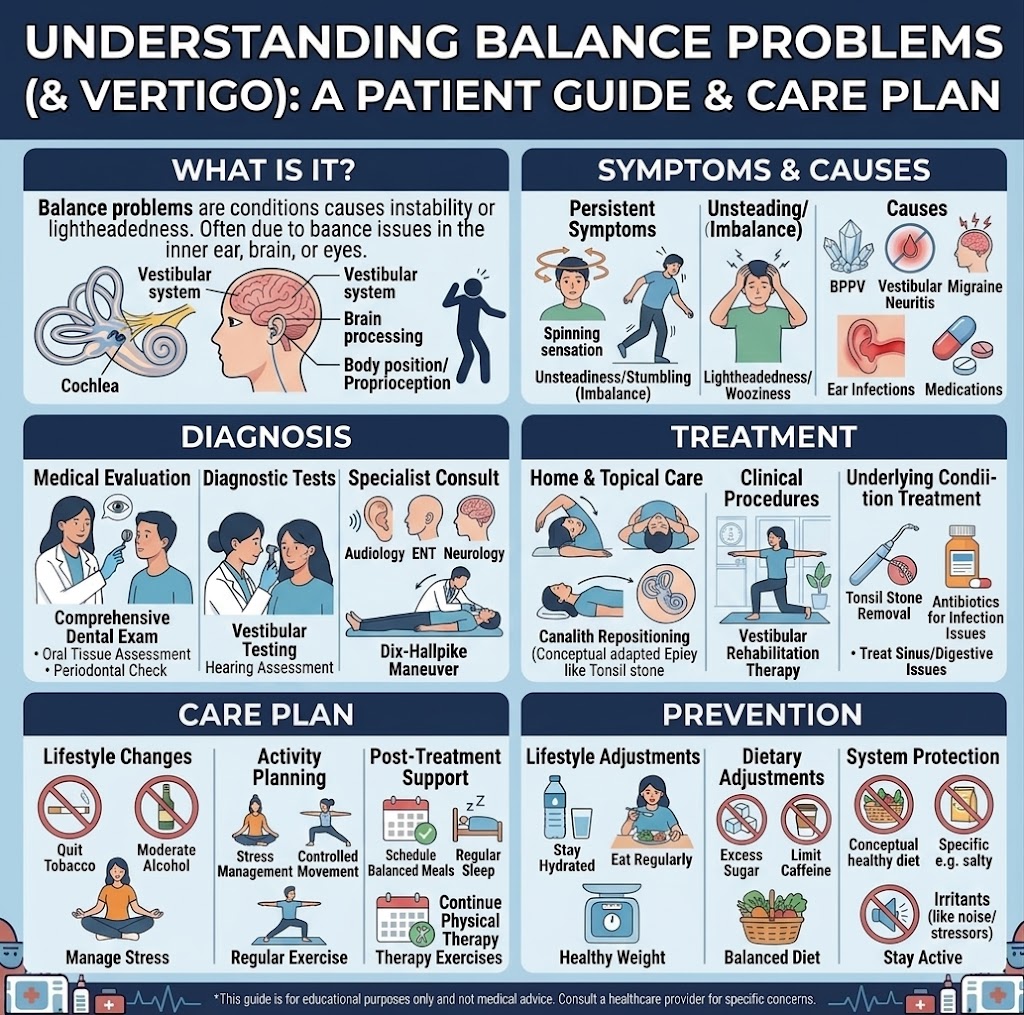
Balance problems cause sensations of dizziness, spinning, lightheadedness, or unsteadiness, making you feel like you might fall, whether sitting, standing, or lying down. Your ability to maintain balance relies on many body systems working together: muscles, bones, joints, eyes, nerves, heart, blood vessels, and critically, the balance organ in your inner ear (vestibular system). When these systems are not functioning well, balance issues occur, with inner ear problems being a very common cause.
Understanding the Condition
Understanding and Managing Balance Problems
Understanding the Condition
Common Symptoms
Spinning Sensation (Vertigo): A strong feeling that you or your surroundings are spinning or moving when you are still.
Faintness or Lightheadedness (Presyncope): Feeling like you might pass out, often associated with a sudden drop in blood pressure.
Loss of Balance or Unsteadiness: Difficulty staying upright, leading to an unsteady gait or frequent wobbling.
Falling or Feeling Like You Might Fall: Actually losing your footing or having a strong sensation of imminent fall.
Floating Sensation or General Dizziness: A vague feeling of disorientation, lightheadedness, or feeling disconnected.
Vision Changes: Experiencing blurred vision or other visual disturbances during balance episodes.
Consultation Guide
Which Specialist to Meet
Start with your Primary Care Provider, who may refer you to an Otolaryngologist (ENT doctor) for inner ear issues, a Neurologist for nervous system conditions, or a Physical Therapist specializing in balance rehabilitation.
Preparations Before Your Visit
Detail your symptoms: when they started, frequency, duration, and what makes them better or worse. List all medical conditions, current medications (including over-the-counter), and prepare questions for your doctor.
Book a doctor visit near me
Stress Management: Utilize relaxation techniques to lessen symptoms potentially aggravated by stress. (Duration: Ongoing)
Anti-Dizziness/Anti-Nausea: Short-term relief for severe symptoms. (Duration: Days to a few weeks)
Injections: For severe Meniere's, medications can be injected into the ear to reduce symptoms. (Duration: Typically a single procedure, with varying effects)
Consultation Guide
Balance problems cause sensations of dizziness, spinning, lightheadedness, or unsteadiness, making you feel like you might fall, whether sitting, standing, or lying down. Your ability to maintain balance relies on many body systems working together: muscles, bones, joints, eyes, nerves, heart, blood vessels, and critically, the balance organ in your inner ear (vestibular system). When these systems are not functioning well, balance issues occur, with inner ear problems being a very common cause.
Migraine Prevention: Regular medication to reduce frequency of attacks if vestibular migraine is the cause. (Duration: Months or years)
Vestibular Rehabilitation Therapy (VRT): Specialized exercises to help your brain adapt to inner ear problems, improving balance. (Duration: Several weeks to a few months, with ongoing home practice)
Canalith Repositioning Maneuvers: Specific head movements by a therapist to resolve displaced inner ear crystals for BPPV. (Duration: Often effective in 1-3 sessions)
General Physical Therapy: Improves strength, flexibility, balance, and gait. (Duration: Several weeks to months)
Procedures and Surgical Interventions
Diagnostic Procedures
Neurological Examination
Assesses the function of your nervous system (brain, spinal cord, nerves, muscles) to identify contributing conditions.
What to Expect
The doctor will take your medical history and perform tests evaluating reflexes, muscle strength, coordination, balance, sensation, vision, hearing, and mental status. This might include walking, following eye movements, or checking balance. Duration varies from minutes to over an hour.
Objectively measures your body's sway and balance control, helping to determine how much you rely on vision, inner ear, or touch/proprioception for stability.
What to Expect
You stand barefoot on a computerized platform, often secured with a safety harness. The platform or a surrounding visual screen may move. The test records your body's subtle movements under various sensory conditions.
Evaluates your inner ear's balance system and its connection to eye movements, essential for stable vision during head motion.
What to Expect
You sit in a motorized chair within a dark room. The chair gently rotates back and forth while special goggles record your eye movements. You may be instructed to keep your eyes open or closed, helping doctors understand your inner ear's response to motion.
Treatment Options
Medications
Fluid-Reducing Medications: For conditions like Meniere's disease, taken to manage inner ear fluid pressure. (Duration: Long-term)
Surgical Procedures: Rarely, for severe cases unresponsive to other treatments (e.g., certain inner ear conditions or tumors). (Duration: Single procedure with a recovery period of weeks to months)
Medication Review: Regularly discuss all medications with your healthcare team to identify potential side effects impacting balance.
Prevention & Long-Term Wellbeing
Home Remedies and Lifestyle Adjustments
Careful Movement: Avoid quick changes in position; move slowly to prevent dizziness. (Duration: Ongoing)
Safe Environment: Remove fall hazards, ensure good lighting, and consider assistive devices like canes or walkers if recommended. (Duration: Ongoing)
Hydration & Diet: Maintain adequate fluid intake and a balanced diet. (Duration: Ongoing)
Prevention and Long-Term Wellbeing Strategies
Regular Exercise: Incorporate balance-enhancing activities like walking, tai chi, or yoga, tailored to your ability.
Fall Prevention: Optimize your home for safety: clear pathways, good lighting, grab bars, and non-slip surfaces.
Manage Chronic Conditions: Work with your doctor to control underlying health issues such as diabetes, high blood pressure, or migraine.
Vision and Hearing Checks: Regular professional evaluations are crucial, as changes in these senses directly impact balance.
Healthy Lifestyle: Prioritize hydration, balanced nutrition, and adequate sleep.
Avoid Triggers: Limit alcohol and caffeine, and learn to identify and avoid other personal triggers for dizziness.
Mindful Movement: Practice slow, controlled movements, especially when changing positions.
Proper Footwear: Choose sturdy, supportive shoes for better stability.
Tags & Topics
Notice an error or need an update?
Help us keep medical information accurate. Report incorrect info or suggest an edit.


