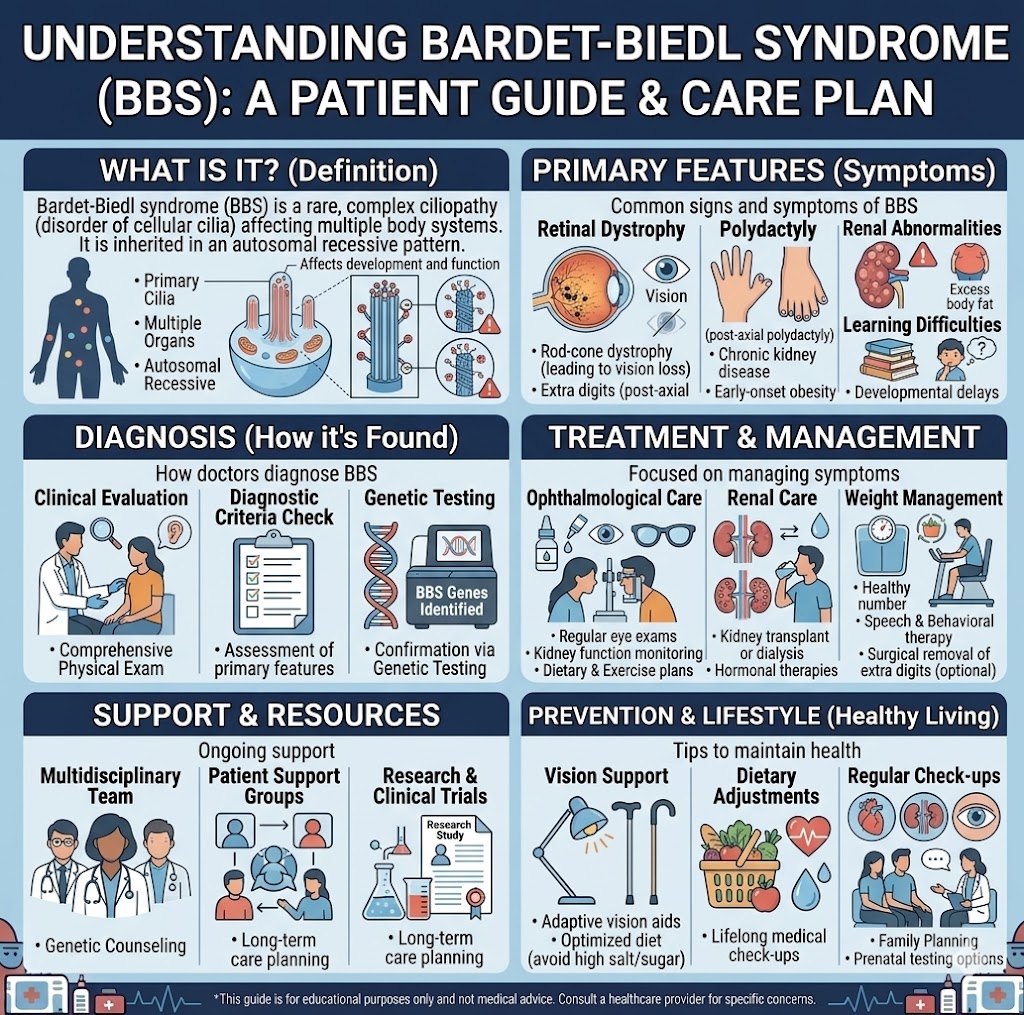
Bardet-Biedl (BAR-day, BEE-dul) syndrome, or BBS, is a rare genetic condition caused by gene changes, affecting nearly all body systems. Early childhood onset often includes significant weight gain and vision loss. Other issues can involve kidney problems, differences in sexual development, extra fingers or toes, and challenges with speech, learning, thinking, and memory. While incurable, early diagnosis and tailored treatment for related conditions can ease symptoms, reduce complications, and improve quality of life. A multidisciplinary specialist team is typically required.
Understanding the Condition
Bardet-Biedl Syndrome (BBS): A Comprehensive Guide
Understanding the Condition
Bardet-Biedl (BAR-day, BEE-dul) syndrome, or BBS, is a rare genetic condition caused by gene changes, affecting nearly all body systems. Early childhood onset often includes significant weight gain and vision loss. Other issues can involve kidney problems, differences in sexual development, extra fingers or toes, and challenges with speech, learning, thinking, and memory. While incurable, early diagnosis and tailored treatment for related conditions can ease symptoms, reduce complications, and improve quality of life. A multidisciplinary specialist team is typically required.
Common Symptoms
Weight Gain: Extra body weight, often starting in early childhood.
Vision Loss: Progressive poor eyesight leading to vision loss.
Kidney Problems: Abnormal kidney development and function.
Hormone Imbalances: Low hormone levels affecting sexual organ development, delayed puberty, and sexual function.
Extra Digits (Polydactyly): Having more than the usual number of fingers or toes, a condition called polydactyly.
Cognitive and Developmental Challenges: Difficulties with speaking, learning, thinking, and memory.
Neurological Issues: Brain and nerve changes, possibly causing seizures or affecting speech, walking, balance, and coordination.
Mood and Behavior: Changes in emotional state and conduct.
Metabolic Conditions: Increased risk for conditions like diabetes, high cholesterol, high blood pressure, sleep apnea, and liver disease.
Thyroid Issues: Thyroid hormone imbalances.
Digestive Problems: Digestive issues, such as inflammatory bowel disease or celiac disease.
Loss of Smell (Anosmia): Inability to detect odors, known as anosmia.
Eye Conditions: Eye conditions like misaligned eyes (strabismus) and cloudy eye lenses (cataracts).
Frequent Urination: Needing to urinate often day and night.
Consultation Guide
Which Specialist to Meet
Due to varied symptoms, a team of specialists may be needed, including a geneticist (for diagnosis and counseling), an ophthalmologist (eye doctor), a nephrologist (kidney specialist), an endocrinologist (hormone specialist), a neurologist (brain and nerve specialist), a dietitian, and therapists (speech, occupational, mental health).
Preparations Before Your Visit
Before your visit, list all symptoms, their onset, severity, and any relevant family medical history. Prepare a list of questions you have for your doctor.
Book a doctor visit near me
When gene changes aren't found, diagnosis often relies on a comprehensive review of symptoms, medical history, and a thorough physical examination, given BBS's widespread effects.
The doctor will inquire about your health, developmental milestones, and specific symptoms (e.g., weight, vision, development). A physical exam will assess eyes, potential kidney issues, and extra digits. This guides further specialized tests like eye exams or kidney function evaluations.
Early Diagnosis: Recognizing symptoms early allows for prompt intervention and management of associated conditions, which can significantly improve long-term outcomes and quality of life.
Regular Medical Check-ups: Consistent visits with a team of specialists to monitor all affected body systems, including eyes, kidneys, hormones, and metabolism.
Diagnostic Procedures
Genetic testing examines your DNA to identify specific gene changes (mutations) causing Bardet-Biedl syndrome, which can be new or inherited.
What to Expect
A small sample (blood or cheek swab) is collected and analyzed in a lab. If initial tests are inconclusive but BBS is suspected, advanced genome sequencing (often focusing on the exome, the protein-coding DNA) may be performed to find subtle genetic variations. Physical risks are minimal. Results are typically discussed with a genetic counselor or doctor.
What to Expect
Kidney Function Monitoring: Regular check-ups and tests to monitor kidney health and function, with interventions as needed. (Duration: Lifelong monitoring to prevent or manage kidney disease progression.)
Treatment Options
Medications
Hormone Therapy: Medications to balance hormone levels, particularly for issues affecting sexual development and puberty. (Duration: Often lifelong.)
Metabolic Management Medications: Medications to manage associated conditions like diabetes (blood sugar control), high blood pressure, and high cholesterol. (Duration: Typically lifelong for chronic conditions.)
Mental Health Medications: Prescriptions to address mood and behavioral changes such as depression, anxiety, or hyperactivity. (Duration: Varies, from short-term to long-term based on individual response and condition severity.)
Surgical Procedures
Cataract Surgery: A procedure to remove the cloudy natural lens of the eye and replace it with a clear artificial lens. This helps restore clear vision affected by cataracts. (Duration: Typically a one-time outpatient procedure, recovery takes a few weeks.)
Kidney Transplant: Surgery to replace a failing kidney with a healthy one from a living or deceased donor. This is vital when kidneys can no longer filter waste from the body. (Duration: A one-time surgery, followed by lifelong immunosuppressant medication and monitoring.)
Therapies
Speech, Occupational, and Physical Therapy: Specialized therapies to help improve communication skills, daily living activities, motor skills, balance, and coordination. (Duration: Varies based on individual needs, often ongoing during childhood and adolescence, and as needed in adulthood.)
Behavioral and Developmental Therapies: Therapies designed to address learning difficulties, behavioral challenges, and social skills development. (Duration: Ongoing, adapting to individual progress and challenges.)
Prevention & Long-Term Wellbeing
Lifestyle & Supportive Care
Weight Management: Guidance from dietitians and healthcare providers on healthy eating and exercise plans to manage early-onset weight gain and reduce related health risks. (Duration: Lifelong commitment to healthy habits.)
Vision Aids and Support: Use of low vision aids, adaptive technologies, and support services to manage progressive vision loss. (Duration: Lifelong as vision changes.)
Prevention
Genetic Counseling: For families with a history of BBS, genetic counseling can provide information about the risk of passing the condition to children and discuss reproductive options.
Healthy Lifestyle: Adopting a balanced diet and engaging in regular, appropriate physical activity to help manage weight, prevent metabolic complications like diabetes, and support overall health.
Mental Health Support: Accessing counseling or therapy to address mood, behavior, and social challenges, promoting emotional well-being and coping strategies.
Educational and Vocational Support: Providing appropriate educational accommodations and support for learning disabilities, and guidance for vocational planning to foster independence.
Community Support: Connecting with support groups and communities can provide emotional support, shared experiences, and practical advice for living with BBS.
Tags & Topics
Notice an error or need an update?
Help us keep medical information accurate. Report incorrect info or suggest an edit.


