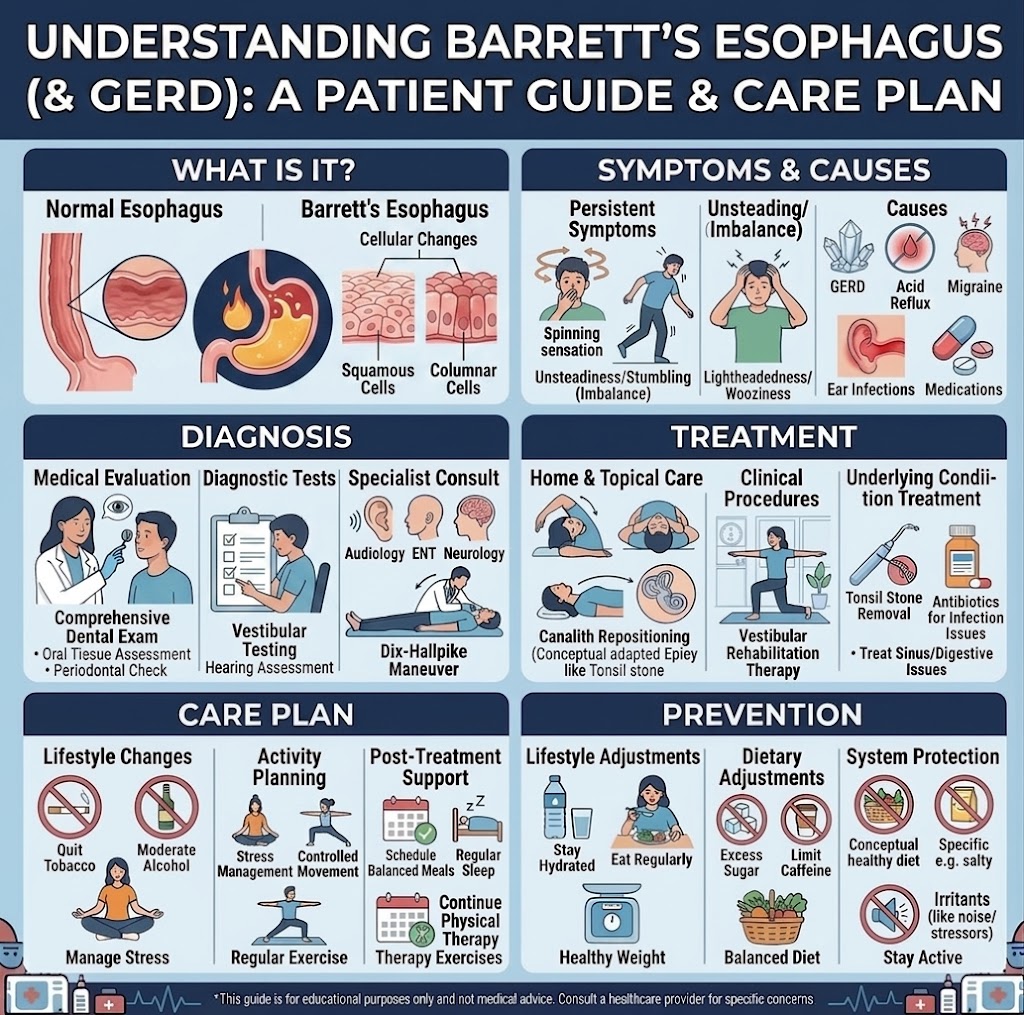
Barrett's esophagus is a condition where the normal, pale pink lining of your swallowing tube (esophagus) changes due to long-term irritation from stomach acid. This irritation, often from acid reflux, causes the lining to thicken and become redder, with cells that are different from typical esophageal cells, making them more similar to the lining of your intestines. Barrett's esophagus is a complication of chronic gastroesophageal reflux disease (GERD), a condition where stomach acid frequently flows back into the esophagus. Although the risk is small, Barrett's esophagus is associated with an increased chance of developing esophageal cancer. Regular monitoring is crucial to detect and treat precancerous cells before they become cancerous.
Understanding the Condition
Barrett's Esophagus: Understanding Cellular Changes in Your Esophagus
Understanding the Condition
Common Symptoms
Frequent Heartburn and Regurgitation: A burning sensation in the chest and the backward flow of stomach contents into the throat or mouth.
Difficulty Swallowing: Feeling like food is sticking in your throat or chest.
Chest Pain: Less commonly, discomfort or pain in the chest area.
Silent Reflux: Interestingly, about half of individuals diagnosed with Barrett's esophagus report few to no symptoms of acid reflux, making it a 'silent' condition for many.
When to See a Doctor: If you've experienced heartburn, regurgitation, or acid reflux for more than five years, discuss your digestive health with your doctor regarding the possibility of Barrett's esophagus.
Seek Immediate Medical Help If You Experience: Severe chest pain (which could indicate a heart attack), significant difficulty swallowing, vomiting blood (red or dark, like coffee grounds), passing black, tarry, or bloody stools, or unexplained weight loss.
Consultation Guide
Which Specialist to Meet
You should first consult with your primary care provider, who can then refer you to a gastroenterologist. A gastroenterologist is a medical doctor specializing in conditions of the digestive system.
Preparations Before Your Visit
Before your appointment, be prepared to discuss your symptoms, including how long you've had them, their severity, and any factors that make them better or worse. Provide a complete list of your medications and medical history. Your doctor may advise you to fast for a certain period before any diagnostic procedures.
Book a doctor visit near me
Acid-Reducing Medications: These drugs decrease stomach acid production, helping to control GERD symptoms and prevent further esophageal damage. (Duration: Long-term, as prescribed.)
Endoscopic Procedures (for precancerous changes)
Radiofrequency Ablation (RFA): Heat energy delivered via an endoscope destroys abnormal cells, allowing healthy tissue to regrow. (Duration: One or more sessions, typically 30-60 minutes each, weeks apart.)
Cryotherapy: Uses extreme cold via an endoscope to freeze and destroy abnormal cells, which are then replaced by healthy tissue. (Duration: One or more sessions, typically 30-60 minutes each, weeks apart.)
Manage Acid Reflux: Actively manage GERD symptoms through diet, lifestyle modifications, and prescribed medications to reduce esophageal acid exposure.
Avoid Smoking: Smoking increases the risk of Barrett's esophagus and esophageal cancer. Quitting smoking is crucial.
Maintain a Healthy Weight: Excess body weight, especially around the abdomen, increases reflux and Barrett's risk. Aim for a healthy body mass index.
Understand Family History: If you have a family history of Barrett's esophagus or esophageal cancer, inform your doctor and discuss potential screening.
Consultation Guide
Barrett's esophagus is a condition where the normal, pale pink lining of your swallowing tube (esophagus) changes due to long-term irritation from stomach acid. This irritation, often from acid reflux, causes the lining to thicken and become redder, with cells that are different from typical esophageal cells, making them more similar to the lining of your intestines. Barrett's esophagus is a complication of chronic gastroesophageal reflux disease (GERD), a condition where stomach acid frequently flows back into the esophagus. Although the risk is small, Barrett's esophagus is associated with an increased chance of developing esophageal cancer. Regular monitoring is crucial to detect and treat precancerous cells before they become cancerous.
Diagnostic Procedures
Upper Endoscopy with Biopsy
This is the primary method for diagnosing Barrett's esophagus. A doctor uses a thin, flexible tube with a camera and light (called an endoscope) to visually inspect the lining of your esophagus, stomach, and the first part of your small intestine (duodenum). During this examination, the doctor looks for visible changes in the esophageal lining that suggest Barrett's. If such changes are observed, small tissue samples (biopsies) are taken from different areas of the esophagus. These samples are then sent to a lab to be examined under a microscope for specific cellular changes characteristic of Barrett's esophagus and to check for precancerous cells (dysplasia).
What to Expect
You will typically be given a sedative to help you relax and feel comfortable, and a local anesthetic may be sprayed in your throat to numb it. You'll lie on your side, and the endoscope will be gently guided down your throat. You might feel some pressure but generally no pain. The procedure usually takes 15 to 30 minutes. After the procedure, you will need someone to drive you home due to the sedatives, and you may experience a mild sore throat or bloating, which should resolve quickly.
Regular Endoscopic Surveillance: If diagnosed with Barrett's esophagus, your doctor will recommend regular upper endoscopies with biopsies to monitor for precancerous changes (dysplasia). The frequency depends on the degree of cellular change found. Early detection of dysplasia allows for timely intervention to prevent cancer.
Treatment Options
Medications
Photodynamic Therapy (PDT): A light-sensitive medication is activated by laser light delivered through an endoscope to destroy precancerous cells. Requires post-procedure sun avoidance. (Duration: Typically a single session.)
Endoscopic Mucosal Resection (EMR): An endoscope-guided procedure to remove visible early-stage cancer or high-grade precancerous tissue from the esophageal lining. (Duration: Single procedure, 30-60 minutes.)
Surgical Procedures (for advanced changes or cancer)
Esophagectomy: A major surgery involving the removal of part or all of the esophagus, typically for advanced cancer. The esophagus is then reconstructed using another organ, usually part of the stomach. (Duration: Several hours of surgery, followed by significant hospital stay and recovery time.)
Prevention & Long-Term Wellbeing
Lifestyle and Home Remedies
Acid Reflux Management: Adopting a low-acid diet, eating smaller meals, avoiding food before bed, elevating the head of your bed, and maintaining a healthy weight can significantly reduce acid reflux. (Duration: Ongoing)
Prevention
Tags & Topics
Notice an error or need an update?
Help us keep medical information accurate. Report incorrect info or suggest an edit.


