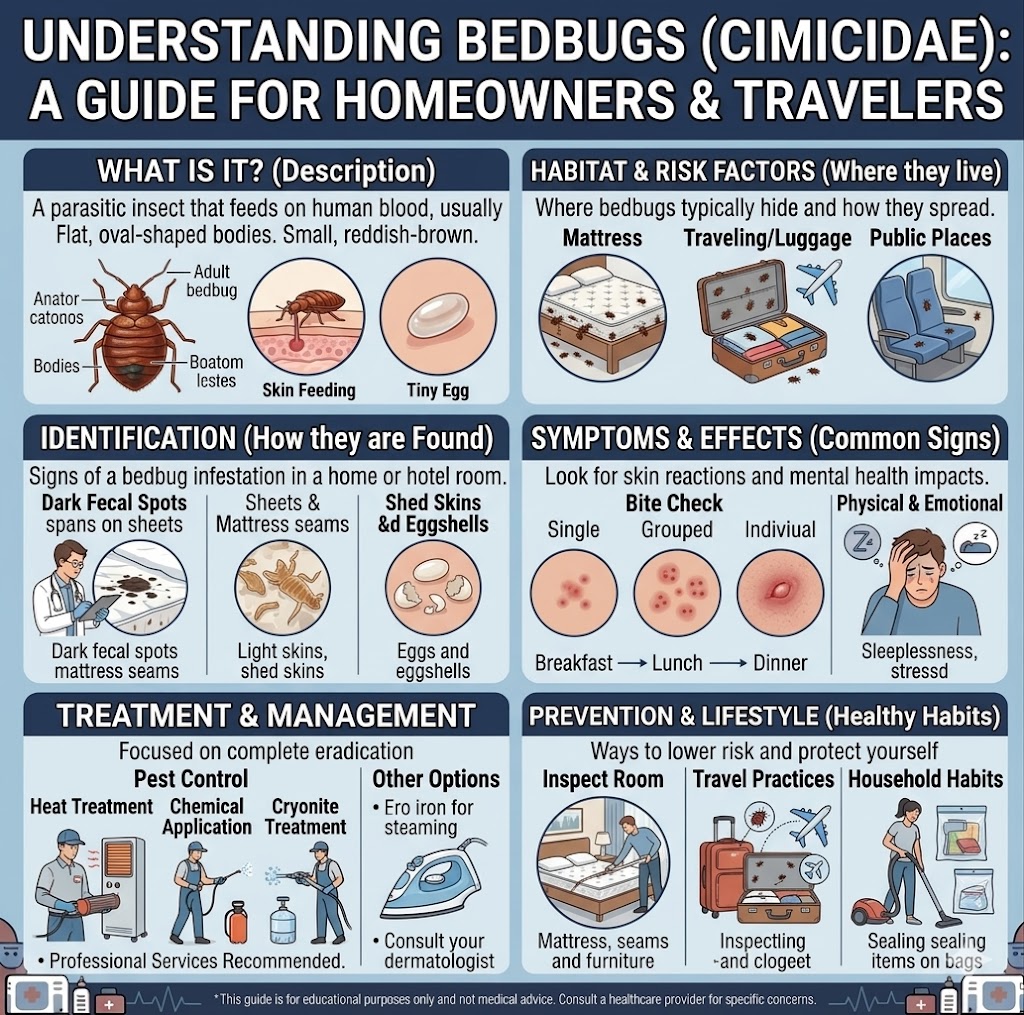
Bedbugs are tiny, reddish-brown insects that feed on human blood. About the size of an apple seed, these wingless pests typically hide in bedding, furniture, and crevices near where people sleep. While their bites are usually harmless and clear up within a week or two, some individuals can experience allergic or severe skin reactions. Bedbugs are not known to transmit diseases. Infestations often require professional pest control.
Understanding the Condition
Understanding Bedbugs and Their Bites
Understanding the Condition
Bedbugs are tiny, reddish-brown insects that feed on human blood. About the size of an apple seed, these wingless pests typically hide in bedding, furniture, and crevices near where people sleep. While their bites are usually harmless and clear up within a week or two, some individuals can experience allergic or severe skin reactions. Bedbugs are not known to transmit diseases. Infestations often require professional pest control.
Common Symptoms
Inflamed Spots: Small, red, raised areas on the skin, often with a darker spot in the middle.
Arrangement: Bites frequently appear in a rough line or clustered pattern on the skin.
Location: Commonly found on exposed skin, such as the face, neck, arms, and hands.
Varied Reactions: Some people show no reaction to bites, while others develop intense itching, fluid-filled blisters, or widespread hives, indicating an allergic response. If you experience severe reactions, seek medical attention.
Consultation Guide
Which Specialist to Meet
Begin by consulting a general practitioner or family doctor. If symptoms are severe or persistent, a dermatologist (skin specialist) or an allergist (allergy specialist) may be recommended.
Preparations Before Your Visit
Before your visit, be prepared to describe your symptoms in detail: when they started, where on your body the bites appear, and any recent travel or introduction of new furniture or secondhand items into your home. Avoid scratching the bites vigorously before your appointment, as this can make examination difficult.
Book a doctor visit near me
Cool Compresses: Apply a cool, damp cloth to the itchy areas to help soothe irritation and reduce swelling. (Duration: As needed for symptom relief.)
Topical Anti-Itch Creams: Use a mild corticosteroid cream or an antihistamine lotion on bites to relieve itching and inflammation. (Duration: Apply as directed, typically for a few days until symptoms subside.)
Oral Antihistamines: For more widespread itching or allergic reactions, oral antihistamine tablets can help reduce discomfort and promote sleep. (Duration: Take as directed, usually for 1-2 weeks.)
Diagnostic Procedures
Physical Examination and History Taking
Diagnosing bedbug bites primarily involves a thorough physical examination of your skin and a detailed discussion about your recent activities and living environment. Since bedbug bites can resemble other insect bites or skin conditions, providing a comprehensive history is crucial. The doctor will look for the characteristic patterns and locations of bedbug bites.
What to Expect
During the visit, the doctor will carefully examine the affected areas of your skin, paying close attention to the appearance and distribution of the bites. You will be asked questions about when you first noticed the bites, how they feel, if anyone else in your household has similar bites, your travel history, and if you've recently acquired used furniture or bedding. The doctor may also inquire about the cleanliness of your home, though bedbug infestations are not solely linked to unsanitary conditions. No specific blood tests or invasive procedures are typically required for diagnosis.
Treatment Options
Clean Affected Skin: Gently wash bedbug bites with soap and water to keep them clean and reduce the risk of infection. (Duration: Ongoing as needed until bites heal.)
Over-the-Counter Medications
Prescription Medications
Stronger Topical Corticosteroids: If over-the-counter options are insufficient, a doctor may prescribe a stronger topical cream to manage severe itching or inflammation. (Duration: Typically for a few days to a week.)
Oral Antibiotics: If scratching leads to a secondary bacterial skin infection, a course of oral antibiotics may be necessary. (Duration: Usually 7-10 days.)
Oral Corticosteroids: In rare cases of severe allergic reactions, a doctor might prescribe a short course of oral corticosteroids to reduce inflammation. (Duration: Typically 3-5 days.)
Prevention & Long-Term Wellbeing
Prevention
Cover Up While Sleeping: Wearing pajamas that cover as much skin as possible can help reduce the number of bites, as bedbugs generally don't burrow under clothing.
Inspect Secondhand Items: Thoroughly examine used bedding, mattresses, upholstered furniture, and clothing for any signs of bedbugs before bringing them into your home. Consider cleaning or treating them if possible.
Hotel and Travel Precautions: When staying in hotels or other accommodations, check mattress seams, headboards, and cracks for bedbug signs. Keep your luggage off the floor, ideally on a luggage rack, dresser, or table, to prevent hitchhiking.
Professional Pest Control: If you suspect or confirm a bedbug infestation in your home, professional pest extermination is highly recommended to effectively eradicate the insects.
Long-Term Wellbeing
Regular Home Inspections: After an infestation, periodically inspect your sleeping areas and furniture for any recurring signs of bedbugs to catch new activity early.
Educate Yourself: Understand how bedbugs spread and what signs to look for, especially if you travel frequently or interact with high-risk environments.
Tags & Topics
Notice an error or need an update?
Help us keep medical information accurate. Report incorrect info or suggest an edit.


