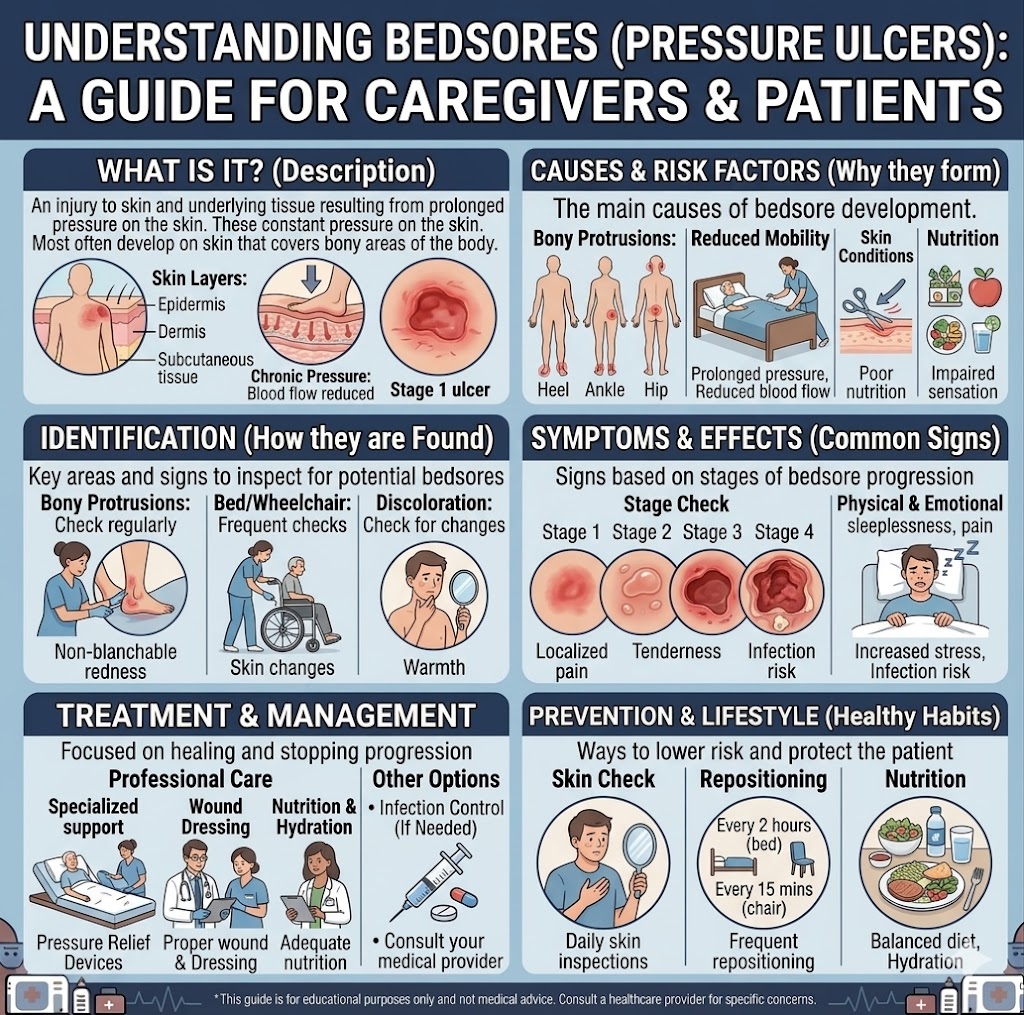
Bedsores, also known as pressure injuries, are skin and tissue damage caused by continuous pressure on specific body areas, reducing blood flow. They frequently occur over bony spots like heels, hips, and the tailbone. Individuals with limited movement, or those spending extended time in beds or chairs, are most vulnerable. These injuries can develop rapidly. While many heal with treatment, some become chronic, underscoring the vital role of early detection and prevention.
Understanding the Condition
Understanding Bedsores (Pressure Injuries)
Understanding the Condition
Common Symptoms
Changes in skin color or texture: Skin might appear red, purple, darker, or feel harder/softer than usual.
Swelling or warmth: The affected area may be swollen or feel notably warmer/cooler.
Pain or tenderness: The area could be sore to the touch.
Pus-like drainage: Fluid, possibly with odor, seeping from the wound, suggesting infection.
Open wounds or blisters: Skin may break open, forming shallow or deep wounds that can expose muscle or bone.
Consultation Guide
Which Specialist to Meet
List your symptoms (onset, changes), all medications, full medical history, and questions for your doctor.
Book a doctor visit near me
The provider gently inspects and measures the wound. You may feel slight discomfort if the area is tender. You will be asked about your symptoms and pain.
If infection is suspected (pus, odor, fever), a sample of fluid or tissue is collected from the wound to identify bacteria and guide antibiotic choice.
Consultation Guide
Bedsores, also known as pressure injuries, are skin and tissue damage caused by continuous pressure on specific body areas, reducing blood flow. They frequently occur over bony spots like heels, hips, and the tailbone. Individuals with limited movement, or those spending extended time in beds or chairs, are most vulnerable. These injuries can develop rapidly. While many heal with treatment, some become chronic, underscoring the vital role of early detection and prevention.
Diagnostic Procedures
Clinical Skin Assessment and Staging
A doctor or nurse examines the affected skin and surrounding tissue for color, texture, temperature, and open wounds. Wounds are classified (Stage 1-4, unstageable, Deep Tissue Injury) based on depth and severity, from minor discoloration to deep damage involving bone.
What to Expect
What to Expect
A sterile swab is gently rubbed inside the wound. This is quick, usually painless, possibly causing a brief tickle or pressure.
Blood tests check for infection signs (e.g., high white blood cells), anemia, or nutritional deficits that hinder healing or increase risk.
What to Expect
A blood sample is drawn from your arm with a small needle. You might feel a brief pinch. The process is fast, typically minutes.
Imaging Tests (X-ray or MRI)
For deep bedsores potentially involving bone or joints, X-rays or MRI provide detailed images to check for bone infections (osteomyelitis) or joint damage.
What to Expect
X-ray: You lie or sit still on a table for brief image captures. Quick and painless. MRI: You lie still on a table inside a noisy, tunnel-like machine. Earplugs are offered. Scan takes 30-60+ minutes. Painless, but some find the enclosed space uncomfortable.
Treatment Options
Home and Conservative Remedies
Repositioning: Change body position every 1-2 hours in bed, or 15-30 minutes in a wheelchair, to relieve pressure. (Duration: Ongoing as needed)
Skin Care: Keep skin clean and dry, especially after incontinence. Use mild soaps and moisturizers. (Duration: Ongoing as needed)
Pressure-Relieving Devices: Use specialized cushions, mattresses, or beds to distribute pressure evenly. (Duration: Ongoing as needed)
Medications
Topical Wound Dressings: Specialized dressings (e.g., hydrocolloid, foam) protect wounds, absorb drainage, and maintain a healing environment. (Duration: Days to weeks, depending on wound progress)
Antibiotics: Oral or IV antibiotics treat bacterial infections in the wound or surrounding tissues. (Duration: Typically 7-14 days, as prescribed)
Pain Relievers: Over-the-counter or prescription medication manages discomfort. (Duration: As needed for pain management)
Procedures and Therapies
Debridement: Removal of dead tissue from the wound (surgically, mechanically, chemically, or biologically) to aid healing. (Duration: Can be a single procedure or multiple sessions over weeks)
Negative Pressure Wound Therapy (NPWT): A vacuum pump applied to a dressing draws out fluid, reduces swelling, and promotes tissue growth. (Duration: Typically used for several weeks to months, with dressing changes every few days)
Physical and Occupational Therapy: Exercises improve mobility and strength, along with education on positioning to prevent future sores. (Duration: Ongoing as needed, often several weeks to months)
Surgical Procedures
Flap Surgery: For deep, non-healing sores, healthy skin/tissue from elsewhere is used to cover the wound and provide padding. (Duration: Single surgery followed by weeks to months of recovery and rehabilitation)
Prevention & Long-Term Wellbeing
Start with your primary care doctor. They may refer you to a dermatologist (skin specialist), wound care specialist, physical or occupational therapist (for movement/positioning), registered dietitian (for nutrition), or a surgeon for severe cases.
Preparations Before Your Visit
Nutritional Support: Eat a diet rich in protein, vitamins, minerals, and fluids to promote healing. (Duration: Ongoing as needed)
Prevention
Frequent Repositioning: Shift positions every 1-2 hours in bed; every 15-30 minutes in a wheelchair. Seek assistance if needed.
Daily Skin Checks: Inspect skin, especially over bony areas, for changes. Use mirrors or ask for help.
Maintain Skin Hygiene: Keep skin clean and dry with mild soap. Use barrier creams for incontinence.
Good Nutrition & Hydration: Consume protein, vitamins, minerals, and plenty of water for skin health.
Avoid Smoking: Smoking impairs circulation and healing; seek support to quit.
Regular Movement: Engage in physical activity or range-of-motion exercises to improve blood flow.
Pressure-Relieving Equipment: Use specialized mattresses/cushions. Avoid doughnut cushions as they concentrate pressure.
Proper Bed Positioning: Avoid raising the head of the bed above 30 degrees for prolonged periods to reduce 'shear' forces.
Long-Term Monitoring and Support
Ongoing Medical Follow-up: Regular checks with your care team for existing sores and new risks.
Caregiver Education: Ensure caregivers understand repositioning, skin care, and early warning signs.
Adaptive Equipment Review: Regularly assess mobility aids and pressure-relieving equipment.
Psychological Support: Discuss emotional distress with your doctor and seek support if needed.
Tags & Topics
Notice an error or need an update?
Help us keep medical information accurate. Report incorrect info or suggest an edit.


