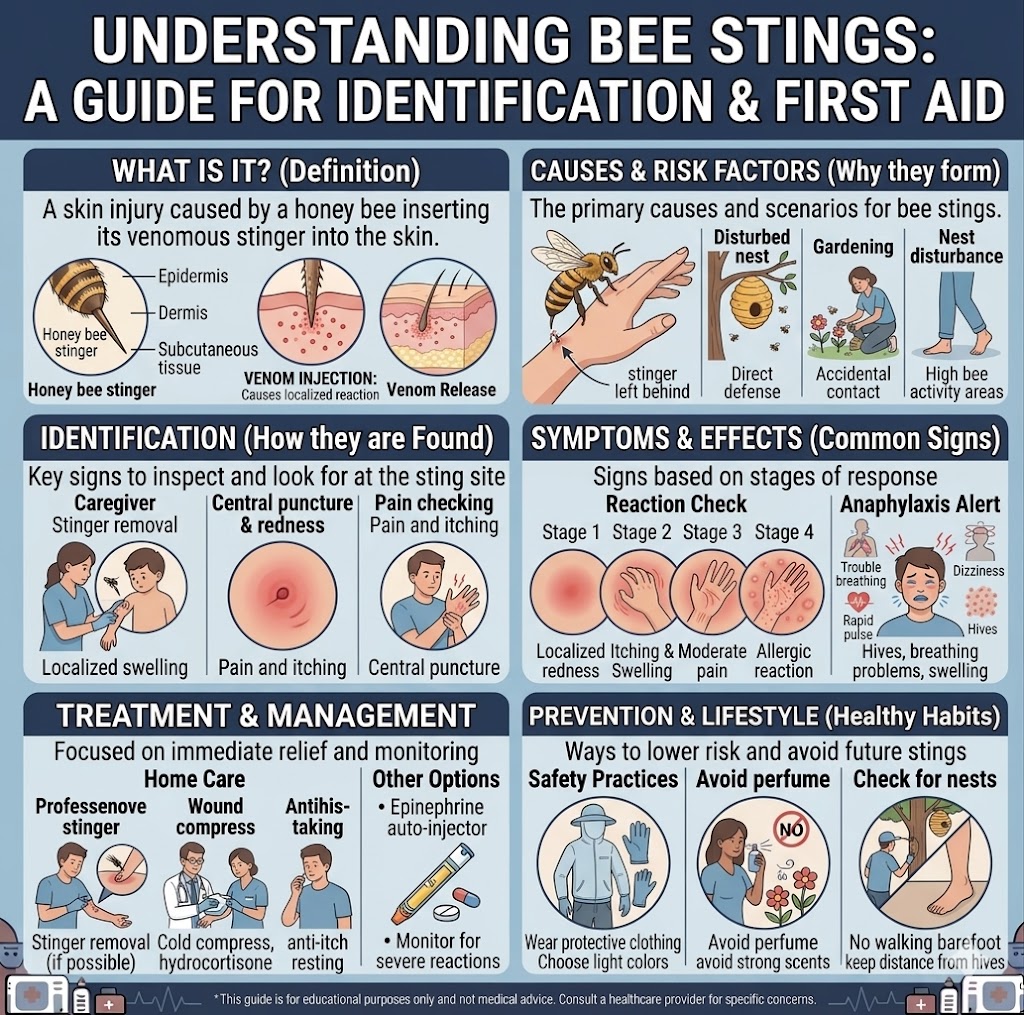
A bee sting is a frequent outdoor nuisance. While most stings cause minor discomfort treatable with basic first aid, some individuals experience moderate reactions. A small percentage can develop a severe, life-threatening allergic reaction (anaphylaxis) requiring immediate emergency medical attention. Understanding reactions and prevention is key.
Understanding the Condition
Common Symptoms
Severe Reaction (Anaphylaxis): This is a potentially life-threatening emergency, typically occurring 15 minutes to an hour after a sting. Symptoms include widespread rash, intense itching, difficulty breathing or wheezing, swollen tongue or throat, trouble swallowing, and chest tightness. Even one or two symptoms warrant urgent medical care.
Multiple Bee Stings: Numerous stings (over a dozen) can cause systemic illness, even without an allergy. Symptoms include those of a moderate reaction, plus nausea, vomiting, diarrhea, fever, and lightheadedness.
Consultation Guide
Which Specialist to Meet
Seek an emergency physician for severe reactions. For persistent symptoms, allergy concerns, or a history of severe reactions, consult a primary care physician or an allergist/immunologist. An allergist provides specialized testing and long-term management.
Preparations Before Your Visit
Before your visit, detail your symptoms: onset, duration, severity, and number of stings. Mention any prior reactions and current medications.
Book a doctor visit near me
Consultation Guide
A bee sting is a frequent outdoor nuisance. While most stings cause minor discomfort treatable with basic first aid, some individuals experience moderate reactions. A small percentage can develop a severe, life-threatening allergic reaction (anaphylaxis) requiring immediate emergency medical attention. Understanding reactions and prevention is key.
Mild Reaction: Most stings cause immediate, sharp burning pain, a raised red bump (welt), and localized swelling. Pain and swelling typically resolve within a few hours.
Moderate Reaction: A stronger local reaction may involve intense burning pain, a larger welt, itching, flushing, and swelling that expands over 1-2 days, lasting up to a week.
Diagnostic Procedures
These tests involve applying small amounts of suspected allergens to your skin and observing for a reaction. They help confirm specific allergy triggers and guide treatment planning, which may include avoidance, medication, or allergy shots.
What to Expect
A healthcare professional will place tiny drops of various allergen extracts on your skin, usually on the forearm or back, then gently prick or scratch the surface to allow allergen entry. You'll be monitored for about 15-20 minutes for a red, itchy, raised bump (wheal), indicating a positive reaction. You may feel a slight prick or scratch.
Blood Tests (Specific IgE Antibody Tests)
These tests measure specific immunoglobulin E (IgE) antibodies in your blood, which the immune system produces in response to allergens. Elevated IgE levels suggest an allergy. Useful for those unable to undergo skin tests due to skin conditions or medications. Not used for penicillin allergy.
What to Expect
A small blood sample will be drawn, typically from a vein in your arm, similar to a routine blood draw. The sample is sent to a lab for analysis, with results usually available within several days to a week.
Treatment Options
Remove Stinger: Gently scrape out the stinger with a fingernail or credit card immediately, avoiding squeezing to prevent further venom release. (Duration: Immediate action)
Clean and Ice: Wash the sting area with soap and water, then apply a cold compress or ice pack to reduce pain and swelling. (Duration: As needed for a few hours)
Pain and Itch Relief: Over-the-counter pain relievers and topical anti-itch creams can alleviate discomfort and itching. (Duration: As needed for a few hours to days)
Medications
Oral Antihistamines: Taken orally to reduce itching, hives, and minor swelling. (Duration: As needed for a few days)
Oral Corticosteroids: Prescribed for significant local swelling and inflammation that persists beyond a few days. (Duration: 3-7 days)
Emergency Self-Injectable Epinephrine: Crucial for individuals with a severe allergy (anaphylaxis). This pre-filled auto-injector delivers a rapid, life-saving dose that must be administered immediately at the first sign of a severe reaction, followed by calling for emergency medical help. (Duration: Immediate emergency use)
Therapies
Allergy Immunotherapy (Allergy Shots): For confirmed severe insect sting allergies, this long-term treatment involves regular injections of increasing amounts of bee venom to desensitize the immune system, significantly lowering the risk of severe reactions to future stings. (Duration: Weekly injections for several months, then monthly for 3-5 years)
Prevention & Long-Term Wellbeing
Bee Sting: Reactions, Care, and Prevention
- Understanding the Condition
Prevention
Drink Smart: Use clear, open cups or check cans/straws for insects before drinking sweet beverages outdoors.
Secure Food & Waste: Tightly cover all food containers and trash cans to prevent odors from attracting insects.
Clear Debris: Regularly remove garbage, fallen fruit, and animal waste from outdoor spaces.
Wear Closed Shoes: Always wear closed-toe shoes outdoors, especially in grassy or flowering areas.
Avoid Scented Products: Refrain from strong perfumes, colognes, or scented body products that attract insects.
Dress Strategically: Avoid bright colors or floral patterns that can mimic flowers.
Yard Work Caution: Be cautious when mowing or trimming vegetation, as this can disturb hidden nests.
Distance from Nests: Steer clear of visible beehives, wasp, or hornet nests. Consider professional removal if they are near your home.
Calm Retreat: If stinging insects are nearby, remain still and slowly move away. Avoid swatting, which can provoke a sting.
Long-Term Monitoring
Medical Identification: If severely allergic, carry medical alert identification specifying your condition.
Epinephrine Preparedness: Always carry your prescribed emergency epinephrine auto-injector, know how to use it, and check its expiration date.
Allergist Follow-up: Maintain regular appointments with your allergist to review your management plan.
Tags & Topics
Notice an error or need an update?
Help us keep medical information accurate. Report incorrect info or suggest an edit.


