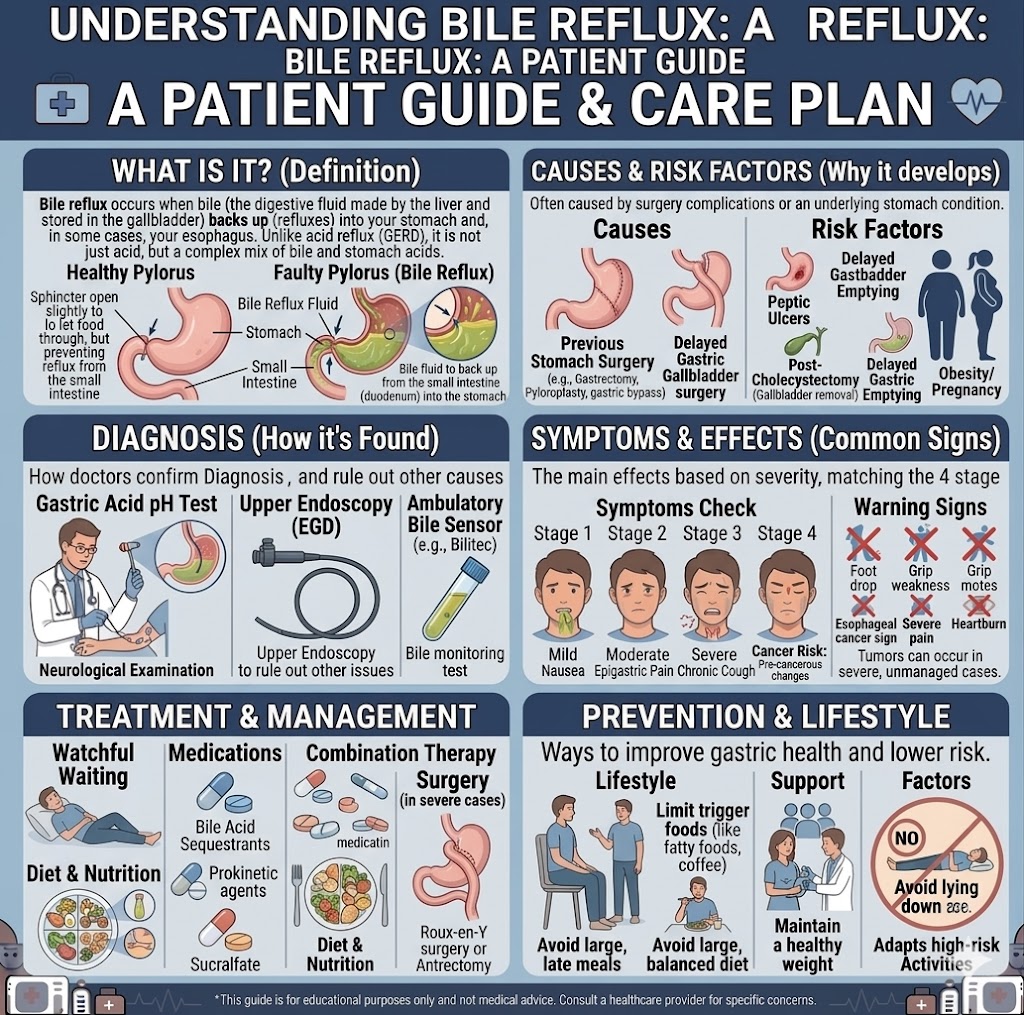
Bile reflux occurs when bile, a digestive fluid made by your liver, flows backward into your stomach. Bile is essential for breaking down fats in your food. Sometimes, this backward flow can extend further up into the esophagus, the tube connecting your mouth to your stomach. This condition is distinct from acid reflux (also known as GERD), where stomach acid backs up. While similar symptoms can occur, bile reflux often requires different treatment approaches. It can happen due to a weakness in the valve between the stomach and small intestine (the pyloric valve) or as a complication of certain surgeries, such as weight-loss procedures or gallbladder removal.
Understanding the Condition
Bile Reflux: Understanding and Managing a Digestive Condition
Understanding the Condition
Bile reflux occurs when bile, a digestive fluid made by your liver, flows backward into your stomach. Bile is essential for breaking down fats in your food. Sometimes, this backward flow can extend further up into the esophagus, the tube connecting your mouth to your stomach. This condition is distinct from acid reflux (also known as GERD), where stomach acid backs up. While similar symptoms can occur, bile reflux often requires different treatment approaches. It can happen due to a weakness in the valve between the stomach and small intestine (the pyloric valve) or as a complication of certain surgeries, such as weight-loss procedures or gallbladder removal.
Common Symptoms
Heartburn: A burning sensation in the chest that can extend to the throat.
Upper Abdominal Pain: Discomfort or pain in the upper part of the belly.
Nausea: Feeling sick to your stomach.
Vomiting Bile: Throwing up a greenish-yellow fluid.
Cough or Hoarseness: Irritation in the throat leading to a persistent cough or changes in voice.
Unintended Weight Loss: Losing weight without trying.
Difficulty Swallowing: Feeling like food is sticking or getting caught in your throat.
Consultation Guide
Which Specialist to Meet
Start by discussing your symptoms with your primary care doctor. They may refer you to a gastroenterologist, a medical doctor specializing in digestive system disorders.
Preparations Before Your Visit
Before your visit, keep a detailed record of your symptoms, including when they occur, what makes them better or worse, and any specific foods you've eaten. Make a list of all medications, vitamins, and supplements you currently take. Be prepared to share your medical history, including any previous surgeries. You might be asked to fast (not eat or drink) for several hours before your appointment if diagnostic tests are anticipated.
Book a doctor visit near me
Limit Fatty Foods: High-fat meals can stimulate bile production and slow stomach emptying, potentially worsening symptoms. Opt for leaner choices. (Duration: Ongoing)
Avoid Trigger Foods and Drinks: Spicy foods, citrus, caffeine, alcohol, and carbonated beverages can sometimes irritate the digestive tract. Identifying and avoiding your personal triggers may help. (Duration: Ongoing)
Elevate Head During Sleep: Raising the head of your bed by 6-8 inches can help gravity keep bile and stomach contents down, especially if you experience nighttime symptoms. (Duration: Ongoing)
Maintain a Healthy Weight: Excess weight can put pressure on the abdomen, potentially worsening reflux. Achieving and maintaining a healthy weight can significantly improve symptoms.
Avoid Smoking: Smoking can relax the digestive valves, making reflux more likely, and also irritates the esophagus.
Limit Alcohol Consumption: Alcohol can irritate the esophagus and may also relax the lower esophageal sphincter, increasing reflux.
Manage Stress: Stress doesn't cause bile reflux, but it can exacerbate digestive symptoms. Incorporating stress-reduction techniques like meditation or gentle exercise can be beneficial.
Regular Medical Follow-ups: Consistent check-ups with your healthcare provider are crucial for monitoring your condition, adjusting treatments as needed, and addressing any new symptoms or concerns.
Diagnostic Procedures
Upper Endoscopy (Esophagogastroduodenoscopy or EGD)
An upper endoscopy is a procedure that allows your doctor to visually examine the lining of your upper digestive system, which includes your esophagus, stomach, and the first part of your small intestine (duodenum). A long, thin, flexible tube called an endoscope, equipped with a tiny camera at its tip, is gently guided through your mouth and down into these areas. This helps identify any abnormalities, inflammation, or the presence of bile.
What to Expect
You will typically be given a mild sedative to help you relax and a local anesthetic to numb your throat. You'll lie on your side while the endoscope is carefully inserted. You might feel some pressure but generally no pain. The procedure itself usually takes 15-30 minutes. Your doctor may take small tissue samples (biopsies) for further examination. After the procedure, you'll recover from the sedation for a short period before being able to go home, though you'll need someone to drive you. You might experience a mild sore throat for a day or two.
Roux-en-Y Diversion (Roux-en-Y Reconstruction): For severe cases of bile reflux, particularly after certain gastric surgeries, a surgeon may create a new pathway for bile to drain further down the small intestine, bypassing the stomach. This prevents bile from entering the stomach and esophagus. (Duration: One-time procedure, followed by recovery and long-term monitoring)
Pylorus Valve Repair: If the issue is a weakened or damaged pyloric valve (the muscle between the stomach and small intestine), surgical repair or reconstruction of this valve may be performed to improve its function and prevent bile backflow. (Duration: One-time procedure, followed by recovery and long-term monitoring)
Treatment Options
Medications
Bile Acid Binders: These medications work by attaching to bile acids in your digestive tract, preventing them from being reabsorbed and reducing their irritating effects. They are then eliminated from the body. (Duration: Typically long-term, as prescribed by your doctor)
Acid-Reducing Medications: If you also experience acid reflux, medications that reduce stomach acid production may be prescribed to lessen the irritation to your esophagus, even though they don't directly stop bile reflux. (Duration: Typically long-term, as prescribed by your doctor)
Stomach Motility Enhancers: These medications can help improve the movement of food through your digestive system, which might reduce the time bile spends in the stomach. (Duration: As prescribed by your doctor, often for several weeks or months)
Surgical Procedures
Adhere to Treatment Plan: Follow your doctor's recommendations for lifestyle changes and medications precisely to effectively manage bile reflux and prevent complications.
Prevention & Long-Term Wellbeing
Lifestyle Adjustments and Home Remedies
Smaller, More Frequent Meals: Eating smaller amounts of food more often can help reduce pressure in the stomach and lessen the likelihood of bile backing up. (Duration: Ongoing)
Prevention and Long-Term Management
Tags & Topics
Notice an error or need an update?
Help us keep medical information accurate. Report incorrect info or suggest an edit.


