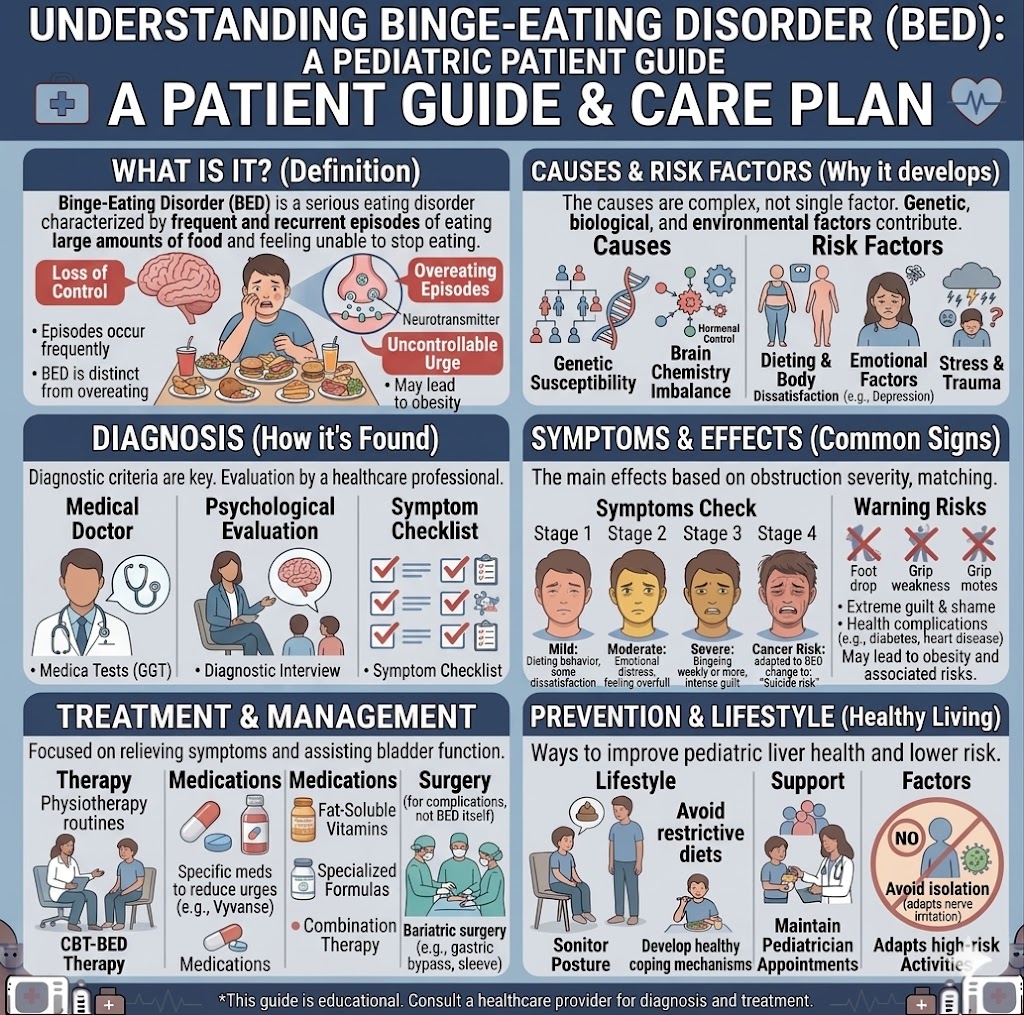
Binge-eating disorder is a serious eating condition marked by recurring episodes of eating unusually large amounts of food, often much faster than usual, and feeling unable to stop or control what or how much is eaten. Unlike occasional overeating during holidays, binge-eating disorder involves a regular and distressing pattern of feeling out of control with food. People often experience shame or embarrassment, which can lead to attempts to restrict eating, inadvertently fueling a cycle of further bingeing. Effective treatment can help individuals regain control and achieve a more balanced relationship with food.
Understanding the Condition
Binge-Eating Disorder: Understanding, Symptoms, and Support
Understanding the Condition
Common Symptoms
Loss of Control: Feeling unable to stop eating once you've started, or unable to control how much you eat.
Rapid Eating: Consuming food very quickly during episodes of bingeing.
Eating When Full: Continuing to eat even when you are not hungry or feel uncomfortably full.
Large Food Amounts: Eating a significantly greater amount of food than most people would in a similar period, such as over two hours.
Secretive Eating: Often eating alone or in secret due to embarrassment or shame.
Negative Feelings: Experiencing feelings of depression, disgust, shame, guilt, or upset about your eating behavior.
A mental health professional will ask about your eating habits, feelings, body image, and medical history to determine if your symptoms align with diagnostic criteria for binge-eating disorder.
Prescription Medications: Certain medications may be prescribed by a doctor to help reduce binge-eating episodes or manage co-occurring mental health conditions such as depression or anxiety, which are often linked with binge-eating disorder. These medications are typically used in conjunction with therapy. (Duration: Treatment duration is determined by your doctor and depends on your response and the management of symptoms, often requiring ongoing monitoring.)
Consultation Guide
While not diagnostic for the disorder itself, blood tests may be performed to check for common complications or related health issues, such as diabetes, heart disease risk factors, or nutritional deficiencies that can arise from inconsistent eating patterns.
Psychotherapy (Talk Therapy): A broader term for various types of talk therapy, where you work with a mental health professional to explore the underlying causes of your eating behaviors, understand how thoughts and emotions influence actions, and develop healthy coping mechanisms for stress and emotional challenges. It helps you gain control over your life and respond to difficult situations constructively. (Duration: The duration varies depending on individual needs and the specific type of therapy, ranging from short-term focused treatment to longer-term support. It can be as effective as medications for some, and often complements other treatments.)
Diagnostic Procedures
To assess overall health, check for any physical complications related to weight or nutrition, and rule out other medical conditions.
What to Expect
A healthcare provider will typically take your vital signs, measure your height and weight, listen to your heart and lungs, and examine your abdomen. This is a standard check-up to understand your general physical condition.
Psychological Evaluation
What to Expect
You will have a confidential discussion with a mental health professional. They will ask detailed questions about your eating behaviors, thoughts and emotions surrounding food, body image, and any related personal or family history. This helps them understand your situation and make an accurate diagnosis.
What to Expect
A healthcare professional will draw a small sample of blood, usually from a vein in your arm. You might feel a brief pinch or sting. The blood sample is then sent to a laboratory for various analyses, such as checking blood sugar, cholesterol levels, or vitamin levels.
A urinalysis is a test of your urine. It is used to detect and manage a wide range of conditions, such as urinary tract infections, kidney disease, or diabetes, which might be related to overall health or complications of binge-eating disorder. This test examines the appearance, concentration, and content of your urine for any unusual indicators.
What to Expect
You will typically be provided with a sterile cup and given instructions for collecting a clean-catch urine sample. This usually involves cleaning the genital area, starting to urinate into the toilet, then collecting a midstream sample into the cup, and finishing urination into the toilet. The collected sample is then sent to a laboratory for analysis.
Treatment Options
Binge-eating disorder is a serious eating condition marked by recurring episodes of eating unusually large amounts of food, often much faster than usual, and feeling unable to stop or control what or how much is eaten. Unlike occasional overeating during holidays, binge-eating disorder involves a regular and distressing pattern of feeling out of control with food. People often experience shame or embarrassment, which can lead to attempts to restrict eating, inadvertently fueling a cycle of further bingeing. Effective treatment can help individuals regain control and achieve a more balanced relationship with food.
Therapies
Cognitive Behavioral Therapy (CBT): CBT is a common and effective form of talk therapy that helps you identify and change unhelpful thinking patterns and behaviors related to binge eating. It focuses on developing coping skills, managing triggers, and improving body image. It often includes practical exercises to practice new skills. (Duration: Typically involves fewer sessions than some other therapies, often structured over several weeks to months, with specific goals for each session.)
Medications
Manage Co-occurring Conditions: Address any co-existing mental health conditions like depression, anxiety, or substance use disorders, as these can impact binge-eating patterns. Integrated treatment for all conditions is vital for overall wellbeing.
Prevention & Long-Term Wellbeing
No Compensatory Behaviors: Unlike other eating disorders, binge-eating disorder does not involve regular behaviors like vomiting, using laxatives, or excessive exercise to offset binges. While individuals might attempt dieting, this often worsens the cycle.
- Consultation Guide
Which Specialist to Meet
To address binge-eating disorder, you may consult a primary care doctor for an initial assessment, who can then refer you to specialists. These may include a psychologist, psychiatrist, registered dietitian, or other mental health providers specializing in eating disorders. A multidisciplinary team approach is often most effective.
Preparations Before Your Visit
Before your visit, consider noting down your eating patterns, including when binges occur and what triggers them. Be prepared to discuss your feelings about food, your body, any past dieting attempts, and any related emotional challenges. It can be helpful to keep a brief journal of your food intake and associated moods for a few days leading up to your appointment.
Book a doctor visit near me
Prevention and Self-Care
Promote Healthy Body Image and Eating: Cultivate a positive body image and self-acceptance, regardless of shape or size. Emphasize balanced nutrition and mindful eating rather than restrictive dieting, which can trigger binge eating. Avoid using food as a primary coping mechanism for emotions.
Seek Early Intervention: If you notice yourself or a loved one developing unhealthy eating patterns or emotional distress related to food, seek professional help promptly. Early intervention can significantly improve outcomes and prevent the disorder from becoming more severe.
Long-Term Management
Continue Professional Support: Ongoing therapy, support groups, or regular check-ups with your healthcare team can be crucial for maintaining recovery, managing stress, and addressing any recurring challenges. This ensures sustained progress and helps prevent relapse.
Lifestyle Balance: Develop healthy coping strategies for stress, ensure adequate sleep, engage in regular physical activity (without using it to compensate for binges), and nurture supportive relationships to foster overall emotional and physical health.
Tags & Topics
Notice an error or need an update?
Help us keep medical information accurate. Report incorrect info or suggest an edit.


