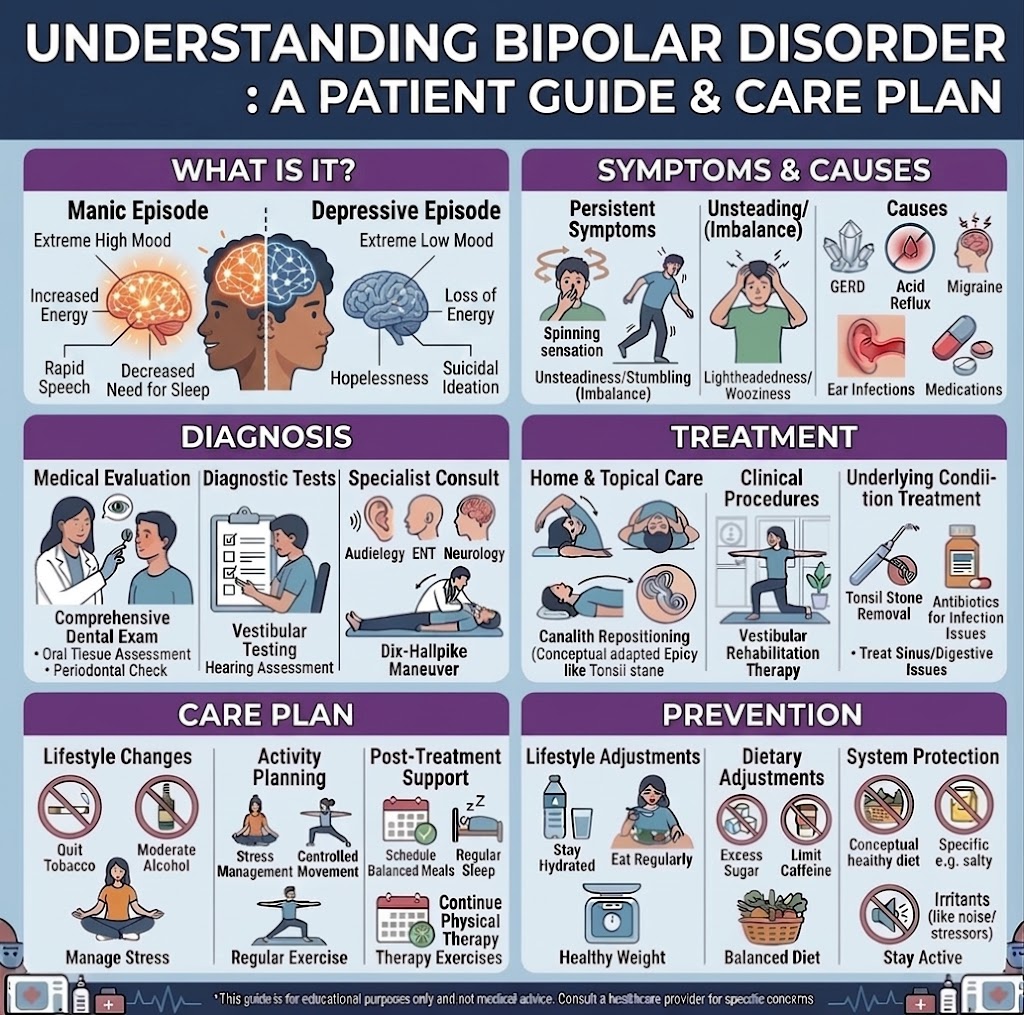
Bipolar disorder, formerly called manic depression, is a mental health condition marked by extreme shifts in mood. These shifts include emotional highs, known as mania or hypomania (a less severe high), and emotional lows, known as depression. During depression, you might feel deep sadness, hopelessness, and lose interest in daily activities. During mania or hypomania, you may feel overly excited, intensely happy, full of energy, or unusually irritable. These significant mood changes can impact sleep, energy levels, activity, judgment, behavior, and clear thinking. Episodes can occur rarely or many times a year, typically lasting several days. While some individuals experience long stable periods between episodes, others may have frequent shifts or even experience depression and mania simultaneously. Bipolar disorder is a lifelong condition, but effective treatment with medication and talk therapy can successfully manage mood swings and other symptoms.
Understanding the Condition
Bipolar Disorder: Understanding Extreme Mood Swings
Understanding the Condition
Bipolar disorder, formerly called manic depression, is a mental health condition marked by extreme shifts in mood. These shifts include emotional highs, known as mania or hypomania (a less severe high), and emotional lows, known as depression. During depression, you might feel deep sadness, hopelessness, and lose interest in daily activities. During mania or hypomania, you may feel overly excited, intensely happy, full of energy, or unusually irritable. These significant mood changes can impact sleep, energy levels, activity, judgment, behavior, and clear thinking. Episodes can occur rarely or many times a year, typically lasting several days. While some individuals experience long stable periods between episodes, others may have frequent shifts or even experience depression and mania simultaneously. Bipolar disorder is a lifelong condition, but effective treatment with medication and talk therapy can successfully manage mood swings and other symptoms.
Common Symptoms
Bipolar I Disorder: Characterized by at least one manic episode, which might precede or follow hypomanic or major depressive episodes. Severe mania can sometimes lead to psychosis, a break from reality.
Bipolar II Disorder: Involves at least one major depressive episode and at least one hypomanic episode, but never a full manic episode. Bipolar II is not a milder form of Bipolar I; individuals with Bipolar II often experience longer periods of depression.
Cyclothymic Disorder: Features numerous periods of hypomania symptoms and milder depressive symptoms over at least two years (one year in children/teens). These symptoms are less severe than major depression or full hypomania.
General Symptoms and Onset: Symptoms can begin at any age but are most commonly diagnosed in the teenage years or early 20s. They vary greatly from person to person and can change over time.
Mania and Hypomania Symptoms: While similar, mania is more severe, causing greater disruption in daily life, work, school, and relationships. Mania can also involve psychosis and may require hospitalization. Both manic and hypomanic episodes include three or more of these symptoms: increased activity/energy, exaggerated sense of well-being (euphoria), decreased need for sleep, unusual talkativeness or pressured speech, racing thoughts, being easily distracted, and poor decision-making (e.g., reckless spending).
Depressive Symptoms: Include persistent sadness, loss of interest or pleasure in activities, fatigue, changes in sleep or appetite, feelings of worthlessness or guilt, and thoughts of death or suicide.
Consultation Guide
Which Specialist to Meet
Before your visit, consider taking these steps: Write down specific symptoms you've experienced, including mood changes, their duration, frequency, and how they impact your daily life. Compile a list of all your current medications, other medical conditions, and any family history of mental illness. Prepare a list of questions for the doctor. Bringing a trusted family member or friend can be helpful, as they might offer additional insights into your symptoms and provide support.
Book a doctor visit near me
A thorough discussion with your mental health provider about your symptoms, medical history, family history, and lifestyle. They will assess your mood, energy levels, thought patterns, and behaviors over time.
With your consent, your doctor may contact family members or close friends to discuss their observations of your symptoms and behavior. This information is used to complement your own report and provide a fuller picture.
A physical examination and various lab tests are conducted to rule out other medical conditions that might cause similar symptoms (e.g., thyroid problems, vitamin deficiencies) or to check for substance use. Urinalysis, a common urine test, detects conditions like urinary tract infections, kidney disease, or diabetes, and can screen for substances that might mimic or worsen bipolar symptoms.
Cognitive Behavioral Therapy (CBT): A structured approach to identify and change unhelpful thinking patterns and behaviors that contribute to mood instability. Teaches practical skills for symptom management, trigger reduction, and problem-solving, often with practice assignments. (Duration: Typically short-term (e.g., 12-20 sessions over several months), can be extended)
Electroconvulsive Therapy (ECT): A procedure performed under general anesthesia where controlled electric currents are passed through the brain to induce a brief seizure, which can rapidly improve severe mental health symptoms by changing brain chemistry. Modern ECT is safer, using controlled stimulation. (Duration: A typical course involves 6 to 12 sessions over a few weeks, sometimes followed by maintenance treatments)
Adhere to Treatment: Consistently follow prescribed medication and therapy plans. Abruptly stopping treatment risks symptom worsening or relapse.
Long-Term Monitoring and Management
Prioritize Sleep: Maintain a regular sleep schedule and ensure adequate rest, as sleep disruptions can trigger mood instability.
Avoid Substances: Abstain from alcohol and recreational drugs, which can worsen symptoms, interfere with medications, and increase relapse risk.
Manage Stress: Identify personal stressors and develop healthy coping mechanisms to mitigate their impact on your mood.
Consultation Guide
Other Bipolar Types: Include bipolar and related disorders caused by specific substances (drugs, alcohol) or underlying medical conditions like Cushing's disease or stroke.
Diagnostic Procedures
You should seek evaluation from a mental health professional, such as a psychiatrist, psychologist, or licensed therapist. For children or teenagers, a child and adolescent psychiatrist is recommended. These specialists are trained to diagnose and treat mental health conditions.
Preparations Before Your Visit
What to Expect
You will have an in-depth conversation with a mental health professional who will ask detailed questions about your personal experiences, feelings, and behavioral patterns. This may involve multiple sessions to gather a comprehensive understanding.
Information from Others
The provider may ask for permission to speak with family members or close friends who can offer observations about your mood and behavior, which can provide valuable context for diagnosis.
What to Expect
Physical Exam and Lab Tests (including Urinalysis)
What to Expect
During a physical exam, a doctor will check your general health. For lab tests, blood samples may be drawn, and for a urinalysis, you will be asked to provide a urine sample in a sterile cup, typically in a private restroom. The samples are then sent to a laboratory for analysis.
Treatment Options
Medications
Mood Stabilizers: Help control manic or hypomanic episodes and prevent depressive phases, aiming to stabilize overall mood. (Duration: Long-term, often lifelong)
Antipsychotics: May be prescribed to manage manic or mixed episodes, or when psychosis is present; some also act as mood stabilizers. (Duration: Long-term, as needed)
Antidepressants (with mood stabilizer): Used cautiously and usually alongside a mood stabilizer to treat depressive episodes, to avoid triggering mania. (Duration: Short-term for episodes, or longer with close monitoring)
Therapies
Psychotherapy (Talk Therapy): Involves talking with a mental health professional to understand the condition, develop coping skills, manage stress, and improve relationships. Learn how thoughts, emotions, and behaviors affect mood, building healthy responses to challenges. (Duration: Ongoing, with varying frequency (e.g., weekly, bi-weekly))
Transcranial Magnetic Stimulation (TMS): A non-invasive procedure using magnetic fields to stimulate nerve cells in the brain involved in mood control. It is primarily used for major depression resistant to other treatments. An electromagnetic coil on the scalp delivers magnetic pulses to specific brain regions. (Duration: Usually daily sessions for 4-6 weeks)
Healthy Lifestyle: Incorporate a balanced diet and regular physical activity to support overall mental and physical health, helping manage potential medication side effects like weight gain.
Regular Check-ups: Maintain consistent communication with your mental health provider to review and adjust your treatment plan.
Build a Support System: Engage with trusted family, friends, or support groups for emotional assistance.
Prevention & Long-Term Wellbeing
Prevention of Episodes
Recognize Warning Signs: Identify early signs of mood shifts (e.g., sleep changes, irritability). Communicate these with your care team, family, and friends for early intervention.
Tags & Topics
Notice an error or need an update?
Help us keep medical information accurate. Report incorrect info or suggest an edit.


