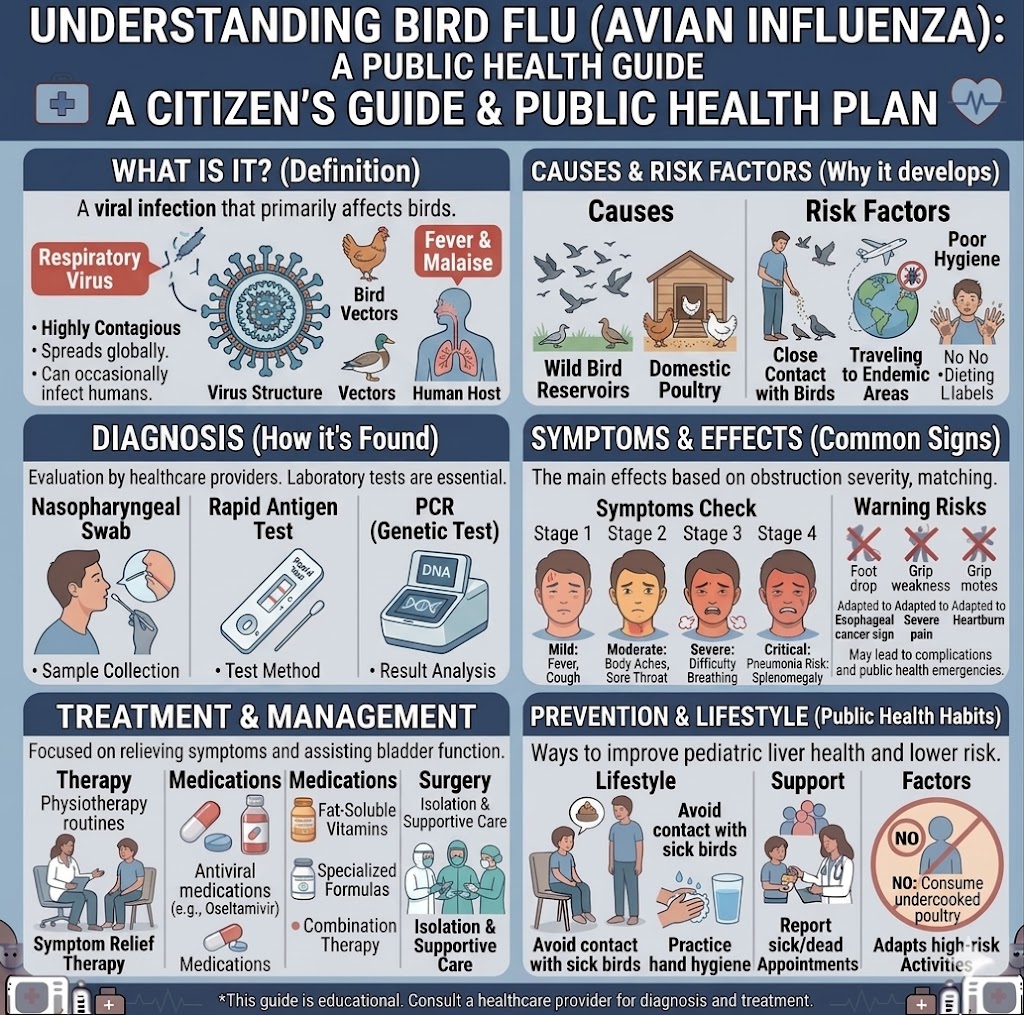
Bird flu, also known as avian influenza, is an infection caused by influenza type A viruses that naturally occur in bird species. While these viruses primarily affect birds—ranging from no symptoms to severe illness or death—they rarely spread to humans. However, health experts closely monitor bird flu because these viruses can change, or 'mutate,' becoming capable of infecting humans more easily and spreading from person to person. If a new strain were to emerge that spreads easily among people, it could cause a widespread global outbreak (pandemic) because humans would have little to no natural protection against it.Most human infections happen after close, prolonged contact with infected live poultry, typically on farms or in backyard coops. Less commonly, people can be exposed through contact with wild birds or other animals. The risk of getting bird flu from common park birds like crows or sparrows is low, as they generally don't carry strains that infect people or farm animals. Influenza viruses infect the nose, throat, and lungs, which are parts of the respiratory system. Human bird flu symptoms are similar to common flu symptoms, varying from mild to severe.
Understanding the Condition
Bird Flu (Avian Influenza): Understanding and Protecting Yourself
Understanding the Condition
Bird flu, also known as avian influenza, is an infection caused by influenza type A viruses that naturally occur in bird species. While these viruses primarily affect birds—ranging from no symptoms to severe illness or death—they rarely spread to humans. However, health experts closely monitor bird flu because these viruses can change, or 'mutate,' becoming capable of infecting humans more easily and spreading from person to person. If a new strain were to emerge that spreads easily among people, it could cause a widespread global outbreak (pandemic) because humans would have little to no natural protection against it.Most human infections happen after close, prolonged contact with infected live poultry, typically on farms or in backyard coops. Less commonly, people can be exposed through contact with wild birds or other animals. The risk of getting bird flu from common park birds like crows or sparrows is low, as they generally don't carry strains that infect people or farm animals. Influenza viruses infect the nose, throat, and lungs, which are parts of the respiratory system. Human bird flu symptoms are similar to common flu symptoms, varying from mild to severe.
Common Symptoms
General Flu-Like Symptoms: Bird flu symptoms often resemble those of the common flu and typically appear within seven days, but can take up to two weeks, after exposure to the virus. Symptoms can range from mild to serious.
Fever: An elevated body temperature.
Cough: A common respiratory symptom.
Sore Throat: Pain or irritation in the throat.
Muscle Aches: Body pain and stiffness.
Headache: Pain in the head.
Fatigue: Feeling unusually tired or weak.
Breathing Problems: Difficulty breathing or shortness of breath. This is a particularly common and often more severe symptom with bird flu compared to other flu types, increasing the risk of needing breathing assistance during outbreaks.
Pink Eye (Conjunctivitis): Redness and irritation of the eye.
Upset Stomach and Vomiting: Nausea, stomach cramps, and throwing up.
Diarrhea: Loose and watery stools.
Consultation Guide
Which Specialist to Meet
If you suspect you have been exposed to bird flu and develop any symptoms, consult your primary care physician immediately. They may refer you to an infectious disease specialist for further evaluation and management, especially in severe cases.
Preparations Before Your Visit
Before your visit, make a list of your symptoms, including when they started and how severe they are. Be prepared to share details about any potential exposures, such as recent travel, contact with sick animals (especially birds or poultry), or if you work in an environment with animal contact. Also, have your medical history and current medications ready.
Book a doctor visit near me
Since bird flu symptoms are similar to other types of flu, specific laboratory tests are needed to confirm a bird flu infection. These tests detect the genetic material of the virus.
Rest: Getting plenty of rest helps your body conserve energy and fight off the infection. (Duration: Until symptoms improve, typically 1-2 weeks.)
Hydration: Drinking plenty of fluids like water, broths, and clear juices helps prevent dehydration and keeps your throat moist. (Duration: Throughout the illness, typically 1-2 weeks.)
Symptom Relief: Over-the-counter pain relievers and fever reducers can help manage discomfort, aches, and fever. Nasal decongestants or cough suppressants may also be used as directed. (Duration: As needed for symptoms, typically 1-2 weeks.)
Antiviral Medications: Specific prescription antiviral drugs can help lessen the severity of bird flu and shorten the duration of illness, especially if started early after symptoms appear. (Duration: Typically a 5-day course, but may vary based on severity and individual response.)
Hospital Care and Support
Diagnostic Procedures
Viral Diagnostic Test (e.g., PCR test)
What to Expect
A healthcare professional will collect a sample, usually by swabbing the inside of your nose or the back of your throat. This quick procedure involves gently inserting a sterile swab for a few seconds. The sample is then sent to a lab for analysis, and results may take several hours to a few days.
An X-ray is a quick and painless imaging test that uses a small amount of radiation to create pictures of the structures inside your body, particularly bones, but also the lungs and heart. It's often used to check for lung complications like pneumonia, which can occur with severe bird flu.
What to Expect
You will be asked to stand or lie still on a table, and a technologist will position you. You may be asked to hold your breath briefly while the X-ray machine captures images. Dense materials like bones appear white, air in the lungs appears black, and soft tissues like fat and muscle appear as shades of gray. The procedure is typically very fast, lasting only a few minutes.
Treatment Options
General Care and Home Remedies
Management of Complications: Additional treatments may be administered to address complications such as bacterial pneumonia, ear infections, kidney problems, or heart issues. (Duration: Ongoing as needed, depending on the specific complication.)
Prevention & Long-Term Wellbeing
Respiratory Support: For severe breathing problems, oxygen therapy may be provided. In critical cases, a breathing machine (ventilator) may be necessary to support lung function. (Duration: Varies significantly based on the severity of lung involvement and patient recovery, from a few days to several weeks.)
Prevention Strategies
Avoid Contact with Sick Animals: Keep a safe distance from sick or potentially sick wild or domestic birds and other animals. Do not touch dead birds or animals.
Practice Good Hand Hygiene: Wash your hands frequently and thoroughly with soap and water, especially after touching animals, animal products, or surfaces that might be contaminated with animal saliva, mucus, or stool.
Use Protective Gear: If you are in an area where bird flu might be present (e.g., working with poultry), wear protective gear such as gloves, a face mask, and eye protection to prevent the virus from entering your mouth, nose, or eyes.
Safe Food Handling and Cooking: Avoid spreading germs in the kitchen by thoroughly washing all surfaces that contact raw poultry, meat, seafood, or eggs with hot, soapy water. Cook poultry to an internal temperature of 165°F (74°C), eggs until yolks and whites are firm, and egg dishes to 160°F (71°C). Cook beef to 145°F (63°C) with a 3-minute rest, and ground beef to 160°F (71°C).
Avoid Raw Dairy Products: Consume only pasteurized dairy products. Raw milk is not heated to kill germs and may carry a higher risk of infection, especially in areas where bird flu has affected dairy cows.
Seasonal Flu Vaccine: Get your annual seasonal flu shot. While it doesn't prevent bird flu, it helps protect you from other flu viruses, reducing the risk of being infected with two different flu types at the same time.
Travel Precautions: If traveling to regions experiencing bird flu outbreaks, avoid poultry farms, bird markets, and any direct contact with live birds or poultry if possible.
Long-Term Monitoring and Public Health
Public Health Preparedness: Public health agencies continuously monitor bird flu strains and have plans in place for rapid vaccine development and distribution should a human pandemic emerge.
Follow Medical Advice for Complications: If you experienced complications from bird flu, follow up with your healthcare professional as advised to monitor your recovery and manage any lingering health issues.
Tags & Topics
Notice an error or need an update?
Help us keep medical information accurate. Report incorrect info or suggest an edit.


