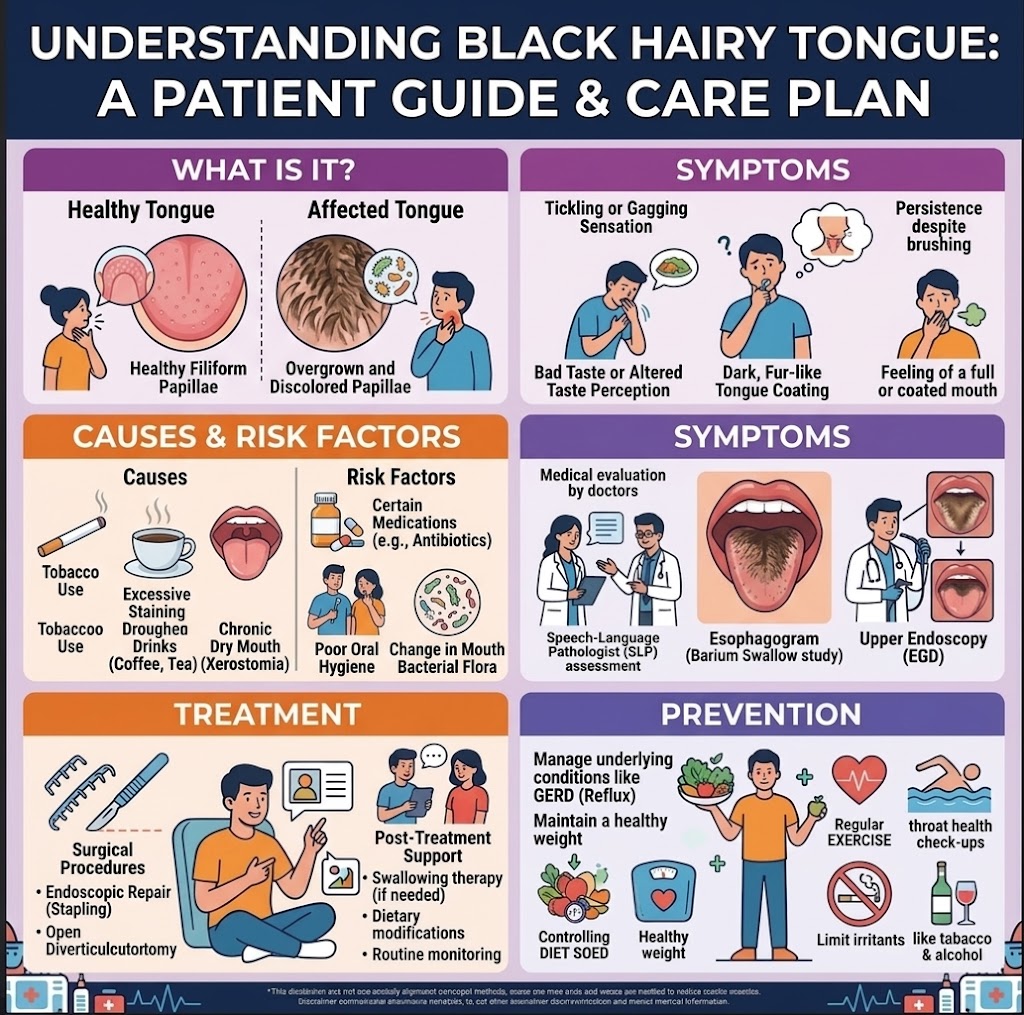
Black hairy tongue is a harmless, temporary condition that makes your tongue appear dark and furry. It happens when tiny, rounded bumps on the tongue's surface, called papillae, grow longer than usual and fail to shed dead skin cells. These elongated papillae can then trap food, drinks, tobacco, bacteria, or yeast, causing them to become discolored and creating a 'hairy' appearance. While visually alarming, it's typically painless and doesn't cause serious health problems, usually resolving with good oral hygiene and by addressing underlying causes.
Understanding the Condition
Black Hairy Tongue: A Guide for Non-Medical Persons
Understanding the Condition
Common Symptoms
Discolored Tongue: Your tongue may appear black, but it can also be brown, green, yellow, or white.
Hairy or Furry Appearance: The surface of your tongue may look distinctly hairy or furry due to elongated papillae.
Altered Taste Sensation: You might experience changes in how food tastes or a persistent metallic taste in your mouth.
Bad Breath (Halitosis): Accumulation of bacteria and debris on the tongue can lead to unpleasant breath.
Gagging or Tickling Sensation: If the papillae become extremely long, you might feel a tickling or mild gagging sensation at the back of your throat.
Burning Sensation (Rare): In infrequent cases, if the condition is linked to a yeast or bacterial infection, a burning feeling on the tongue may occur.
Consultation Guide
Which Specialist to Meet
Before your appointment, be prepared to discuss your symptoms, including when they started and any changes you've noticed. List all medications you are currently taking, including over-the-counter drugs, supplements, and mouthwashes. Be ready to share information about your oral hygiene habits, dietary choices, use of tobacco or alcohol, and consumption of coffee or black tea. Your doctor or dentist may also inquire about any existing health conditions you have.
Book a doctor visit near me
Self-Monitoring: Periodically inspect your tongue for any changes in color, texture, or the presence of new symptoms. Early detection allows for prompt intervention.
Consultation Guide
Black hairy tongue is a harmless, temporary condition that makes your tongue appear dark and furry. It happens when tiny, rounded bumps on the tongue's surface, called papillae, grow longer than usual and fail to shed dead skin cells. These elongated papillae can then trap food, drinks, tobacco, bacteria, or yeast, causing them to become discolored and creating a 'hairy' appearance. While visually alarming, it's typically painless and doesn't cause serious health problems, usually resolving with good oral hygiene and by addressing underlying causes.
You should consult your general practitioner (family doctor) or a dentist. These professionals can assess your condition, identify potential causes, and recommend appropriate steps or treatments.
Preparations Before Your Visit
Your doctor or dentist will ask detailed questions about your lifestyle, habits, and health conditions to identify potential causes.
If your doctor suspects an infection, they will gently rub a sterile cotton swab across the surface of your tongue to collect a small sample of cells or discharge. This sample will then be sent to a laboratory to identify any specific bacteria or yeast present. The procedure is quick and generally causes no discomfort, though you might feel a slight tickle or mild pressure.
Discontinue Irritating Mouthwashes: Avoid mouthwashes containing oxidizing agents like peroxide if they cause irritation, as this can worsen the condition. (Duration: Immediate cessation of problematic mouthwashes.)
Diagnostic Procedures
This is the primary diagnostic method where your healthcare professional visually inspects your tongue and mouth.
What to Expect
The doctor or dentist will ask you to open your mouth wide and stick out your tongue. They will carefully observe the color, texture, and overall appearance of your tongue using a light. They may also gently feel your tongue with a gloved finger to check for any abnormalities. This examination is quick, painless, and usually takes only a few minutes.
Medical History Review
What to Expect
Oral Swab Test (If Infection Suspected)
If there's suspicion that a bacterial or fungal infection is contributing to the condition, a swab may be taken for laboratory analysis.
What to Expect
Treatment Options
You will be asked about your oral hygiene routine (how often you brush your teeth and tongue), your diet, whether you smoke or use tobacco products, your alcohol and caffeine consumption, and any medications you are currently taking (especially antibiotics). They will also inquire about any underlying health issues that might affect your immune system or oral health. This discussion helps to pinpoint factors contributing to black hairy tongue.
Medications (If Infection is Present)
Antifungal or Antibacterial Treatments: If a yeast or bacterial infection is identified as a contributing factor, your doctor may prescribe specific oral rinses or medications to treat the infection. (Duration: Typically 1-2 weeks, as directed by your healthcare professional.)
Prevention & Long-Term Wellbeing
Home Remedies and Lifestyle Adjustments
Regular Tongue Cleaning: Gently brush your tongue twice daily with a soft-bristled toothbrush or use a tongue scraper to remove dead skin cells and debris. (Duration: Ongoing until resolution, typically several weeks to months of consistent effort.)
Improve Oral Hygiene: Brush your teeth at least twice a day and floss daily to maintain overall oral health. (Duration: Ongoing.)
Avoid Tobacco Products: Cessation of smoking or other tobacco use is crucial for resolving the condition. (Duration: Immediate cessation for long-term benefit.)
Limit Irritating Beverages: Reduce consumption of excessive coffee, black tea, and alcohol, which can stain the papillae and dehydrate the mouth. (Duration: Ongoing reduction or cessation.)
Eat a Balanced Diet: Include crunchy, fibrous foods in your diet, which can naturally help to gently rub dead skin cells off the tongue during chewing. (Duration: Ongoing dietary change.)
Prevention Strategies
Maintain Excellent Oral Hygiene: Brush your teeth twice daily, floss once daily, and make tongue cleaning a regular part of your routine using a brush or scraper. This prevents buildup of dead skin cells and debris.
Hydrate Regularly: Drink plenty of water throughout the day to keep your mouth moist and help rinse away food particles and bacteria.
Avoid Tobacco Use: Refrain from smoking or using any tobacco products, as they are significant contributors to black hairy tongue.
Moderate Caffeine and Alcohol Intake: Limit your consumption of coffee, black tea, and alcoholic beverages to reduce the risk of staining and oral dehydration.
Choose a Varied Diet: Incorporate a variety of fruits, vegetables, and fibrous foods into your diet, which naturally assist in cleaning the tongue surface during eating.
Review Oral Care Products: If you frequently use mouthwashes, choose alcohol-free options and consult your dentist if you suspect any product is irritating your mouth.
Manage Underlying Health Conditions: Work with your doctor to effectively manage any conditions that compromise your immune system, such as diabetes, HIV, or cancer, as these can increase susceptibility.
Long-Term Monitoring
Regular Dental Check-ups: Schedule routine visits with your dentist (at least once a year, or more frequently if advised) for professional cleaning and oral health assessments. They can identify and address potential issues early.
Tags & Topics
Notice an error or need an update?
Help us keep medical information accurate. Report incorrect info or suggest an edit.


