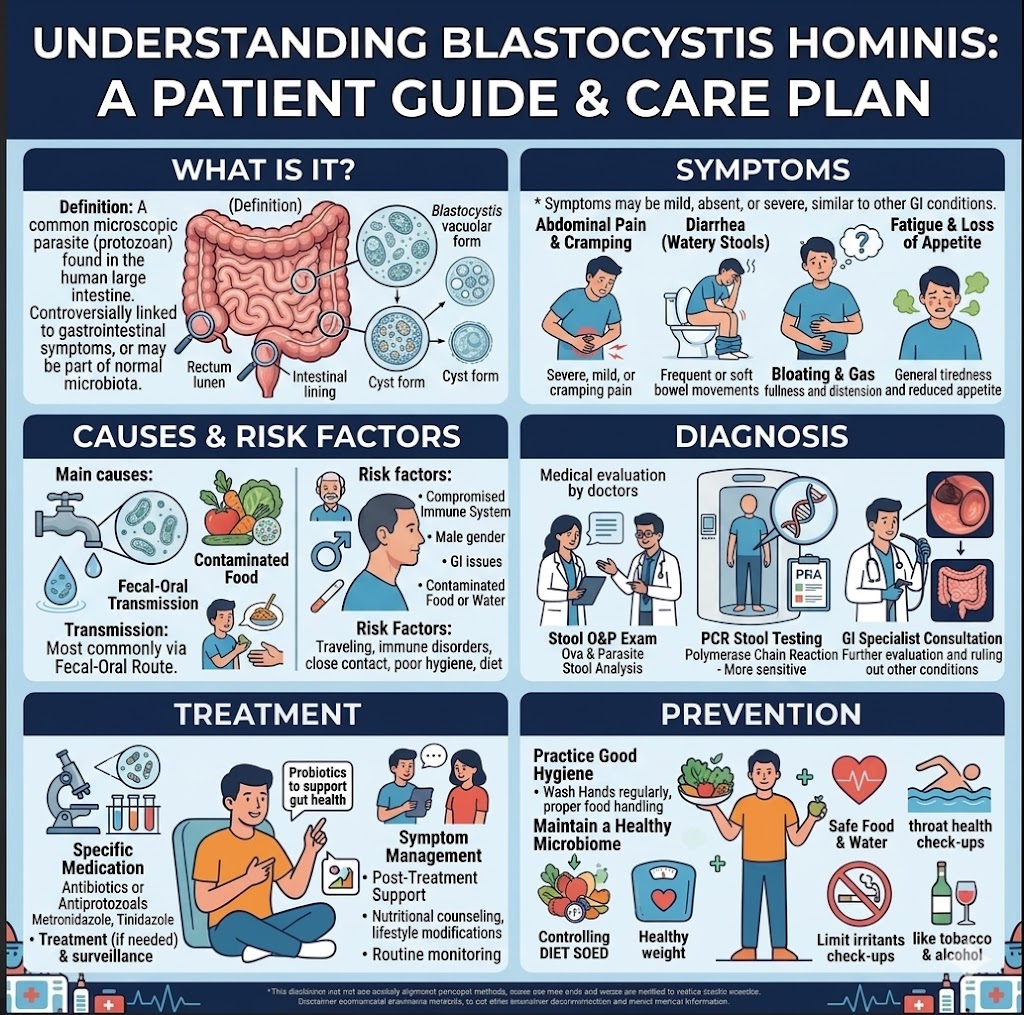
Blastocystis is a tiny, single-celled organism (a type of parasite) that can live in your digestive tract. While many people carry it without any problems, it is sometimes found in individuals experiencing digestive issues like diarrhea and stomach pain. Scientists are still learning about its exact role in causing illness. This infection, called blastocystosis, can spread through contaminated food, water, or contact with human or animal waste. It's more commonly seen in those who travel to or live in regions with less developed sanitation, or people who work closely with animals. Initially known as Blastocystis hominis, it's now recognized as a group of related types, referred to scientifically as Blastocystis spp.
Understanding the Condition
Blastocystis Infection (Blastocystosis): Understanding a Common Gut Parasite
Understanding the Condition
Blastocystis is a tiny, single-celled organism (a type of parasite) that can live in your digestive tract. While many people carry it without any problems, it is sometimes found in individuals experiencing digestive issues like diarrhea and stomach pain. Scientists are still learning about its exact role in causing illness. This infection, called blastocystosis, can spread through contaminated food, water, or contact with human or animal waste. It's more commonly seen in those who travel to or live in regions with less developed sanitation, or people who work closely with animals. Initially known as Blastocystis hominis, it's now recognized as a group of related types, referred to scientifically as Blastocystis spp.
Common Symptoms
Diarrhea: Loose, watery stools.
Nausea: Feeling sick to your stomach.
Abdominal Pain: Discomfort or cramping in the belly area.
Bloating: A feeling of fullness or swelling in the abdomen.
Gas: Increased flatulence.
Loss of Appetite: Reduced desire to eat.
Fatigue: Persistent tiredness or lack of energy.
Consultation Guide
Which Specialist to Meet
If you experience persistent digestive symptoms, particularly diarrhea or abdominal pain lasting more than three days, you should consult a primary care physician. They may then refer you to a specialist in digestive diseases (gastroenterologist) or an infectious disease specialist for further evaluation and management.
Preparations Before Your Visit
Before your visit, make a list of your symptoms, including when they started and how severe they are. Note any recent travel, especially to developing countries, and any medications or supplements you are currently taking. Be prepared to discuss your diet and any contact with animals or contaminated water sources.
Book a doctor visit near me
A CT scan uses X-rays and computer technology to create detailed cross-sectional images, or 'slices,' of your internal organs, bones, blood vessels, and soft tissues. It provides more detailed views than standard X-rays and can help doctors look for other potential causes of digestive symptoms or complications.
Antiparasitic Treatment: If symptoms are severe or persistent, a doctor may prescribe medication specifically designed to eliminate parasites from the digestive tract. (Duration: Typically a course of 7 to 10 days, depending on the specific medication and severity.)
Antibiotics: In some cases, certain types of antibiotics, which also have antiparasitic properties, may be used. (Duration: Usually a course of 5 to 10 days.)
Supportive Care and Home Remedies
Hydration: Drinking plenty of fluids, such as water, clear broths, and oral rehydration solutions, is crucial to prevent dehydration, especially with diarrhea. (Duration: Continuous until symptoms resolve.)
Dietary Adjustments: Eating bland, easily digestible foods like rice, bananas, toast, and applesauce can help soothe the digestive system. Avoiding fatty, spicy, or high-fiber foods, as well as dairy, caffeine, and alcohol, may reduce irritation. (Duration: During the symptomatic period and gradually reintroduce foods.)
Follow-up with Doctor: If symptoms persist or return after treatment, schedule a follow-up visit with your doctor. Additional stool tests or different treatment approaches might be needed.
Diagnostic Procedures
Stool Sample Analysis
This is the primary test to detect Blastocystis. You will be asked to collect a small sample of your stool. The sample is then sent to a lab where technicians examine it under a microscope to look for the parasite. Sometimes, more advanced tests are used to identify the specific type of Blastocystis.
What to Expect
You will be given a special container and instructions on how to collect a stool sample at home. It's important to follow these instructions carefully to ensure the sample is suitable for testing. You might need to collect samples on several different days to increase the chance of finding the parasite, as its presence can vary. The collection process itself is not painful or invasive.
CT Scan (Computed Tomography Scan)
What to Expect
You will lie on a motorized table that slides into a large, donut-shaped machine. The scanner will rotate around you as it takes X-ray images. You may be asked to hold your breath briefly at certain times. The procedure is painless, but the machine can be noisy. You might receive a contrast dye, either orally or through an injection, to make certain areas show up more clearly. If given an injection, you might feel a brief warm sensation. The entire scan typically takes 10 to 30 minutes.
Upper Endoscopy (Esophagogastroduodenoscopy)
An upper endoscopy is a procedure that allows a doctor to visually examine the lining of your upper digestive system, which includes your esophagus, stomach, and the first part of your small intestine (duodenum). A long, thin, flexible tube with a camera on the end, called an endoscope, is gently guided down your throat. This can help diagnose various digestive conditions or take tissue samples (biopsies) if needed.
What to Expect
You will typically receive a sedative to help you relax and a local anesthetic to numb your throat. You'll lie on your side, and the endoscope will be carefully inserted. You may feel some pressure, but it should not be painful. The camera sends images to a monitor, allowing the doctor to look for abnormalities. Air may be gently inflated into your digestive tract to improve visibility. The procedure usually takes 15 to 30 minutes, and you will need someone to drive you home afterward due to the sedation.
An X-ray is a quick and painless imaging test that uses a small amount of radiation to create images of the inside of your body, particularly bones. While not typically used to diagnose Blastocystis directly, it can help rule out other conditions affecting the digestive system or look for blockages or abnormalities in the abdominal area.
What to Expect
You will be asked to remove any metal objects or jewelry and may need to wear a gown. You will stand, sit, or lie down in various positions on an X-ray table or in front of an X-ray plate. The X-ray technician will position the machine to capture the necessary images. You must remain still for a few seconds while the X-ray is taken. The procedure is very quick and usually takes only a few minutes. If a contrast medium (like barium or iodine) is used, you might drink it or have it administered in another way to highlight specific areas, which can add time to the preparation.
Treatment Options
Medications
Probiotic Use: Discuss with your doctor if probiotics might be beneficial to help restore healthy gut bacteria, especially after a course of medication.
Prevention & Long-Term Wellbeing
Rest: Allowing your body adequate rest can help your immune system fight the infection and aid recovery. (Duration: As needed for energy recovery.)
Prevention
Practice Good Hand Hygiene: Wash hands thoroughly with soap and water for at least 20 seconds, especially after using the toilet, changing diapers, and before preparing or eating food. Alcohol-based hand sanitizers can be used when soap and water are not available.
Safe Food and Water Practices: When traveling, especially in areas with questionable sanitation, drink only bottled or boiled water. Avoid ice made from tap water. Eat thoroughly cooked food and peel fruits and vegetables yourself. Avoid raw or undercooked meats and unpasteurized dairy products.
Avoid Contaminated Contact: Be cautious when handling animal feces and ensure proper disposal. Avoid swimming in or drinking from water sources that might be contaminated.
Long-Term Monitoring
Balanced Diet and Lifestyle: Maintaining a healthy, balanced diet rich in whole foods and fiber, along with regular exercise, supports overall gut health and immune function.
Tags & Topics
Notice an error or need an update?
Help us keep medical information accurate. Report incorrect info or suggest an edit.


