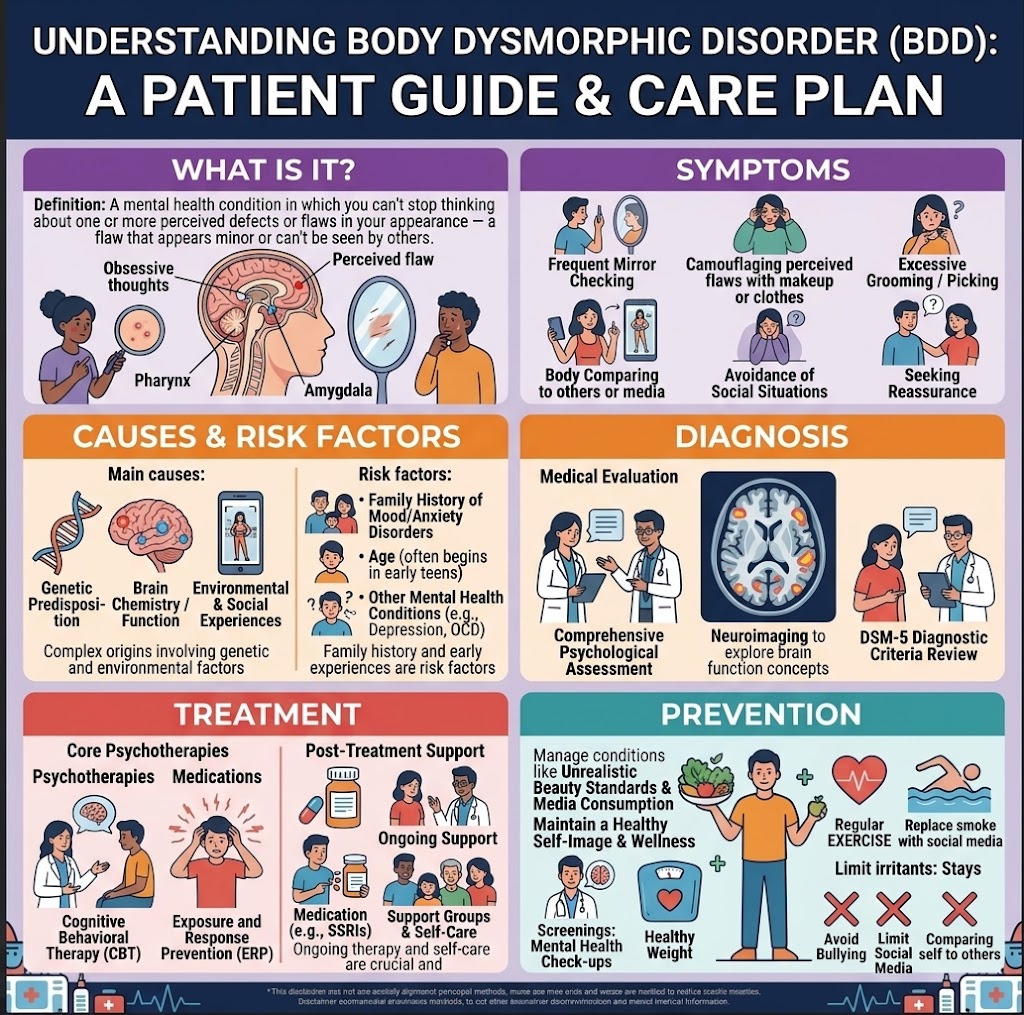
Body Dysmorphic Disorder (BDD) is a mental health condition where individuals are overly preoccupied with one or more perceived flaws in their appearance. These flaws are often minor or unnoticeable to others, yet they cause significant distress, shame, and anxiety, leading to avoidance of social situations. People with BDD may spend many hours daily checking their appearance, grooming, or seeking reassurance, behaviors that profoundly impact their daily lives. Treatment often involves therapy, medication, or a combination of both.
Understanding the Condition
Body Dysmorphic Disorder: Understanding Intense Appearance Concerns
Understanding the Condition
Common Symptoms
Extreme Preoccupation: Being intensely focused on a perceived flaw in appearance that others cannot see or consider very minor.
Strong Belief in a Defect: A firm conviction that you have an appearance defect making you look ugly or deformed.
Negative Perception from Others: Believing that others notice your perceived flaw negatively or even mock you for it.
Repetitive Behaviors: Engaging in hard-to-resist or control actions aimed at fixing or hiding the perceived flaw, such as frequent mirror checking, excessive grooming, or skin picking.
Hiding Perceived Flaws: Attempting to conceal perceived imperfections using specific styling, makeup, or clothing.
Constant Comparison: Regularly comparing your appearance with that of others.
Seeking Reassurance: Frequently asking others for reassurance about your appearance.
Perfectionist Tendencies: Having a strong drive for perfection, especially concerning your looks.
Unsatisfying Cosmetic Procedures: Seeking cosmetic procedures repeatedly, often experiencing only temporary satisfaction or a quick return of anxiety.
Social Avoidance: Steering clear of social situations due to embarrassment or anxiety about your appearance.
Consultation Guide
Which Specialist to Meet
If you recognize these symptoms in yourself or a loved one, it's important to consult a healthcare professional. You can start by talking to your primary care doctor, who may refer you to a mental health specialist such as a psychiatrist, psychologist, or a licensed therapist experienced in treating Body Dysmorphic Disorder.
Preparations Before Your Visit
Before your appointment, make a list of your symptoms, including when they started and how they affect your daily life. Note any major stresses or recent life changes. List all medications, vitamins, and supplements you're currently taking. Preparing questions for your doctor can also help ensure you cover all your concerns.
Book a doctor visit near me
Early Identification and Treatment: While there's no known way to prevent Body Dysmorphic Disorder, recognizing symptoms early, especially during teenage years when it often begins, and starting treatment promptly can significantly improve outcomes and prevent the condition from worsening.
Consistent Maintenance Treatment: Engaging in long-term maintenance treatment, which may include ongoing therapy or medication, is crucial to prevent the return of BDD symptoms and maintain progress.
Build a Strong Support System: Connect with trusted friends, family, or support groups. Sharing your experiences can reduce feelings of isolation and provide encouragement during challenging times.
Practice Stress Management: Incorporate relaxation techniques such as mindfulness, deep breathing, or yoga into your daily routine to help manage anxiety and stress, which can often worsen BDD symptoms.
Limit Appearance-Focused Behaviors: Work with your therapist to gradually reduce compulsive behaviors like excessive mirror checking, grooming, or seeking reassurance about your appearance.
Engage in Healthy Lifestyle Habits: Prioritize adequate sleep, a balanced diet, and regular physical activity. These habits contribute to overall mental and physical health, helping to manage symptoms and improve mood.
Consultation Guide
Body Dysmorphic Disorder (BDD) is a mental health condition where individuals are overly preoccupied with one or more perceived flaws in their appearance. These flaws are often minor or unnoticeable to others, yet they cause significant distress, shame, and anxiety, leading to avoidance of social situations. People with BDD may spend many hours daily checking their appearance, grooming, or seeking reassurance, behaviors that profoundly impact their daily lives. Treatment often involves therapy, medication, or a combination of both.
Diagnostic Procedures
Clinical Mental Health Assessment
Diagnosis for Body Dysmorphic Disorder is primarily made through a thorough clinical evaluation by a mental health professional. This involves a detailed discussion about your thoughts, feelings, and behaviors related to your appearance concerns.
What to Expect
During the assessment, you can expect to have a confidential conversation with a psychiatrist or psychologist. They will ask you specific questions about the perceived flaws you are preoccupied with, how much time you spend thinking about them, and the repetitive behaviors you engage in (like mirror checking or grooming). The professional will also explore how these concerns impact your daily life, relationships, work, or school. They will inquire about your personal and family medical history, including any other mental health conditions, to ensure an accurate diagnosis and develop a personalized treatment plan.
Treatment Options
Therapies
Cognitive Behavioral Therapy (CBT): CBT is a widely used and effective type of psychotherapy for BDD. It helps you identify and change unhelpful thinking patterns and behaviors related to your perceived flaws. You learn to challenge negative beliefs, manage compulsive behaviors like mirror checking, and develop healthier coping strategies. CBT sessions are structured, often involving 'homework' to practice skills outside of therapy. It can also help manage stressful life situations and improve emotional challenges. (Duration: Typically involves 12 to 20 sessions, but can vary based on individual needs and progress.)
Medications
Antidepressants (SSRIs): Certain types of antidepressant medications, specifically those that help balance brain chemicals like serotonin, are often prescribed to help reduce the obsessive thoughts and compulsive behaviors associated with BDD. These medications can help alleviate distress and improve overall mood. (Duration: Often requires long-term use, typically several months to years, with regular monitoring by a doctor.)
Avoid Counterproductive Interventions: Understand that cosmetic procedures typically do not 'fix' the underlying issues of BDD and can often lead to further distress or searching for new perceived flaws. Focus on mental health treatment instead.
Prevention & Long-Term Wellbeing
Prevention and Long-Term Wellbeing
Tags & Topics
Notice an error or need an update?
Help us keep medical information accurate. Report incorrect info or suggest an edit.


