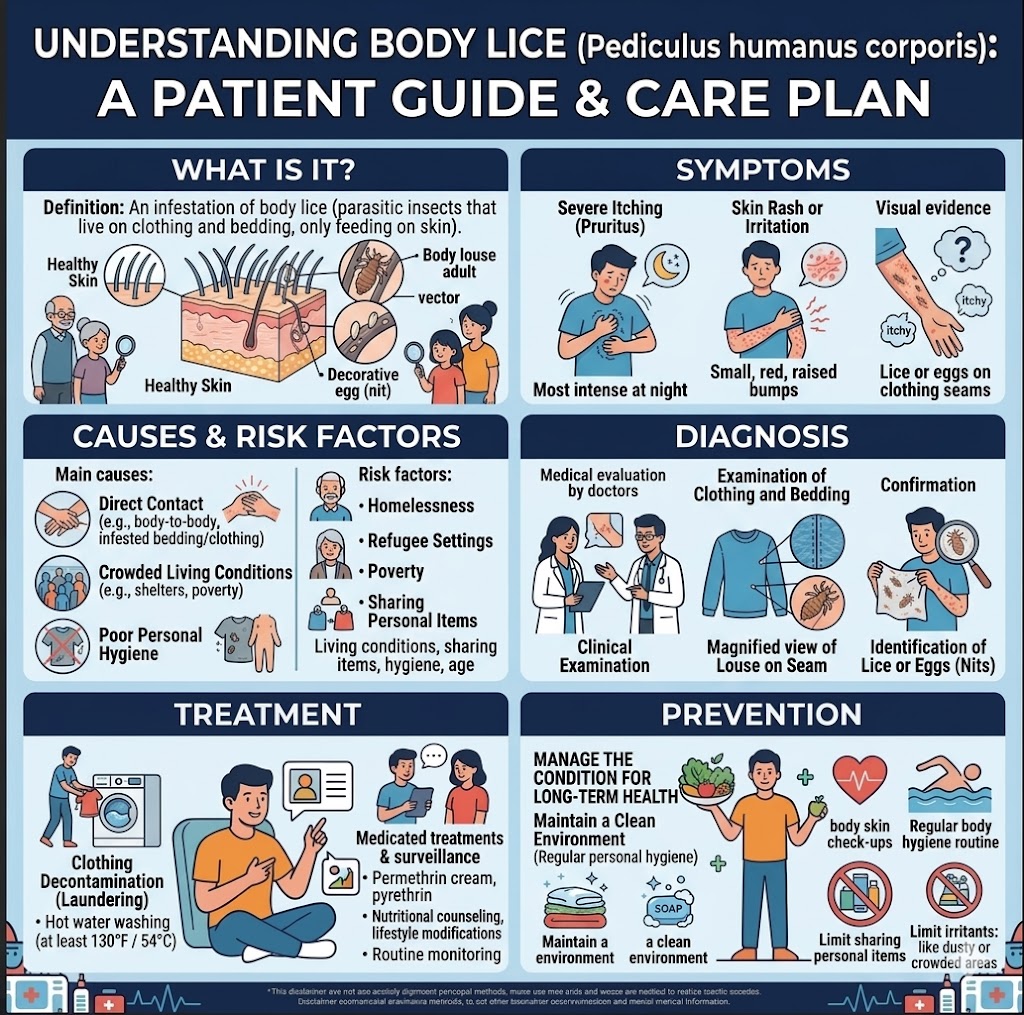
Body lice are tiny, wingless insects that live primarily in clothing and bedding, rather than directly on the human body. They travel to the skin several times a day to feed on human blood, often biting in areas where clothing seams touch the skin. These lice are commonly found in crowded living conditions with limited access to hygiene, such as refugee camps or shelters. They can spread easily through close contact with an infested person or their contaminated clothing and bedding. Importantly, body lice have the potential to transmit certain diseases. Pets like dogs and cats do not spread body lice.
Understanding the Condition
Body Lice: Understanding and Managing Infestations
Understanding the Condition
Body lice are tiny, wingless insects that live primarily in clothing and bedding, rather than directly on the human body. They travel to the skin several times a day to feed on human blood, often biting in areas where clothing seams touch the skin. These lice are commonly found in crowded living conditions with limited access to hygiene, such as refugee camps or shelters. They can spread easily through close contact with an infested person or their contaminated clothing and bedding. Importantly, body lice have the potential to transmit certain diseases. Pets like dogs and cats do not spread body lice.
Common Symptoms
Before your visit, make a list of your symptoms, including when they started and how severe they are. Be prepared to discuss your living conditions, recent travel, and any potential exposure to crowded environments. List all medications you are currently taking. Your doctor may also ask about your hygiene habits and laundry routines.
Book a doctor visit near me
The doctor will ask about your symptoms and lifestyle. They will then conduct a visual check of your body, paying close attention to your torso, armpits, groin, and other areas where clothing makes direct contact with the skin. They will also likely inspect the seams of your clothing, especially underwear and shirts, as this is where body lice and their eggs are most commonly found. This examination is non-invasive and quick.
Itch Relief: Over-the-counter anti-itch creams (like those containing hydrocortisone) or oral antihistamines can help alleviate the intense itching and discomfort caused by bites. (Duration: As needed to relieve symptoms, typically for several days until the lice are eradicated and the skin heals.)
Antibiotics for Skin Infections: If vigorous scratching leads to a bacterial skin infection, your doctor may prescribe oral or topical antibiotics to clear the infection. (Duration: Typically 7-10 days, or as directed by a doctor, until the infection clears.)
Consultation Guide
Intense Itching: Bites from body lice often cause severe and persistent itching, leading to significant discomfort.
Skin Blemishes: You may observe small red spots from the bites, sometimes accompanied by tiny specks of blood or crusted areas on the skin, especially where clothing is tight.
Skin Changes from Scratching: Prolonged and vigorous scratching can lead to secondary issues such as thickened, discolored skin (often appearing leathery or darker). In some cases, scratching can break the skin, allowing bacteria to enter and cause infections, characterized by pus, increased redness, and potentially fever.
Consultation Guide
Which Specialist to Meet
You should first consult your primary care physician (family doctor or general practitioner). If the condition is severe, persistent, or leads to skin complications, they may refer you to a dermatologist, a doctor specializing in skin conditions.
Preparations Before Your Visit
Diagnostic Procedures
Physical Examination (Visual Inspection)
A doctor will carefully examine your skin, focusing on areas typically covered by clothing, and also inspect your clothing and bedding for the presence of live lice, their eggs (nits), or bite marks.
What to Expect
Treatment Options
Home Remedies and Environmental Control
Thorough Cleaning of Clothing and Bedding: All infested clothing, bedding, towels, and other washable items must be machine washed in hot, soapy water. The water temperature should be at least 130°F (54°C). (Duration: One wash cycle, followed by machine drying on a hot setting for at least 20 minutes to ensure all lice and eggs are killed. Repeat this process regularly until the infestation is gone.)
Cleaning Non-Washable Items: For items that cannot be washed (e.g., certain stuffed animals or delicate fabrics), seal them tightly in an airtight plastic bag to starve the lice. (Duration: At least two weeks.)
Medications
Medicated Topical Treatments: Your doctor may recommend or prescribe medicated lotions, creams, or shampoos designed to kill lice. These products contain specific ingredients that target the lice's nervous system. (Duration: Typically applied once, or as directed by a healthcare provider, often with a second application recommended 7-10 days later to kill newly hatched lice.)
Oral Medications: In certain cases, particularly for widespread infestations or when topical treatments are ineffective, a doctor might prescribe an oral medication to eliminate the lice from the inside out. (Duration: As prescribed by a doctor, usually a single dose or a short course over a few days.)
Prevention & Long-Term Wellbeing
Prevention
Avoid Close Contact: Do not share clothing, bedding, towels, or personal items with anyone who has body lice. Avoid prolonged direct skin-to-skin contact with infected individuals.
Maintain Personal Hygiene: Bathe or shower regularly and change into clean clothes at least once a week. More frequent changes are recommended if you are in or have been in high-risk environments.
Ensure Environmental Cleanliness: Regularly wash and dry bedding and clothing, especially in communal living spaces or after any potential exposure. Pay particular attention to laundering items in hot water and using a hot dryer cycle.
Long-Term Monitoring and Support
Regular Self-Checks: If you live in or frequently visit crowded or unsanitary environments, periodically inspect your skin and the seams of your clothing for any signs of lice or bites to catch potential infestations early.
Follow-up Cleaning Practices: Continue rigorous cleaning of clothing and bedding for several weeks after an infestation has been treated to minimize the risk of re-infestation from any missed eggs or lingering lice.
Address Contributing Living Conditions: When possible, advocate for or work towards improved sanitation and reduced overcrowding in communal living settings, as these factors significantly contribute to the spread of body lice.
Tags & Topics
Notice an error or need an update?
Help us keep medical information accurate. Report incorrect info or suggest an edit.


