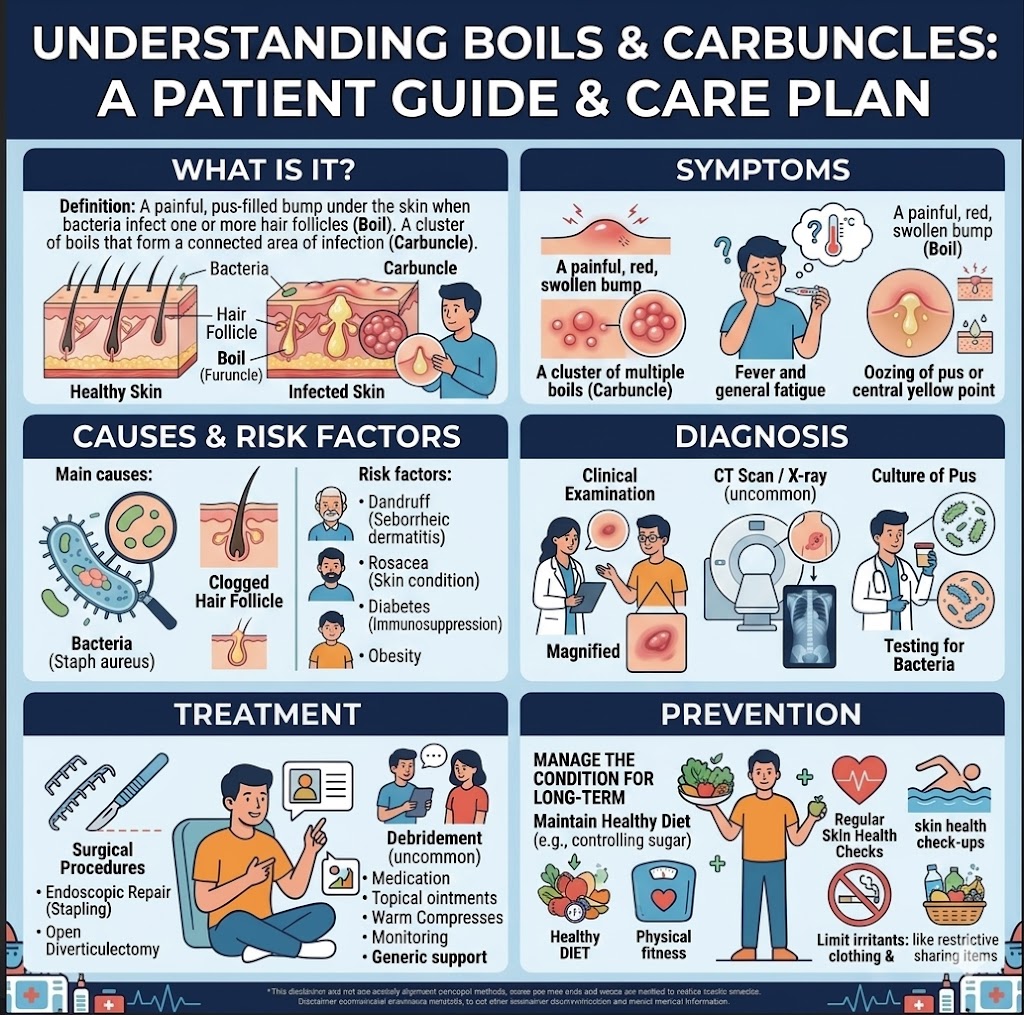
Boils and carbuncles are common skin infections caused by bacteria, often *Staphylococcus aureus*. A boil, also known as a furuncle, is a painful, pus-filled lump that forms when bacteria infect one or more hair follicles under your skin. A carbuncle is a more severe infection, consisting of a cluster of interconnected boils, forming a deeper and larger infected area. These infections usually start as red or purple, tender bumps that quickly fill with pus, grow larger, and become more painful until they rupture and drain.
Understanding the Condition
Boils and Carbuncles: Understanding Skin Infections
Understanding the Condition
Common Symptoms
Boil (Furuncle): Typically begins as a painful, reddish or purplish, tender bump under the skin. It rapidly fills with pus, enlarges over a few days, and eventually may rupture and drain. Common locations include the face, back of the neck, armpits, thighs, and buttocks.
Carbuncle: A cluster of boils forming a larger, deeper, and more painful infection. Compared to a single boil, a carbuncle is usually more severe and more likely to leave a scar. People with a carbuncle often experience general unwellness, including fever and chills.
Consultation Guide
Which Specialist to Meet
Initially, you should consult your primary care physician (PCP) or a general practitioner. If boils or carbuncles are severe, recurring, or difficult to treat, your doctor may refer you to a dermatologist (a skin specialist) or an infectious disease specialist. For urgent cases with significant pain, fever, or spreading infection, an urgent care center or emergency room visit may be necessary.
Preparations Before Your Visit
Before your visit, make a list of your symptoms, including when they started, how long they've lasted, and if they've changed. Note any attempts you've made to treat the boil or carbuncle at home, such as warm compresses, and if these helped. Inform your doctor about any recent injuries or insect bites, your complete medical history (especially conditions like diabetes or a weakened immune system), and all medications, supplements, or herbal remedies you are currently taking. Avoid pricking, squeezing, or attempting to drain the boil or carbuncle yourself, as this can spread the infection.
Book a doctor visit near me
Your doctor will ask about your symptoms and medical history. They will then carefully examine the skin infection. This usually involves looking closely at the bump and gently pressing on it to check for tenderness, fluid collection, and how extensive the infection is. This process is generally quick and causes minimal discomfort, though the infected area itself may be sensitive.
Prompt Medical Attention for Worsening Symptoms: Seek medical advice immediately if a boil or carbuncle becomes very large, extremely painful, doesn't improve with home care, appears on your face or spine, or if you develop fever, chills, or red streaks extending from the lesion.
Consultation Guide
Boils and carbuncles are common skin infections caused by bacteria, often *Staphylococcus aureus*. A boil, also known as a furuncle, is a painful, pus-filled lump that forms when bacteria infect one or more hair follicles under your skin. A carbuncle is a more severe infection, consisting of a cluster of interconnected boils, forming a deeper and larger infected area. These infections usually start as red or purple, tender bumps that quickly fill with pus, grow larger, and become more painful until they rupture and drain.
Maintain Good Hygiene: Wash your skin regularly with soap and water, especially after sweating or engaging in activities that cause friction. Pay extra attention to areas prone to boils, such as the face, neck, armpits, thighs, and buttocks.
Avoid Sharing Personal Items: Do not share towels, washcloths, razors, clothing, or athletic equipment, as this can spread bacteria.
Clean Minor Cuts and Scrapes: Promptly clean any skin breaks, cuts, or insect bites with soap and water and cover them with a sterile bandage to prevent bacteria from entering.
Do Not Squeeze or Pick: Resist the urge to squeeze, prick, or open boils yourself, as this can push the infection deeper into the skin or spread it to other areas.
Manage Underlying Conditions: If you have conditions that increase your risk of boils, such as diabetes or a weakened immune system, work with your doctor to manage these conditions effectively.
Diagnostic Procedures
A physical examination where your doctor visually inspects and gently touches the affected skin area. They will assess the size, tenderness, and characteristics of the boil or carbuncle, and look for signs of spreading infection or fever.
What to Expect
Pus Culture (Swab Test)
If the boil or carbuncle is draining pus, or if it needs to be lanced (opened) for drainage, your doctor may take a sample of the pus with a sterile swab. This sample is sent to a laboratory to identify the specific type of bacteria causing the infection and determine which antibiotics will be most effective.
What to Expect
If your boil or carbuncle is already open and draining, your doctor will gently collect a small sample of the pus using a sterile cotton swab. If the infection needs to be lanced (opened) first, a local anesthetic will be used to numb the area before a small incision is made, and then the pus sample will be taken. You might feel a brief, minor discomfort during the swab collection or the initial prick of the anesthetic if an incision is needed. The results typically take a few days to come back.
For carbuncles or if there are signs of a widespread infection (like high fever, chills, or general unwellness), your doctor might order blood tests. These tests can help detect signs of infection in your bloodstream and identify any underlying conditions, such as diabetes, that might make you more prone to these infections.
What to Expect
A nurse or doctor will draw a small sample of blood, usually from a vein in your arm. You will feel a brief prick or sting as the needle goes in. The blood sample is then sent to a lab for analysis. This procedure is generally quick and routine, and any discomfort is usually temporary.
Treatment Options
Warm Compresses: Applying a warm, moist compress to the affected area helps the boil or carbuncle come to a head and promotes drainage. This can reduce pain and inflammation. (Duration: Apply for 10-20 minutes, 3-4 times a day, until the boil drains. Do not attempt to pop or squeeze it.)
Hygiene and Cleaning: Keep the infected area clean by washing it gently with soap and water after the boil drains. Cover it with sterile gauze to prevent further spread of infection and absorb any discharge. (Duration: Ongoing until the area is fully healed.)
Pain Management: Over-the-counter pain relievers can help manage discomfort. (Duration: As needed for pain relief.)
Medications
Antibiotics (Oral or Topical): If the infection is severe, large, spreading, or recurrent, or if you have a carbuncle or a weakened immune system, your doctor may prescribe antibiotics. These medications target the bacteria causing the infection. (Duration: Typically 7-14 days for oral antibiotics, as prescribed by your doctor. Topical antibiotics are applied as directed until the infection clears.)
Surgical Procedures
Incision and Drainage (I&D): For large, painful boils or carbuncles that don't drain on their own, a doctor may perform a procedure to lance (open) and drain the pus. This provides immediate relief and helps clear the infection. (Duration: A single procedure. Healing time varies but usually takes a few days to weeks depending on size. The wound may be packed with gauze to allow continued drainage and then allowed to heal from the inside out.)
Prevention & Long-Term Wellbeing
Prevention
Watch for Recurrence: If you experience frequent boils or carbuncles, discuss this with your doctor. Recurrent infections might indicate a need for further investigation or a more aggressive prevention strategy.
Tags & Topics
Notice an error or need an update?
Help us keep medical information accurate. Report incorrect info or suggest an edit.


