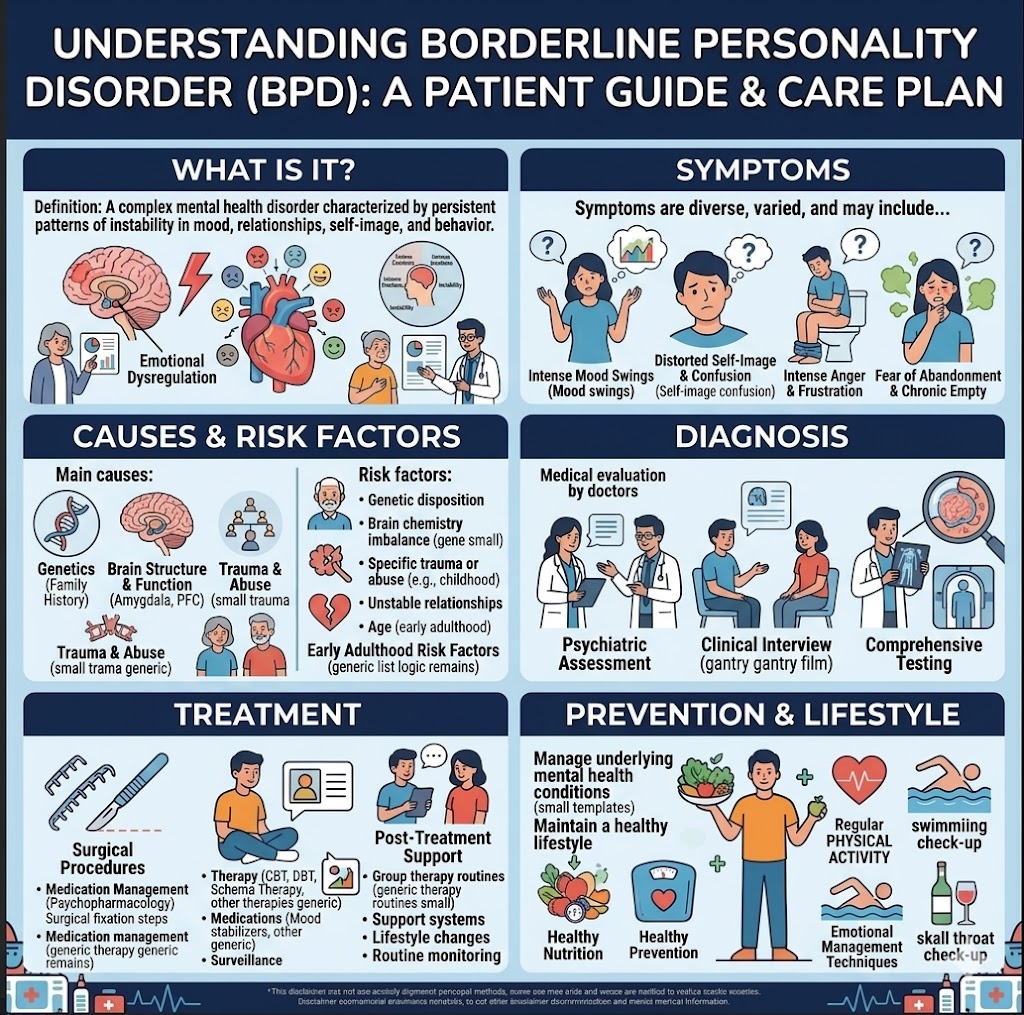
Borderline personality disorder (BPD) is a mental health condition that significantly impacts how a person thinks, feels about themselves and others, and behaves. It causes intense emotional ups and downs, an unstable self-image, and difficulty forming lasting relationships. People with BPD often experience a deep fear of being abandoned, leading to impulsive actions and mood swings that can strain their connections with others. While it typically emerges in early adulthood, many individuals find substantial improvement and learn to live more stable lives with appropriate treatment.
Understanding the Condition
Understanding Borderline Personality Disorder (BPD)
Understanding the Condition
Common Symptoms
Intense Fear of Abandonment: An overwhelming fear of being left alone or rejected, even when there's no real reason for it. This can lead to extreme efforts to prevent separation, imagined or real.
Unstable, Intense Relationships: A pattern of relationships that swing quickly and dramatically between extreme adoration (idealization) and intense dislike or anger (devaluation), often due to sudden shifts in perception of others.
Unstable Self-Image or Sense of Self: Rapid and frequent changes in how a person sees themselves, including shifting goals, values, and a persistent feeling of being 'bad,' worthless, or even non-existent.
Before your visit, consider making notes about your symptoms, including when they started, how often they occur, what makes them better or worse, and how they impact your daily life and relationships. It's also helpful to list any questions you have. You might find it beneficial to bring a trusted friend or family member for support, who can also offer insights into your experiences.
Book a doctor visit near me
Borderline personality disorder is diagnosed by a trained mental health professional, such as a psychiatrist or psychologist, based on a comprehensive evaluation of your symptoms, personal history, and family background. There are no medical tests, like blood work or brain scans, that can definitively diagnose BPD. The diagnosis relies on a detailed clinical assessment against established diagnostic criteria.
During the evaluation, you will have a series of in-depth conversations with the mental health professional. They will ask detailed questions about your feelings, behaviors, relationship patterns, past experiences (including any trauma), and how your symptoms affect your daily life. It's helpful to be open and honest about your experiences. This process may involve one or more sessions to gather enough information for an accurate diagnosis.
Cognitive Behavioral Therapy (CBT): CBT focuses on identifying and changing negative thought patterns and behaviors that contribute to BPD symptoms. It helps individuals develop healthier coping mechanisms and improve problem-solving skills. (Duration: Varies, often 6-12 months.)
Schema-Focused Therapy: This therapy addresses deeply ingrained, long-standing negative patterns (schemas) that developed in childhood and contribute to current difficulties. It helps individuals understand and change these core beliefs and behaviors. (Duration: Generally longer-term, often 1-3 years or more.)
Other Psychotherapies: Other forms of talk therapy, such as mentalization-based treatment (MBT) or transference-focused psychotherapy (TFP), may also be beneficial, tailored to individual needs and symptom presentation. (Duration: Variable, depending on the specific therapy and individual progress.)
Antidepressants: These medications may be used to alleviate co-occurring symptoms of depression or anxiety, which are common alongside BPD. (Duration: As long as needed, often ongoing with regular review by a psychiatrist.)
Identify and Manage Triggers: Learn to recognize the specific situations, thoughts, or feelings that tend to worsen your BPD symptoms. Develop healthy strategies to cope with these triggers or avoid them when possible.
Avoid Substance Misuse: Refrain from using alcohol or recreational drugs, as they can significantly exacerbate BPD symptoms, impair judgment, and interfere with the effectiveness of treatment.
Develop Healthy Coping Skills: Actively apply the skills learned in therapy, such as emotion regulation, distress tolerance, and interpersonal effectiveness, in your daily life to navigate challenges and maintain emotional balance.
Set Healthy Boundaries: Learn to establish clear and healthy boundaries in your relationships to protect your emotional well-being, prevent conflict, and foster more stable interactions.
Consultation Guide
Borderline personality disorder (BPD) is a mental health condition that significantly impacts how a person thinks, feels about themselves and others, and behaves. It causes intense emotional ups and downs, an unstable self-image, and difficulty forming lasting relationships. People with BPD often experience a deep fear of being abandoned, leading to impulsive actions and mood swings that can strain their connections with others. While it typically emerges in early adulthood, many individuals find substantial improvement and learn to live more stable lives with appropriate treatment.
Periods of Stress-Related Detachment or Paranoia: Brief episodes, lasting from a few minutes to a few hours, where severe stress causes a temporary loss of touch with reality, feeling suspicious, or a sense of detachment from oneself or surroundings.
Impulsive and Risky Behavior: Engaging in sudden, thoughtless, and often dangerous actions like reckless driving, unsafe sex, binge eating, drug misuse, excessive spending, or self-sabotage (e.g., suddenly quitting a good job or ending a positive relationship).
Threats of Suicide or Self-Injury: Repeated suicidal thoughts, gestures, or threats, or engaging in self-harm (like cutting or burning), often as a reaction to fears of separation, rejection, or intense emotional pain.
Wide Mood Swings: Quick and dramatic shifts in mood, lasting from a few hours to a few days. These mood swings can include feelings of intense happiness, irritability, anxiety, or deep shame.
Chronic Feelings of Emptiness: Persistent feelings of hollowness, loneliness, or a lack of purpose and meaning.
Inappropriate, Intense Anger: Frequent and strong outbursts of anger, including losing one's temper often, being sarcastic or bitter, or getting into physical fights, often disproportionate to the situation.
Consultation Guide
Which Specialist to Meet
Diagnostic Procedures
If you suspect you or someone you know might have Borderline Personality Disorder, it's important to consult a mental health professional. This could include a psychiatrist (a medical doctor specializing in mental health), a psychologist (who diagnoses and treats mental health conditions through talk therapy), or a licensed therapist or counselor. These specialists can conduct a thorough evaluation and guide you toward appropriate treatment.
Preparations Before Your Visit
Diagnostic Interview and Clinical Evaluation
What to Expect
Treatment Options
Therapies
Dialectical Behavior Therapy (DBT): This is a specialized therapy specifically designed for BPD. It teaches skills to manage intense emotions, reduce self-harm, improve relationships, and cope with distressing situations. DBT typically involves individual therapy sessions, group skills training, and phone coaching for support between sessions. (Duration: Typically 6 months to over a year, often with ongoing maintenance or booster sessions.)
Medications
Mood Stabilizers: These medications are prescribed to help regulate severe mood swings, reduce impulsivity, and manage anger outbursts often associated with BPD. (Duration: As long as needed, often ongoing with regular review by a psychiatrist.)
Antipsychotic Medications: These can help reduce severe anger, impulsivity, or transient psychotic-like thinking patterns that some individuals with BPD experience. (Duration: As long as needed, often ongoing with regular review by a psychiatrist.)
Adhere to Treatment Plan: Consistently attend therapy sessions and take prescribed medications as directed by your mental health team. This consistent engagement is fundamental for long-term progress and stability.
Build a Strong Support System: Cultivate healthy and supportive relationships with trusted family members, friends, or support groups. Having people you can rely on can provide emotional support and reduce feelings of isolation.
Maintain Regular Follow-ups: Continue regular contact with your mental health professional for ongoing support, medication management, and adjustments to your treatment plan as needed to support sustained recovery.
Prevention & Long-Term Wellbeing
Support & Lifestyle Management
Support Groups: Joining peer support groups can provide a sense of community, reduce feelings of isolation, and offer a space to share experiences and learn coping strategies from others facing similar challenges. (Duration: Ongoing, as desired.)
Healthy Lifestyle Practices: Adopting a balanced diet, getting regular physical exercise, and ensuring adequate sleep are crucial for overall mental well-being and can significantly help in stabilizing mood and managing stress. (Duration: Lifelong commitment.)
Stress Reduction Techniques: Learning and regularly practicing relaxation techniques like mindfulness, meditation, deep breathing exercises, or yoga can help individuals manage stress and intense emotional states. (Duration: Lifelong practice.)
Long-Term Management & Prevention
Practice Regular Self-Care: Prioritize activities that promote your well-being, such as engaging in hobbies, spending time in nature, practicing relaxation techniques, maintaining regular exercise, and ensuring a balanced diet and adequate sleep.
Tags & Topics
Notice an error or need an update?
Help us keep medical information accurate. Report incorrect info or suggest an edit.


