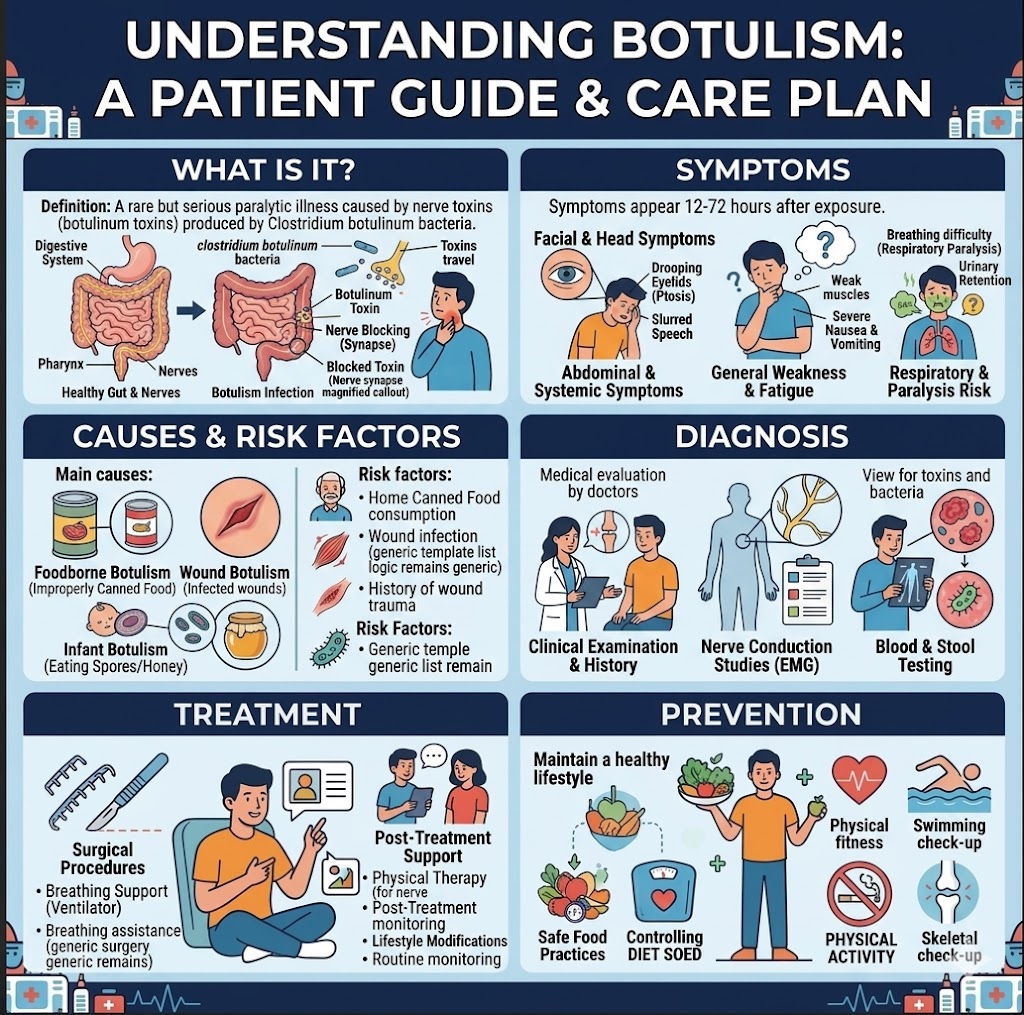
Botulism is a rare but extremely serious illness caused by a powerful poison (toxin) produced by specific bacteria. This toxin attacks the body's nerves, leading to life-threatening muscle weakness and paralysis. The bacteria, called *Clostridium botulinum*, thrives in environments with little to no oxygen. Botulism can occur from contaminated food, infected wounds, or when bacterial spores grow in a baby's intestines. In very rare cases, it can result from medical treatments involving the toxin or from deliberate release (bioterrorism). All forms of botulism are medical emergencies and can be fatal without immediate treatment.
Understanding the Condition
Botulism: A Comprehensive Guide for Non-Medical Individuals
Understanding the Condition
Common Symptoms
Symptoms of Foodborne Botulism: These symptoms typically appear between 12 and 36 hours after consuming contaminated food, though this can range from a few hours to several days depending on the amount of toxin ingested. They primarily affect the nervous system and can include: difficulty swallowing or speaking, weakness on both sides of the face, blurry or double vision, drooping eyelids, and trouble breathing. Digestive issues such as nausea, vomiting, and stomach cramps may also occur.
Symptoms of Wound Botulism: Symptoms from wound botulism usually develop around 10 days after the toxin enters the body through a cut or injury. The symptoms are similar to those of foodborne botulism, affecting the nervous system: difficulty swallowing or speaking, facial weakness on both sides, blurred or double vision, drooping eyelids, and trouble breathing. Unlike foodborne botulism, digestive symptoms are typically not present.
Symptoms of Infant Botulism: This form affects babies, usually between 2 and 8 months of age. Symptoms often include constipation (often the first sign), weak crying, reduced suckling, overall weakness, and difficulty breathing. The baby may appear floppy or lethargic.
Symptoms of Other Botulism Forms (Iatrogenic, Inhalation): These forms present with symptoms similar to foodborne or wound botulism, primarily involving muscle weakness and paralysis, including difficulty speaking, swallowing, breathing, and vision problems. The onset time varies based on the exposure method and amount of toxin.
Consultation Guide
Which Specialist to Meet
If botulism is suspected, immediate emergency medical attention is crucial. You will likely be seen by an emergency physician first. Depending on your condition, care may involve specialists such as neurologists (nerve specialists), infectious disease physicians, and critical care specialists (doctors who treat severely ill patients).
Preparations Before Your Visit
When seeking medical help, be prepared to describe your symptoms in detail, including when they started. It's vital to share recent food consumption history, any wounds or injuries, travel history, and drug use if applicable. If you suspect contaminated food, try to bring a sample or the container for testing. Provide a list of all medications you are currently taking.
Book a doctor visit near me
Doctors will start by thoroughly reviewing your symptoms, medical history, and conducting a physical examination to look for signs of nerve damage, such as muscle weakness, drooping eyelids, or changes in reflexes. This initial assessment helps distinguish botulism from other conditions that have similar symptoms.
The doctor will ask detailed questions about your recent activities, diet, any potential exposures (like home-canned foods or wounds), and when your symptoms began. They will perform a physical exam to check your muscle strength, eye movements, and reflexes. This is a non-invasive part of the diagnostic process.
Laboratory Toxin Detection and Culture
Ongoing Medical Follow-Up: Even after initial treatment, regular follow-up appointments with your doctors are essential to monitor your recovery progress, manage any lingering symptoms, and address potential long-term complications.
Consultation Guide
Botulism is a rare but extremely serious illness caused by a powerful poison (toxin) produced by specific bacteria. This toxin attacks the body's nerves, leading to life-threatening muscle weakness and paralysis. The bacteria, called *Clostridium botulinum*, thrives in environments with little to no oxygen. Botulism can occur from contaminated food, infected wounds, or when bacterial spores grow in a baby's intestines. In very rare cases, it can result from medical treatments involving the toxin or from deliberate release (bioterrorism). All forms of botulism are medical emergencies and can be fatal without immediate treatment.
Ensuring Safe Medical/Cosmetic Toxin Injections: If you are undergoing cosmetic procedures (e.g., for wrinkles) or medical treatments (e.g., for migraines) involving botulinum toxin, ensure the procedure is performed by a licensed and experienced healthcare provider to prevent accidental overdose, which can cause iatrogenic botulism.
Diagnostic Procedures
Clinical Evaluation and Medical History
What to Expect
The most definitive diagnosis involves laboratory tests to identify the botulinum toxin or the *Clostridium botulinum* bacteria itself. Samples may be collected from your blood, stool, or vomit. In cases of wound botulism, a sample from the wound may be taken. If foodborne botulism is suspected, any leftover suspect food can also be tested.
What to Expect
Blood will be drawn from a vein in your arm. A stool sample will be collected, which you might provide using a collection kit. If vomiting occurred, a sample of vomit may be collected. For wound botulism, a doctor may swab or collect tissue from the wound. If you have suspect food, you will be asked to provide it for analysis. These tests help confirm the presence of the toxin or bacteria.
Nerve Conduction Studies and Electromyography (NCS/EMG)
These tests measure the electrical activity of your muscles and nerves. Nerve conduction studies assess how well electrical signals travel along your nerves. Electromyography (EMG) evaluates the electrical activity of your muscles when they are at rest and when they are contracted. These tests can help identify nerve damage patterns consistent with botulism and rule out other neurological conditions.
What to Expect
For nerve conduction studies, small electrode patches will be placed on your skin over specific nerves. Brief, mild electrical pulses will be delivered to stimulate the nerves, and the speed and strength of the nerve's response will be recorded. For EMG, a thin needle electrode will be inserted into several muscles to record their electrical activity. You might feel a brief pinprick sensation with each needle insertion and some muscle discomfort during the test. These tests typically take 30 to 90 minutes.
Treatment Options
Medications
Antitoxin: An antitoxin is the primary treatment for botulism. It is a medication that stops the botulinum toxin from causing further damage to the nerves. It does not reverse damage that has already occurred, which is why early administration is crucial. (Duration: Administered intravenously (into a vein) as soon as botulism is suspected. Effects can be seen quickly in preventing further progression, but recovery from existing damage takes time.)
Antibiotics (for Wound Botulism): For wound botulism, antibiotics may be prescribed to kill the *Clostridium botulinum* bacteria in the wound, preventing them from producing more toxin. These are only used for wound botulism and not other forms, as antibiotics don't affect the toxin itself. (Duration: Typically given for several days to weeks, depending on the severity of the infection and response to treatment.)
Breathing Support (Ventilator): If the toxin affects the muscles used for breathing, a mechanical ventilator may be necessary to help you breathe. This involves a tube placed into your windpipe, connected to a machine that breathes for you. (Duration: May be required for several weeks or even months until your breathing muscles recover sufficiently.)
Feeding Support: Difficulty swallowing can make eating and drinking dangerous. A feeding tube, inserted through the nose into the stomach or directly into the stomach, may be used to ensure you receive proper nutrition and hydration. (Duration: Used as long as swallowing difficulties persist, potentially weeks to months.)
Wound Debridement (for Wound Botulism): For wound botulism, surgical removal of the infected tissue from the wound is often necessary to eliminate the source of the bacteria producing the toxin. (Duration: A one-time procedure, but the wound will require ongoing care and dressing changes for healing, typically several weeks.)
Rehabilitation and Therapies
Wound Care and Avoiding Illicit Drug Use: Keep all wounds clean to prevent infection. If a wound appears infected, seek medical treatment without delay. To prevent wound botulism and other serious diseases, avoid injecting or inhaling street drugs, as they can be contaminated with bacterial spores.
Protecting Infants from Botulism: Do not give honey, even a tiny taste, to children under the age of 1 year, as it can contain botulism spores that are harmful to their undeveloped digestive systems.
Prevention & Long-Term Wellbeing
Physical, Occupational, and Speech Therapy: Once the acute phase passes, extensive rehabilitation is often needed. Physical therapy helps restore muscle strength and movement. Occupational therapy assists with daily living activities. Speech therapy addresses difficulties with speaking and swallowing. (Duration: Can last for weeks, months, or even longer, depending on the extent of nerve damage and individual recovery.)
Prevention
Safe Home Canning Practices: When canning or preserving foods at home, use proper sterilization techniques. Pressure-cook home-canned foods at 250 degrees Fahrenheit (121 Celsius) for 20 to 100 minutes, depending on the food type. Consider boiling home-canned foods for 10 minutes before serving them to destroy any potential toxins.
Careful Food Handling and Storage: Avoid eating preserved food if its container is bulging or if the food has an off smell, though taste and smell are not always reliable indicators of botulism. For foil-wrapped baked potatoes, eat them hot, and if storing leftovers, loosen the foil and refrigerate immediately. Store homemade oils infused with garlic or herbs in the refrigerator and discard after four days. Always refrigerate canned foods promptly after opening.
Long-Term Monitoring and Recovery
Rehabilitation Programs: Many individuals require continued physical, occupational, and speech therapy for an extended period to regain strength, mobility, and the ability to perform daily tasks. Adhering to these programs is crucial for maximizing recovery.
Nutritional Support: For those with persistent swallowing difficulties, working with a dietitian or speech therapist to ensure safe and adequate nutrition is vital, potentially involving modified food textures or continued feeding tube use.
Tags & Topics
Notice an error or need an update?
Help us keep medical information accurate. Report incorrect info or suggest an edit.


