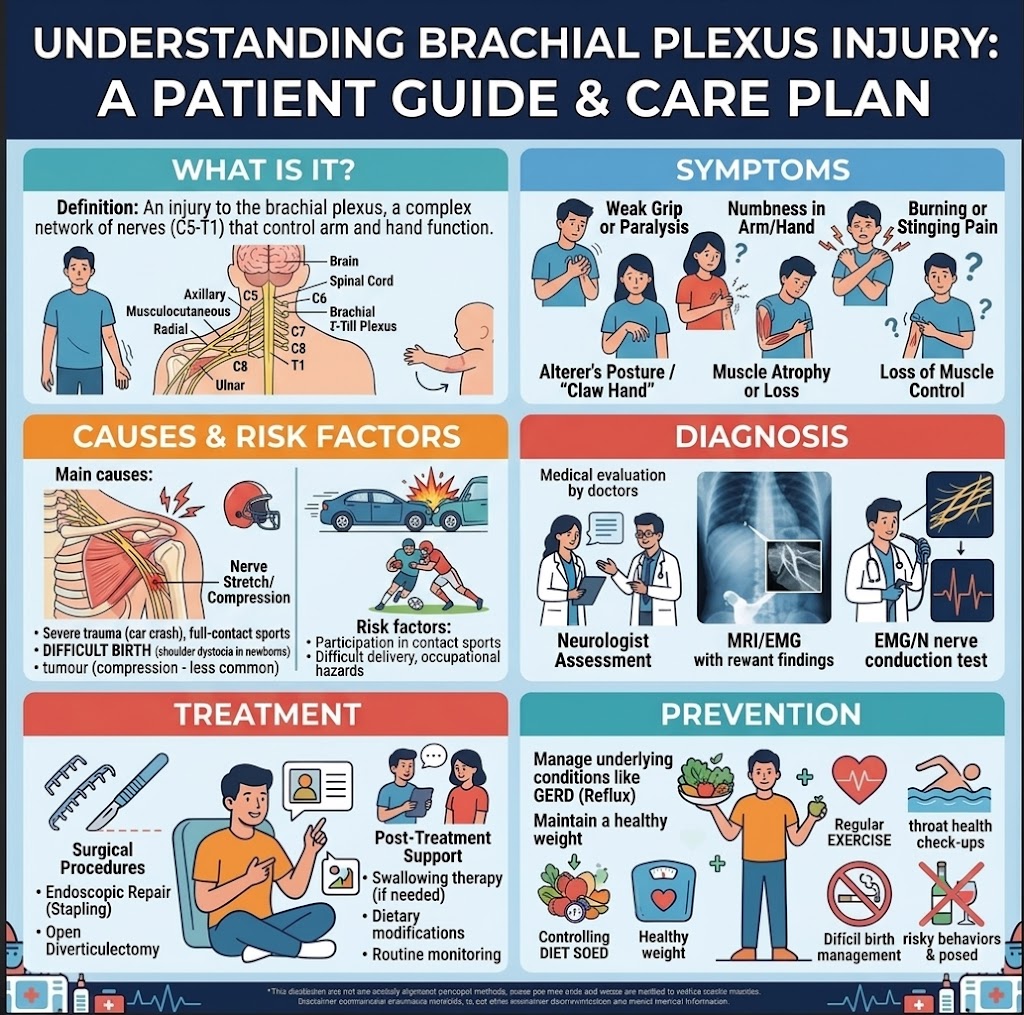
The brachial plexus is a vital network of nerves connecting your spinal cord to your shoulder, arm, and hand, controlling movement and sensation. An injury occurs when these nerves are stretched, compressed, or, in severe cases, torn from the spinal cord. Minor injuries, known as "stingers" or "burners," are common in sports. Serious injuries, often from accidents or birth, can lead to significant weakness or paralysis.
Understanding the Condition
Brachial Plexus Injury: Understanding Nerve Damage in Your Arm and Hand
Understanding the Condition
The brachial plexus is a vital network of nerves connecting your spinal cord to your shoulder, arm, and hand, controlling movement and sensation. An injury occurs when these nerves are stretched, compressed, or, in severe cases, torn from the spinal cord. Minor injuries, known as "stingers" or "burners," are common in sports. Serious injuries, often from accidents or birth, can lead to significant weakness or paralysis.
Common Symptoms
Minor Injuries (Stingers/Burners): A sudden, shooting sensation like an electric shock or burning down the arm, often accompanied by temporary numbness and weakness. These symptoms usually pass quickly, but can occasionally linger for days or longer.
Serious Injuries: Includes severe weakness or paralysis, making it difficult or impossible to move specific muscles in the hand, arm, or shoulder. There may also be a complete loss of sensation in affected areas and intense pain from nerve damage. Typically, only one arm is affected.
Consultation Guide
Which Specialist to Meet
A medical doctor will likely refer you to a neurologist (a doctor specializing in the nervous system) or an orthopedic surgeon specializing in hand or upper extremity conditions. For infants, a pediatric neurologist or orthopedist is recommended.
Preparations Before Your Visit
Before your visit, compile a detailed list of all your symptoms, including when they started and any activities or incidents that may have caused them (e.g., accidents). Document your full medical history and all current medications. Prepare specific questions you have for your doctor regarding your condition, diagnosis, and potential treatment options.
Book a doctor visit near me
The doctor will begin by discussing your medical history and current symptoms. They will then perform a series of physical tests to assess your reflexes, muscle strength, sensation (your ability to feel touch, pain, temperature), coordination, and balance. This typically involves simple commands and physical checks, and the exam can range from a few minutes to an hour or more.
Electromyography (EMG) and Nerve Conduction Study (NCS)
Consultation Guide
Pain Relievers: Over-the-counter options or prescription non-narcotic medications may be used to manage pain and discomfort caused by the injury. (Duration: As needed, typically short-term for acute pain, or managed long-term if chronic.)
Diagnostic Procedures
Neurological Examination
This exam comprehensively evaluates the function of your entire nervous system, including your brain, spinal cord, nerves, and muscles. It helps your healthcare team identify any abnormalities, pinpoint the location of nerve damage, and understand the extent of your condition.
What to Expect
These two tests are often performed together to provide a detailed assessment of the health of your muscles and the nerves that control them. An NCS measures how quickly and strongly electrical signals travel along your nerves, while an EMG records the electrical activity within your muscles, both at rest and during movement.
What to Expect
During the **Nerve Conduction Study (NCS)**, small electrode stickers will be placed on your skin over the nerves being tested. Mild electrical impulses will then be delivered through these electrodes, causing a brief tingling or twitching sensation, to measure how fast and effectively your nerves transmit signals. For the **Needle Electromyography (EMG)**, a very thin needle electrode will be gently inserted into specific muscles. You may feel a brief pinch or mild discomfort. This electrode records the electrical activity of the muscle both when it is relaxed and when you are asked to gently contract it.
Treatment Options
Rest and Gentle Exercises: For mild injuries, resting the affected arm and performing doctor-approved gentle range-of-motion exercises can help prevent joint stiffness and promote natural healing. (Duration: Days to weeks for minor injuries.)
Therapies
Medications
Nerve Graft: If a nerve is torn and has a gap, a section of healthy nerve tissue from another less critical part of your body (a donor nerve) is surgically used to bridge this gap, allowing the damaged nerve to regrow across it. (Duration: Surgery followed by extensive rehabilitation, with nerve regeneration and functional recovery occurring over many months to several years.)
Nerve Transfer: A healthy, but less critical, nerve is surgically rerouted and connected to a severely injured nerve, particularly those that have been torn directly from the spinal cord (avulsion). This technique can often lead to faster and better muscle recovery. (Duration: Surgery followed by intensive rehabilitation over several months to years, with functional gains evolving over this period.)
Muscle Transfer: In cases where nerve repair is not possible or insufficient, a working muscle or tendon from another area of the body is moved and reattached to the affected arm to help restore lost movement and function. (Duration: Surgery followed by several months of rehabilitation to learn how to effectively use the transferred muscle.)
Prevention & Long-Term Wellbeing
Physical Therapy: Specialized exercises and stretches designed to improve the range of motion, strengthen weakened muscles, reduce pain, and prevent stiffness in joints. (Duration: Weeks to several months, potentially ongoing depending on the severity of injury and recovery progress.)
Occupational Therapy: Helps individuals adapt to any functional limitations and teaches new strategies or modifications to perform daily tasks like eating, dressing, or writing. (Duration: Varies based on individual needs and recovery, often several weeks to months.)
Prevention
Sports Safety: Athletes participating in contact sports, such as football and wrestling, should ensure they use appropriate protective gear and employ proper techniques to minimize the risk of nerve stretching or compression during play.
Accident Awareness: Practicing safe driving habits and adhering to traffic laws significantly lowers the chance of severe injuries, including those to the brachial plexus, from motor vehicle accidents.
Long-Term Monitoring and Management
Consistent Therapy and Exercises: For individuals experiencing weakness or paralysis, regular physical therapy sessions and daily range-of-motion exercises are crucial. These help prevent joints from becoming stiff and maintain the health of working muscles, even if full function isn't fully regained.
Injury Protection for Numb Areas: If you have lost sensation in your arm or hand, be extremely vigilant to protect the area from burns, cuts, or other injuries, as you may not feel them. Regularly inspect the skin for any unnoticed damage.
Pain Management: Nerve damage can sometimes lead to chronic pain. Working closely with your healthcare team to develop an effective pain management strategy is vital for maintaining your quality of life.
Regular Medical Follow-ups: Ongoing appointments with your specialist are essential to monitor nerve recovery, assess any functional improvements, and address potential complications or new concerns as they arise.
Tags & Topics
Notice an error or need an update?
Help us keep medical information accurate. Report incorrect info or suggest an edit.


