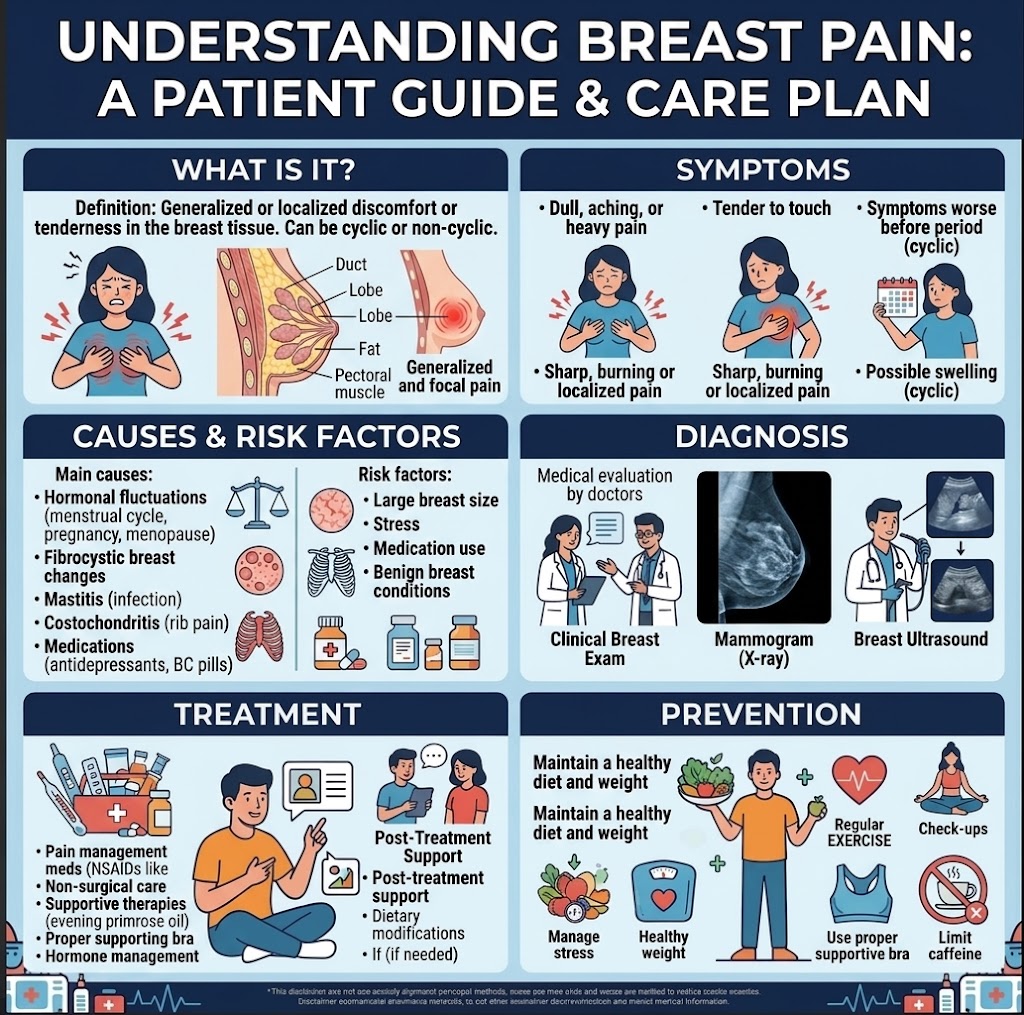
Breast pain (mastalgia) can range from mild to severe, described as tenderness, throbbing, sharp, burning, or tightness in the breast tissue. It can be constant or occasional, affecting men, women, and transgender individuals. Often linked to hormonal changes, especially around menstrual cycles. In men, gynecomastia (increased breast tissue from hormone imbalance) is a common cause. Transgender women on hormone therapy, or transgender men with residual breast tissue after surgery, may also experience it. Most breast pain is benign and not cancer, but persistent, unexplained pain, or pain after menopause, requires medical evaluation.
Understanding the Condition
Understanding Breast Pain (Mastalgia)
Understanding the Condition
Common Symptoms
Cyclic Breast Pain: Pain occurring in a regular pattern, typically before and sometimes during a menstrual period. It often affects both breasts and can range from mild to severe.
Noncyclic Breast Pain: Pain that is constant or irregular, not linked to the menstrual cycle. It may be felt in one specific area.
Extramammary Breast Pain: Pain originating outside the breast, such as from chest wall muscle strain or rib cartilage inflammation, but felt in the breast area.
When to See a Doctor: Consult your doctor if breast pain lasts daily for over two weeks, occurs in a specific area and worsens, interferes with daily life, or wakes you. While pain alone rarely signals breast cancer, any doctor-recommended evaluation is important.
Consultation Guide
Which Specialist to Meet
Initially, see your primary care doctor. They may refer you to a gynecologist or a breast health specialist if needed.
Preparations Before Your Visit
Prepare to describe your pain details: location, intensity, duration, pattern (e.g., related to menstrual cycle, activity, or medications). Provide your full medical history, other symptoms, and a list of all current medications and supplements.
Book a doctor visit near me
An X-ray of the breast for cancer screening or symptom investigation, capable of detecting changes before they are palpable.
Consultation Guide
Breast pain (mastalgia) can range from mild to severe, described as tenderness, throbbing, sharp, burning, or tightness in the breast tissue. It can be constant or occasional, affecting men, women, and transgender individuals. Often linked to hormonal changes, especially around menstrual cycles. In men, gynecomastia (increased breast tissue from hormone imbalance) is a common cause. Transgender women on hormone therapy, or transgender men with residual breast tissue after surgery, may also experience it. Most breast pain is benign and not cancer, but persistent, unexplained pain, or pain after menopause, requires medical evaluation.
Diagnostic Procedures
Removes a small breast tissue sample for lab analysis to determine if a suspicious area is cancerous or benign.
What to Expect
Local anesthetic numbs the area. Guided by imaging (ultrasound or mammogram), a hollow needle extracts tissue. Expect pressure or mild discomfort. A bandage is applied; results typically take a few days.
Breast Self-Exam for Breast Awareness
A personal visual and manual check of your breasts to learn their normal feel and appearance, helping you notice new changes early for professional evaluation.
What to Expect
Monthly, inspect and feel your breasts for changes in size, shape, skin, nipples, or new lumps/tenderness. Report any new findings to your doctor promptly.
What to Expect
Your breast is compressed briefly between plates on a special X-ray machine for clear images. You may feel temporary pressure. A professional reviews images for concerns. Both 2D and 3D options are available.
Uses sound waves to create live images of internal body structures, like breast tissue. It's a safe, non-invasive procedure without radiation.
What to Expect
Gel is applied, then a handheld device (transducer) moves over the skin, displaying images on a monitor. Expect light pressure; no pain. Typically lasts 15-30 minutes.
Treatment Options
Medication Adjustments: If pain is linked to certain medications (e.g., hormone therapies, birth control), your doctor may suggest dosage adjustment or alternatives. (Duration: As advised by a doctor.)
Hormone Therapy Review: Adjusting hormone therapy for transgender women or reviewing post-menopausal hormone therapies may alleviate pain. (Duration: As advised by a doctor, often ongoing.)
Management of Gynecomastia: For men with gynecomastia-related pain, treatment addresses hormone imbalance. Severe cases may consider surgical removal of excess breast tissue. (Duration: Medical management varies; surgical removal is a one-time procedure with recovery.)
Medication Awareness: Discuss with your doctor about potential pain-causing medications and explore alternatives if appropriate.
Proper Bra Support: Consistently wear a well-fitting bra and a sports bra during exercise for optimal support.
Caffeine Moderation: Limit or eliminate caffeine intake, as it can reduce breast pain for some individuals.
Prevention & Long-Term Wellbeing
Home Remedies and Lifestyle Adjustments
Supportive Bras: Wear a properly fitted bra; use a sports bra during exercise to minimize breast movement and pain. (Duration: Ongoing)
Relaxation Techniques: Practice relaxation to manage stress and anxiety, which can worsen severe breast pain. (Duration: Ongoing, as needed)
Dietary Modifications: Consider reducing caffeine. Some find relief with a low-fat, high-complex carbohydrate diet. (Duration: Ongoing; observe effects over weeks to months.)
Over-the-Counter Pain Relievers: Use non-prescription pain relievers for temporary pain. Consult your doctor for dosage and long-term use risks. (Duration: Short-term, as needed, or doctor-advised.)
Medical and Hormonal Management
Prevention
Balanced Lifestyle: Avoid excessive lifting and maintain a low-fat, complex carbohydrate diet to potentially reduce breast tissue sensitivity.
Long-Term Monitoring
Regular Breast Awareness: Monthly self-checks to familiarize yourself with your breasts' normal feel and look, aiding early detection of changes.
Prompt Reporting: Report any new or unusual breast changes to your healthcare professional immediately, even after recent screenings.
Adhere to Screenings: Follow your doctor's recommendations for routine breast screenings, such as mammograms, for early detection.
Tags & Topics
Notice an error or need an update?
Help us keep medical information accurate. Report incorrect info or suggest an edit.


